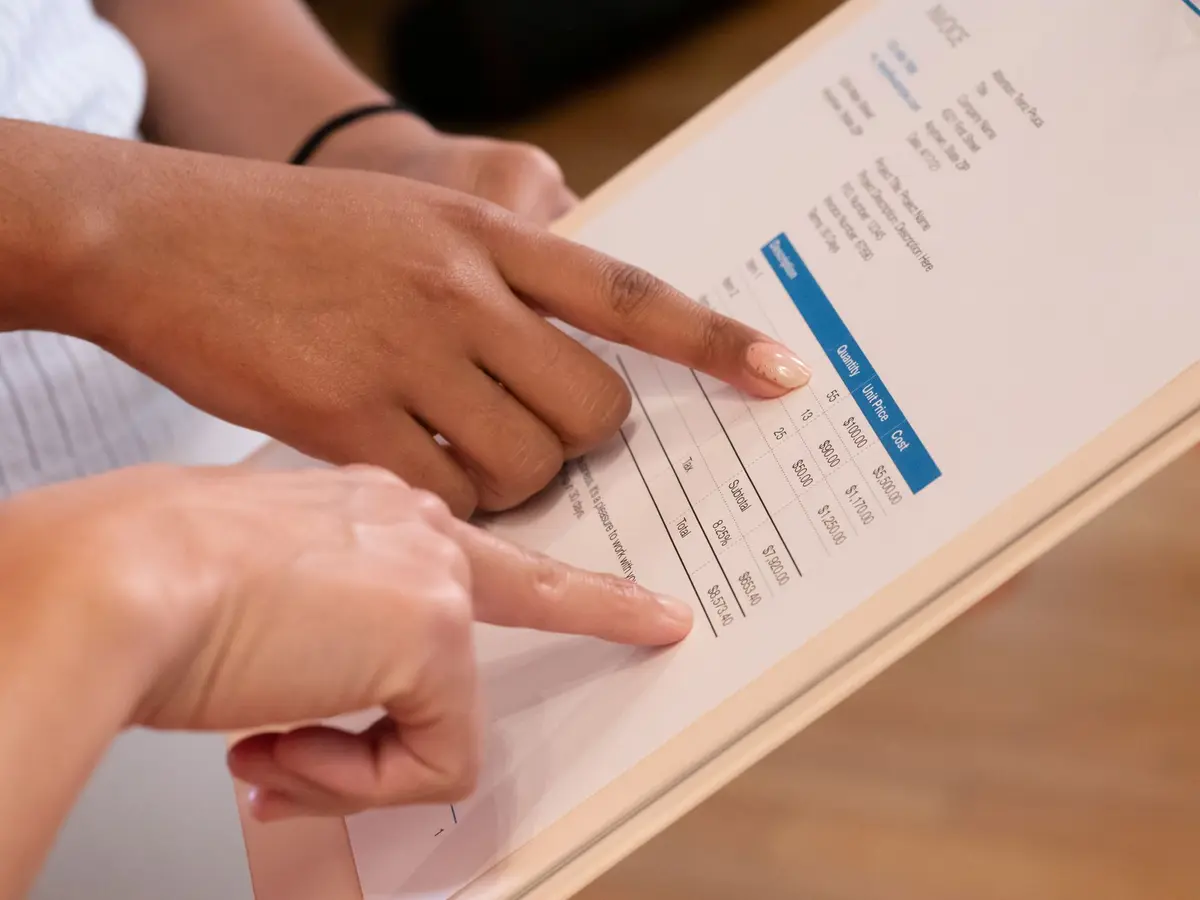
Automate Payment Reminders and Collections Without a Collections Clerk

Start with an email reminder as the default, escalate to SMS when there is no response, introduce call tasks for accounts that require personal follow-up, and use letters for formal escalation where necessary. The most effective approach is a timed sequence: a friendly heads-up before the due date, a clear nudge on the day, then firmer follow-ups at 7, 14, 30 and 60 days overdue. Automation eliminates 15-20 hours weekly spent on manual payment follow-ups. Set up workflows in your accounting software or a dedicated collections platform that trigger reminders automatically when invoices age. Connect your ERP, email, SMS, and WhatsApp APIs. Build a reconciliation loop so payments matched against invoices stop the sequence cold. Hand off high-value or disputed accounts to your team at day 30 or 60. Track Days Sales Outstanding (DSO) and collection rates monthly.
In short
- Late payments cost $39,000+ annually on average; half comes from staff chasing invoices instead of revenue work
- Multi-channel automation (email → SMS → WhatsApp) with a pre-due, day-0, then 7–14–30–60 day cadence cuts DSO by 15–30%
- Set reminders to stop automatically when payment is received; hand off to humans only at day 30+ or for disputes
- Setup takes 1–4 weeks depending on platform; simple email/SMS workflows run in hours; reconciliation API integration takes weeks
- Do not automate if you send fewer than 20 invoices per month, all invoices require negotiation, or customers resist SMS/WhatsApp
Why Late Payments Cost More Than You Think
The average annual cost from late payments is $39,406 per company, with 10% of companies suffering over $100,000 in expenses related to late payments. That figure includes three hidden costs most owners miss:
The opportunity cost of staff time represents the largest hidden expense. Every hour spent chasing late payments is time not spent on sales, customer service, or business development activities that generate revenue. A single collections clerk earning $20/hour costs $3,520 monthly—money that could launch a product line or fund marketing.
If a business has a profit margin of 10%, and has $5,000 in unpaid debt, it must make $50,000 in sales to recover the debt. Even at 20% margins, the business would need $25,000 in sales to recover $5,000 in unpaid debt. Chasing money you've already earned is not profit.
Managing late payments can require additional resources, such as increased staffing to handle accounts receivable. This extra work can take up valuable time and effort that would be better spent on customer service, product development, or business growth.
Only 46% of invoices sent result in on-time payments, with 48% arriving past due, and 6% never paid at all, converting to bad debt.
Manual vs. Automated Collections: The Real Difference
| Activity | Manual Process | Automated Process |
|---|---|---|
| Sending reminders | Log promises in a spreadsheet, email thread, or calendar reminder, then monitor whether payment happens. If the date passes, you re-engage the customer manually. No system for knowing a promise was made, no automatic follow-ups if overdue. | Promises-to-pay are captured in the platform and attached to the invoice. The system tracks commitments automatically and escalates when promised dates pass without payment. |
| Timing consistency | Reminders sent when someone remembers, often late or skipped. | The same reminder goes out at the same point in the billing cycle every time, and the team doesn't have to remember who got what. |
| Channel management | Email only, or manual SMS messages. | A structured multi-channel escalation approach improves visibility and response. |
| Reconciliation | Reconciling incoming payments with open invoices is traditionally a manual and error-prone process. | Automated reconciliation matches most transactions automatically and highlights only the exceptions. Finance teams spend less time preparing spreadsheets and more time investigating real issues. |
| Team workload | Collections teams spend more time reacting than recovering. Manual follow-ups slip, data errors multiply, payment plans collapse unnoticed. | Automating collections frees AR teams from repetitive tasks such as sending reminders, tracking payments, and managing disputes. This allows staff to focus on higher-value projects. |
| Cash flow impact | Manual collections cuts Days Sales Outstanding by 0-10 percent. | AR automation typically cuts Days Sales Outstanding by 15 to 30 percent. |
Building Your Automated Sequence: Step-by-Step
Step 1: Choose Your Channels and Define Your Sequence
The most effective approach is a timed sequence: a friendly heads-up before the due date, a clear nudge on the day, then firmer follow-ups at 7, 14, 30 and 60 days overdue. Design your cadence like this:
- 3–5 days before due date: Pre-due reminder. Email only. Friendly tone. "Just a heads-up that invoice #123 is due on [date]."
- Day 0 (due date): Email. Direct but polite. "Invoice #123 is now due. Pay here [link]."
- Day 7 overdue: Email. Tone shifts slightly firmer. Add early SMS if no payment yet.
- Day 14 overdue: SMS or WhatsApp. Tone becomes more direct. Flag for team review if high-value account.
- Day 30 overdue: WhatsApp or phone call task created for manual follow-up. Formal letter for some geographies.
- Day 60+ overdue: Hand off to collections agency or legal if applicable.
Every 7 days after the due date is a reliable rhythm. Frequent enough to signal urgency, not so aggressive it reads as harassment.
Step 2: Select Your Platform and Connect Your Systems
You need a tool that lives between your accounting software and your customers. Real options include:
- Email and SMS: Connect directly with Xero or QuickBooks. Platforms like Paidnice, CompleteSMS, or Razorpay natively integrate.
- WhatsApp: WhatsApp payment reminders reduce late payments by 45% compared to SMS. WhatsApp Business API messages achieve a 98% open rate and near-100% delivery rate, versus email at 20% and SMS at 45%. Use approved templates for outbound transactional reminders on WhatsApp Business API accounts.
- Reconciliation: Modern payment reconciliation software integrates with leading ERP systems, accounting platforms, payment gateways, banks, and marketplaces through APIs and pre-built connectors. Tools like Corefy, Airwallex, Atlar, or HighRadius handle multi-channel data normalization.
Simple SMS or email reminder workflows can be configured in hours. Voice AI deployments typically take 2 to 6 weeks, depending on language requirements and complexity.
Step 3: Build Your Automation Rules
In your chosen platform, set up triggers based on invoice age:
- Invoice issued → Email sent immediately (optional, for visibility)
- 3 days before due date → Pre-due email triggered automatically
- Due date passed, no payment received → Escalate channel (SMS, WhatsApp)
- Payment received → Stop all reminders for that invoice instantly
- 30 days overdue → Create task for human follow-up or escalation
WhatsApp API allows businesses to schedule messages and trigger them based on payment status. Use merge tags to personalize without manual work: {{customer_name}}, {{invoice_number}}, {{amount_due}}, {{due_date}}.
The key to a successful automated collection strategy is balancing psychological urgency with deep empathy. Automated sequences should be designed as helpful nudges rather than aggressive demands. The tone should always remain professional, courteous, and solution-oriented.
Step 4: Automate Payment Reconciliation
A reconciliation API serves as an intermediary between different financial platforms—such as bank accounts, payment gateways, and internal accounting software—by pulling data from these systems, comparing records, and identifying discrepancies.
The process works like this:
- Consolidate and normalise information from multiple internal and external sources in one place, making statements coherent and consistent.
- The reconciliation engine uses business rules and matching algorithms to automatically compare transactions.
- The system detects and alerts you about any mismatches in statements, granting consistency and facilitating the payment reconciliation process.
- Automated reconciliation matches most transactions automatically and highlights only the exceptions.
This loop closes the feedback: payment received automatically marks the invoice as paid, stops the reminder sequence, and reconciles the account in real time.
Step 5: Know When to Hand Off to a Human
Automation works for routine reminders. Manual collections work until the volume becomes difficult to manage. Automation improves consistency, but it still depends on rules and often breaks down when clients don't follow the expected path.
Create handoff rules:
- 30 days overdue on any invoice: Create a task for your team or sales lead to phone the customer directly.
- Dispute or partial payment: Human judgment needed. Automation cannot negotiate payment plans.
- Customer with payment history: After day 14, personalize the follow-up rather than relying on template messages.
- 60+ days overdue with no contact: Escalate to collections agency or legal.
Remove humans from the parts of collections that do not require them. Disputes, payment plan negotiations, and strategic client conversations still involve people. Those are the situations where human judgment is genuinely necessary.
What Breaks and How to Prevent It
Integration failures
Train your staff to analyze the root causes of discrepancies, whether they stem from incorrect data entry, customer errors, or system integration issues, and develop preventative measures. Test your integrations monthly. Check that invoices appear in the platform, that payments sync back from your bank, and that the reminder sequence triggers on schedule.
Wrong phone numbers or email addresses
If the platform validates numbers and manages opt-outs, you cut the odds of wasted sends and confused recipients. Validate customer contact details during onboarding. Implement a preference center where customers can update their phone number or email without calling you.
Reminder fatigue
Multiple schedules and payer insight features make it easier to apply the right cadence to each tier while avoiding reminder fatigue for reliable customers. Segment your customer list: new customers, reliable payers, and chronic late payers each get different cadences. Good payers might get a single pre-due email. Bad payers move through escalation faster.
Compliance violations
SMS follow-ups require explicit opt-in consent under the Telephone Consumer Protection Act (TCPA) in the United States. Always obtain written or documented consent before adding a client to an SMS sequence, and include a clear opt-out option in every message. Document consent in writing. Include unsubscribe links in every SMS and email. For WhatsApp, obtain clear opt-in and use approved templates. For WhatsApp Business API accounts you must use approved templates for outbound transactional reminders.
Failed payments not detected
There's no automatic follow-ups if they become overdue, and no way for the collections manager to see the pipeline of commitments across the team. Check your reconciliation dashboard daily or set up daily exception alerts. If an invoice is marked paid but the payment never settled, flag it immediately.
When NOT to Automate Collections
Manual collections work until the volume becomes difficult to manage. Automation improves consistency, but it still depends on rules and often breaks down when clients don't follow the expected path.
Do NOT automate if:
- You have fewer than 20 invoices per month. The setup time outweighs the savings. Use a simple spreadsheet with reminder calendar alerts instead.
- Your invoices are all over $10,000 and require negotiation. Disputes and payment plans need human judgment and relationship management. Automation will seem robotic on large deals.
- Your customers are mostly one-off or ad-hoc. Automation assumes a repeating pattern. One-time projects don't justify setup.
- You have zero integration with your accounting software. If you're manually entering invoices into spreadsheets, automation won't help until you fix that first.
- Your customers refuse SMS and WhatsApp. If your customer base prefers phone calls or formal letters, email + voice is more appropriate than multi-channel automation.
For small-volume, high-touch situations, personalize for larger or strategic clients. Automate the routine. Handle the exceptions manually.
Timeline and Implementation Effort
How long does setup take?
- Email + SMS basics: Simple SMS or email reminder workflows can be configured in hours.
- Multi-channel with WhatsApp: 1–2 weeks. You need to apply for WhatsApp Business API approval, which takes 3–5 days.
- Full reconciliation automation: 2–4 weeks. This depends on how many payment providers you use and whether your ERP has good API documentation.
- Custom rules and segmentation: Add 1 week per complexity level (e.g., different sequences for each customer tier).
Implementation depends on the number of payment providers and data sources. Most teams connect their PSPs and financial systems through APIs or file imports and begin automating reconciliation within weeks.
What effort does it require from you?
- Auditing your current process (2–4 hours)
- Writing or adapting email and SMS templates (4–8 hours)
- Testing integrations with your ERP and payment gateway (4–6 hours)
- Training your team on the new dashboard and handoff rules (2–4 hours)
- Monthly monitoring of DSO and exception queues (2–3 hours per month)
Total: 16–30 hours of one-time setup. Then 8–12 hours monthly for oversight.
What to Measure: KPIs That Matter
After launch, track these:
- Days Sales Outstanding (DSO): This is the average number of days it takes to collect payment after an invoice is issued. A successful WhatsApp integration should noticeably reduce your DSO within the first 30 days.
- Payment collection rate: % of invoices paid by day 30, by day 60, by day 90.
- Cost per collection: Total cost (platform fees + staff time) ÷ invoices sent. Your target is under $2 per invoice collected.
- Channel performance: Which channel (email, SMS, WhatsApp) drives the highest payment rate? Adjust your sequence accordingly.
- Message reply rate: Monitor how many customers reply to your automated reminders. A high reply rate often indicates that customers are experiencing friction at checkout or need to update their payment methods, signaling a need for better self-service tools.
Businesses report 30-40% faster payment collection after implementing automated reminders. If you're not seeing at least 15–20% improvement in DSO after three months, your sequences or integration need tuning.
How AiStaffo would automate this
AiStaffo automates the entire payment follow-up and reconciliation loop so your team never chases manually again. Here's how: AiStaffo connects to your ERP or accounting software, extracts overdue invoices daily, triggers email reminders automatically via templates, escalates to SMS and WhatsApp on day 7 and day 14, matches incoming payments in real time against invoices, and stops the reminder sequence the moment payment is received. Your team only gets a task on day 30 if something is still unpaid—no inbox clutter, no spreadsheet hunting. The system logs every touch, generates DSO reports monthly, and hands disputed or high-value invoices to a real person without losing the thread. This cuts the time your staff spends on collections from 15–20 hours per week to under 3 hours per month of exception review. Book a free automation audit to see how much time and money your business is leaving on the table.
Questions people ask
Can I automate reminders if customers are in different countries?
What happens if a customer says they'll pay by a certain date but miss it?
Do I need separate software for each channel (email, SMS, WhatsApp)?
What if a customer pays late but regularly?
How do I handle disputes or partial payments automatically?
Can automation help me recover invoices older than 60 days?
Book a free automation audit
Thirty minutes. We look at one process you run every week and tell you exactly what an AI worker would take off your desk, and what it would not.