
Document Intake and Filing Automation for Every Arrival
AiStaffo builds automation that reads, names, files and acts on every document the moment it arrives, so nothing sits unopened in an inbox or a shared drive.
AiStaffo maps the routine work in your company, builds AI workers to run it 24 hours a day, and keeps them running. Your team shrinks to the people who make decisions.

We spend a short session looking at how work actually moves through your business, and where hours are lost to typing, chasing and re-checking.
Every repeatable process is written down step by step: who starts it, what data it needs, what decision is made, what leaves.
We connect the tools you already use and put the AI worker in the middle. It reads, files, replies, reconciles and reports on its own.
The automation runs every day, watched. Exceptions come to a person; everything routine does not.
We keep it running as your business changes: new staff, new tools, new rules. You never maintain it yourself.
| An employee | An AiStaffo worker | |
|---|---|---|
| Cost | Salary, plus contributions, insurance, leave, maternity cover, hiring and notice: about 1.5 times the salary | One fixed monthly fee, unchanged when volume doubles |
| Hours | About 40 a week; roughly 1,800 productive hours a year | 24 hours a day, 365 days a year |
| Speed and accuracy | Slows and slips late in the day | The same at 3 a.m. as at 10 a.m. |
| Leave, holidays, sickness | Weeks each year, with the role still to be covered | None |
| Resignation | Knowledge walks out; months to replace and retrain | Never leaves; nothing to retrain |
| Compliance | An HR and compliance file for every person | None |
| Mistakes | Fixed after someone notices | Stops and asks before guessing |
Five stages, not a switch. People are replaced by AI workers one workflow at a time, as roles fall vacant and the automation proves itself.
Nothing changes for staff. We record how the work actually moves and where the hours go.
It runs alongside the person doing it today. They check its work; it takes over the volume.
The first role that falls vacant is not refilled.
One or two people handle exceptions and decisions. Everything routine runs on its own.
The team is the people who make decisions. Support continues as the business changes.
Most businesses carry several full-time roles whose day is typing, chasing and compiling. Those roles move to AI workers for a fraction of their all-in cost, and the saving grows with the size of the operation. At the audit we put your own figures on it: which roles, how many hours, what they cost today, what the automated version costs.
AiStaffo builds automation that reads, names, files and acts on every document the moment it arrives, so nothing sits unopened in an inbox or a shared drive.
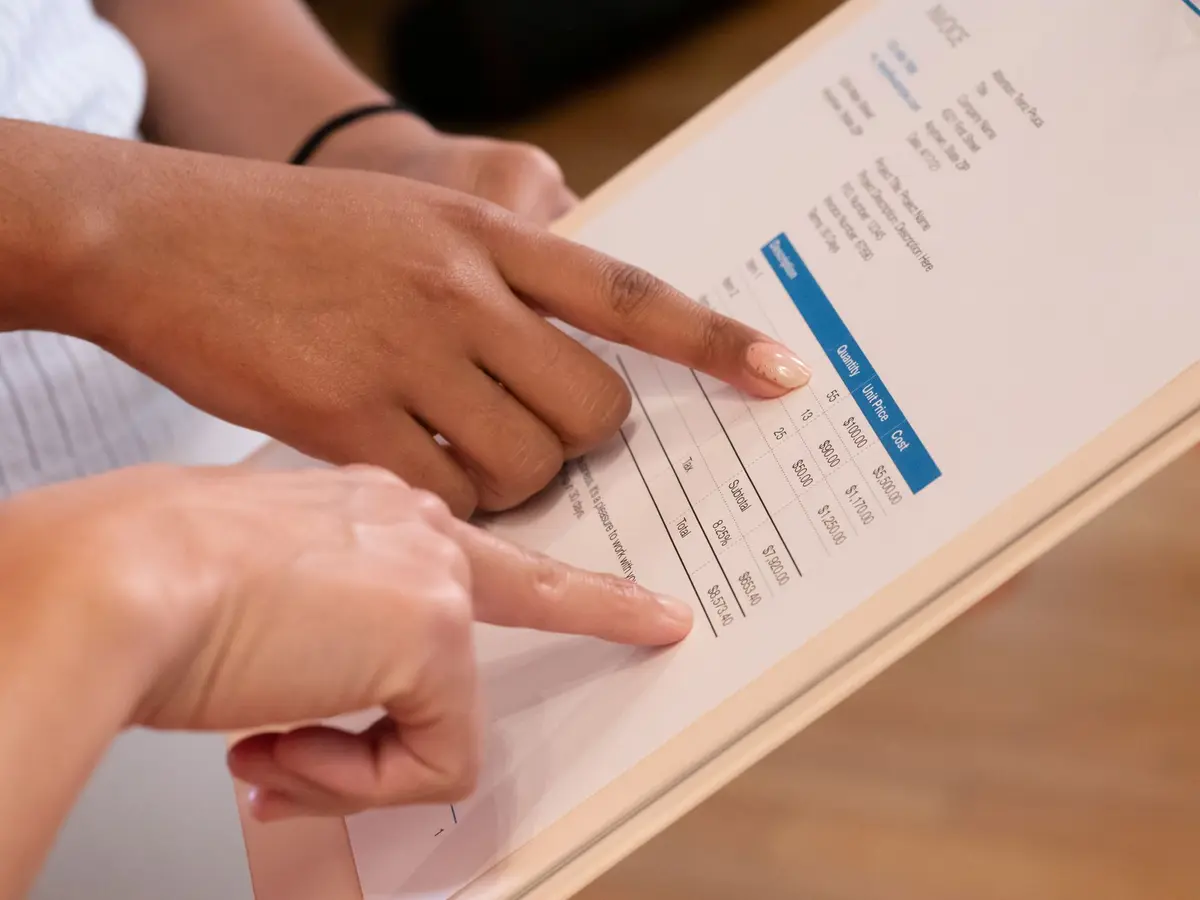
AiStaffo automates the full order-to-cash cycle: orders are entered, invoices generated, follow-ups sent, and payments reconciled—without manual work. Your team spends time on strategy, not data entry.

Automation that routes offer letters, compliance forms, equipment requests and manager check-ins—without manual follow-up. New hires ramp in days instead of weeks.

A system that matches your purchase invoices against GSTR-2B automatically, flags ITC gaps, and prevents GST notices and interest penalties before filing.

Appointment reminders and automated rescheduling that reduces no-shows and frees your front desk from manual follow-up work.

Customer support executives spend much of their day on repetitive tasks. AI automation can handle first-response inquiries, route complex tickets to the right specialist, and preserve conversation context so your team focuses on judgment calls.

Replace the administrative grind in recruitment. AI handles resume parsing, screening, interview scheduling and status updates automatically. Your coordinator moves from pipeline management to closing high-value roles.

Replace manual invoice entry, coding, approval routing and reconciliation with AI. Invoices flow from receipt to payment automatically, freeing your accounts payable clerk for exceptions and vendor work.

Recruitment agencies lose 14 hours per week to automatable tasks. AI automation handles resume screening, candidate matching, interview scheduling and follow-ups, cutting time-to-fill from 42 days to under 20 and lifting placements per recruiter by 40–80%.

Hospitality automation handles booking updates, guest communications, online check-in, and housekeeping coordination without human labor. Properties save up to 20 hours per week and improve occupancy through faster turnovers and better guest data.

Logistics automation handles shipment documentation, customs compliance, carrier coordination, and exception tracking so operators can respond to disruptions before they breach SLAs.

India's four new Labour Codes (in force since November 2025) have created urgent compliance complexity. AI automation for payroll can standardize data intake, eliminate recurring errors, auto-file statutory returns, and free HR teams from spreadsheet firefighting.

Trading companies face mountains of customs paperwork, order entry errors, and vendor follow-ups that consume staff time. AI automation cuts documentation processing time by 50–80% while trimming error rates from 10–20% to under 2%.

AI automation eliminates the repetitive work consuming your accounting firm's time: document collection, bank reconciliation, deadline tracking, and client queries. Redirect senior staff to advisory work without hiring.

Sales teams spend up to 50% of their time on unqualified leads. Automation filters intent and fit, routes hot leads in seconds, and keeps humans in the loop where judgment matters.

Manual GST reconciliation misses the invoice-level errors that block input tax credit and trigger GST notices. Automation catches these before they cost money.

GPT-6 Sol undercuts Claude Opus 5.5 by 50% on token pricing, but Opus 5.5 scores higher on reasoning and coding. The cost gap narrows once you factor in thinking depth, long context, and actual task success rates.

n8n wins on cost and control at scale; Make wins on setup speed and visual simplicity. Choose n8n for complex workflows and self-hosting; Make for quick deployment and non-technical teams.

A step-by-step guide to automating expense reports from receipt capture through accounting sync. Real data on time savings and error prevention.

Duplicate customer records fragment your data, split your pipeline, and stop automation cold. Here's what they cost and how to clean them up without losing history.

Vendor onboarding still costs $12–$35 per entry when done manually, with fraud losses eating 1.5% of revenue. Automation with OCR, TIN matching, and ERP sync collects clean records in days, not weeks.

AI receptionists cost $25–$500/month with 24/7 coverage. Human receptionists run $38–$54K annually. Both have distinct strengths and limits; most successful businesses use both.

Late payments cost businesses $39,000 per year on average. Stop chasing manually. Here's how to build a multi-channel payment reminder system that works 24/7 without hiring extra staff.

Automate invoice data entry from capture to posting. Extract vendor names, amounts, and line items from email PDFs and WhatsApp, validate against POs, route exceptions to a person, and post clean data to your ERP.

Zapier and Make both move data between your apps automatically, but they price and break differently as you scale. Here is what actually changes your total cost, and when a custom build wins.

A bipartisan coalition of 26 U.S. state attorneys general has called on Congress to immediately pass comprehensive AI legislation with mandatory federal oversight, safety testing standards, and incident response protocols—signaling mounting pressure on lawmakers to act on AI compliance.

OpenAI released GPT-6 Sol and GPT-6 Luna on September 22, 2026 at roughly half the price of their predecessors. On AutomationBench, Sol outperforms competitors at one-tenth the cost per task for workflows across sales, marketing, operations, support, finance and HR.
Thirty minutes. We look at one process you run every week and tell you exactly what an AI worker would take off your desk, and what it would not.