Contract Obligation Tracking and Renewal Automation
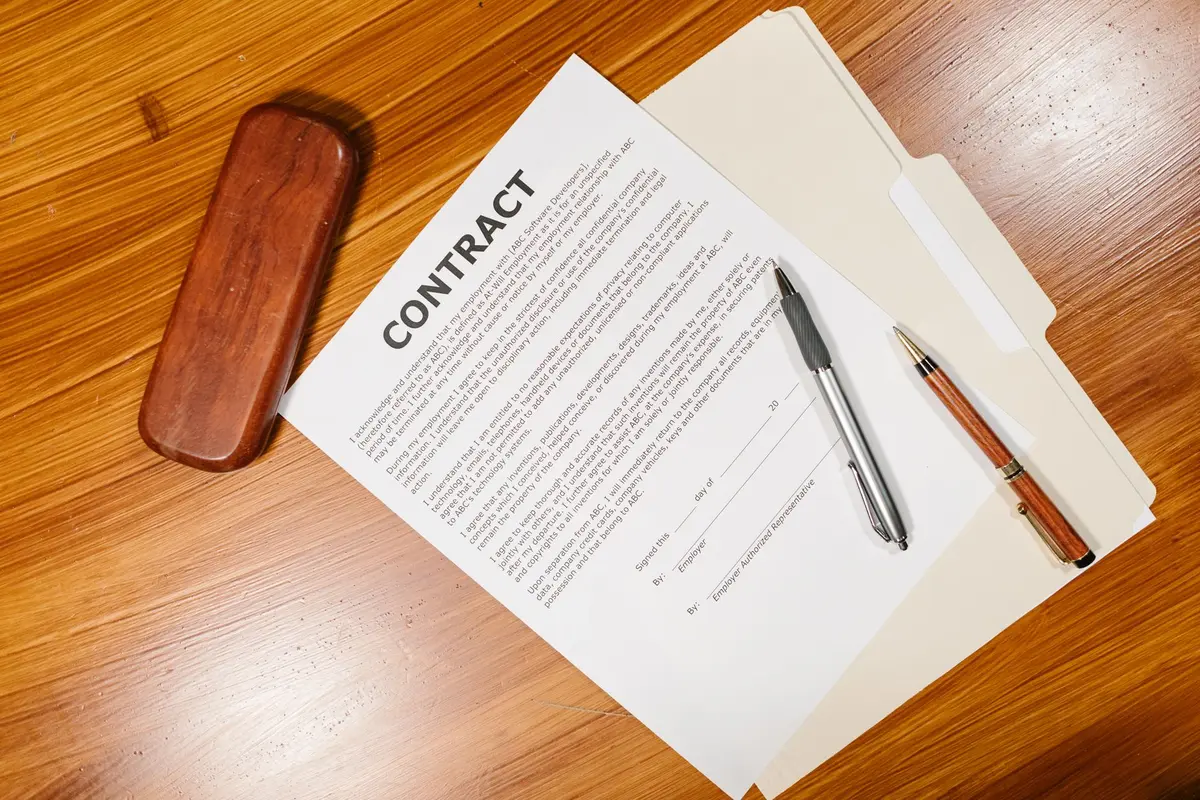
Contract obligation tracking replaces spreadsheets with automated AI extraction and deadline management. AiStaffo reads your contracts, pulls out every obligation (payment terms, delivery dates, renewal windows, compliance requirements), assigns each to an owner, and sends tiered alerts before deadlines arrive. The typical problem: organisations track hundreds of obligations manually across email, spreadsheets, and calendars, missing renewals that lock companies into unfavorable terms or trigger penalty clauses. Research shows poor contract management leaks 8–9% of annual revenue through missed deadlines, auto-renewals gone unnoticed, and renegotiation opportunities lost. Automation surfaces every critical date in advance and creates an audit trail for compliance.
In short
- AI extracts every obligation from executed contracts automatically, replacing manual spreadsheet tracking and reducing missed deadlines by up to 90%
- Tiered alerts (120, 90, 60, 30 days before deadline) route to named owners with backups, preventing renewal deadlines from disappearing into email or calendars
- Centralized obligation register with searchable dashboards gives every team visibility into payment milestones, renewal windows, compliance requirements, and performance deadlines
- Poor contract management leaks 8–9% of annual revenue; automation captures that value through timely renegotiations and prevention of silent auto-renewals
- Deployment takes 4–8 weeks; ongoing system updates obligations automatically as new contracts arrive or existing ones are amended
What Contract Obligation Tracking Automation Does
Contract obligation tracking is the process of monitoring every commitment that each party agrees to fulfill: payment milestones, delivery deadlines, reporting requirements, renewal notice periods, performance benchmarks, and compliance certifications. Without automation, these obligations disappear into dense legal language, spreadsheets maintained by individual contract owners, or forgotten emails. The result is predictable: missed renewal windows lock companies into unfavorable terms for another full year, silent auto-renewals commit the organisation to unwanted extensions, and compliance breaches surface only after penalties are triggered.
Modern contract obligation automation uses AI to read contracts in the way a legal professional would—at scale. The system identifies obligation-indicating language ('shall', 'must', 'is required to') and time-bound phrases ('within 30 days', 'prior to renewal'), determines which party is responsible, and normalizes relative deadlines into absolute dates. Each obligation is extracted into structured data: description, responsible party, deadline, clause reference, and risk level. No manual tagging required.
Once extracted, every obligation enters a centralized tracking system with automatic alerts sent to designated owners at configurable intervals. Tiered reminders fire at 120, 90, 60, and 30 days before deadlines arrive. Each alert goes to a named owner and a backup, creating accountability and preventing the single point of failure that email-only reminders create. Dashboards show what is on track and what needs action.
Why Automation Matters
Manual tracking processes fail at scale. A mid-size organisation with 500 active contracts may have thousands of individual obligations running concurrently, each with its own timeline, responsible party, and consequences for non-performance. Most organisations track these in spreadsheets: flexible but fragile, with no automated alerts, no calendar sync, no permission controls. One missed cell update and a deadline disappears.
The financial impact is documented. Research from the World Commerce and Contracting organization puts the figure at 8.6% of annual revenue lost to poor contract management practices each year. For a company with €50M in revenue, that is €4.3M quietly leaking through missed renewals, unfavorable auto-renewals, and untracked obligations. A single missed deadline can trap a business in an expensive contract for another year or longer, leading to additional charges and missed opportunities for renegotiation.
Renewal tracking without automation is especially risky. Many contracts include auto-renewal clauses with notice requirements: if you fail to notify the vendor 60–90 days before expiration, the contract renews automatically. By the time the renewal happens, no one has reviewed market conditions, vendor performance, or regulatory changes. Margins erode when vendors increase pricing with no corresponding improvement in service. Compliance gaps emerge: a contract signed two years ago may no longer meet data protection, audit, or jurisdictional requirements.
Automation surfaces renewals in advance and provides the data to inform decisions. Legal teams shift from firefighting to strategic governance. Finance teams forecast accurately when renewal dates and payment schedules are extracted automatically. Procurement teams spot overlapping or redundant contracts when one person oversees service agreements.
The Process: Audit to Run
Step 1: Audit (1 week)
We gather your contract portfolio—executed agreements in PDF, Word, or scanned format. We review your current obligation tracking methods (spreadsheets, calendar alerts, email chains, manual databases) and map the pain points. We identify which contracts are highest risk (large annual value, auto-renewal clauses, compliance dependencies, frequent amendments).
Step 2: Process Design (1–2 weeks)
We design the extraction rules: which obligations matter to your business (payment terms, delivery milestones, renewal windows, reporting deadlines, compliance certifications). We map the ownership structure: who monitors vendor renewals, who owns customer contract obligations, who escalates compliance issues, who approves amendments. We define alert cadence and routing: how many days before each deadline, who receives the first alert, who is the backup, which stakeholders get escalated notifications.
Step 3: Build (2–3 weeks)
Our AI models train on your contract language to extract obligations with high accuracy. We connect your central contract repository (SharePoint, dedicated CLM system, or file storage) and populate the obligation tracking database. We set up the alerting workflows: tiered reminders, role-based routing, escalation logic. We build dashboards filtered by contract owner, department, risk level, and deadline. We configure integrations with your CRM or ERP if required (so that CRM records update when contract renewals are flagged, for example).
Step 4: Run (Ongoing)
The system monitors every obligation continuously. As new contracts are added to your repository, AI extracts their obligations automatically. Amended contracts are re-processed; superseded obligations are retired. Alerts fire on schedule. Dashboards stay live. The system learns from corrections and feedback, improving accuracy over time.
Step 5: Support
We provide ongoing monitoring, alert fine-tuning, and model updates as your contract types evolve. We handle escalations and edge cases (complex obligations that require manual review, contracts with unusual structures).
What You Provide
- Access to your existing contract repository or PDF archive (any storage location)
- Clarification of which contract types matter most (vendor agreements, customer contracts, NDAs, service agreements, employment contracts, leases—or all of the above)
- Your current process for handling obligations: who owns renewals, who approves renegotiations, who monitors compliance
- Your integration requirements: whether obligation data must flow into your ERP, CRM, or other systems
- A designated point person to answer questions during design and training
Typical Timeline
End-to-end deployment: 4–8 weeks depending on portfolio size and complexity.
- Audit and intake: 1 week
- Process design: 1–2 weeks
- AI model training and build: 2–3 weeks
- Testing and refinement: 1 week
- Go-live and handover: 1 week
Large portfolios (5,000+ contracts) or complex extraction logic may extend the timeline. Active contracts in flight during setup can be prioritized to extract obligations ahead of others.
What This Does Not Cover
- Contract drafting or negotiation. This service focuses on extraction and tracking of executed agreements, not creation or legal review of new contracts.
- Renegotiation support. The system surfaces renewal opportunities and sends alerts, but does not participate in negotiation or deal-making. Your team drives those decisions with the data we provide.
- Full contract lifecycle management. We focus on obligation extraction, deadline tracking, and alert management. We do not manage contract approvals, e-signature, or full CLM workflows (though we can integrate with your existing CLM system if you have one).
- Regulatory interpretation. AI identifies obligations related to compliance (GDPR, SOX, industry-specific requirements), but does not provide legal advice on whether your organisation meets those obligations.
- Custom integrations beyond your ERP or CRM. We support standard connections; custom APIs are scope-dependent.
- Retroactive penalty recovery. If a deadline was already missed before automation was deployed, we cannot recover lost fees or penalties—but we prevent future misses.
FAQ
How accurate is the AI extraction?
AI-powered obligation extraction typically achieves 85–95% accuracy on core terms (renewal dates, payment dates, performance obligations, termination conditions). The remaining 5–15% of edge cases—cross-referenced obligations, relative date calculations, conditional terms—are flagged for human review. Our models improve over time as they learn from your contract language.
What happens to confidential or sensitive contract data?
Your contract data remains within secure systems. AI processing occurs in isolated environments. We do not share contract content with third parties, train public models on your data, or retain copies after deployment. All data handling complies with GDPR, CCPA, and standard data protection regulations.
Can this work with contracts in languages other than English?
We currently support English-language contracts at highest accuracy. Non-English contracts can be processed with lower confidence; accuracy varies by language and document quality. Scanned or OCR-processed documents work if text is readable.
What if we add new contracts after the system is deployed?
New contracts added to your repository are automatically processed by the running system. Obligations are extracted, alerts are scheduled, and dashboards update. No manual re-training is required, though we monitor model performance and update extraction rules periodically.
Can we customize the alert rules—for example, to send alerts only 30 days before renewal, not at 120, 90, and 60 days?
Yes. Alert cadence, timing, recipients, and escalation logic are all configurable based on your workflow. We can create role-based alerts (finance gets payment deadline alerts, procurement gets vendor renewal alerts, legal gets compliance alerts). You can adjust rules after deployment without engineering changes.
What if we miss a deadline before this system is in place?
Automation prevents future misses by surfacing every critical date. For obligations already past their deadline at go-live, the system flags them as overdue so your team can assess any consequences and bring them current.
How AiStaffo would automate this
AiStaffo reads your contracts using AI and pulls every obligation into a structured database: payment dates, renewal windows, performance requirements, compliance deadlines, and notice periods. We assign each obligation to an owner, set up tiered alerts that fire 120, 90, 60, and 30 days before each deadline, and build dashboards filtered by department, risk level, and contract type. The alerts route to the responsible person and their backup, with escalation rules if action is not taken. You no longer maintain spreadsheets or rely on calendar reminders that get buried in inboxes. As new contracts arrive, obligations are extracted automatically. Amended contracts trigger re-extraction. Your team sees every deadline in advance, renegotiates renewals proactively, and avoids the revenue leakage that manual tracking allows. Book a free automation audit to see how many obligations are currently hidden in your contract portfolio.
Questions people ask
How does AI extract obligations from contracts that use complex legal language?
What dates and deadlines does the system track?
Can we integrate this with our existing systems (ERP, CRM, CLM)?
Who receives the alerts and how do we customize them?
How long does this take to deploy?
What if we already have contracts that missed their renewal deadline?
Book a free automation audit
Thirty minutes. We look at one process you run every week and tell you exactly what an AI worker would take off your desk, and what it would not.