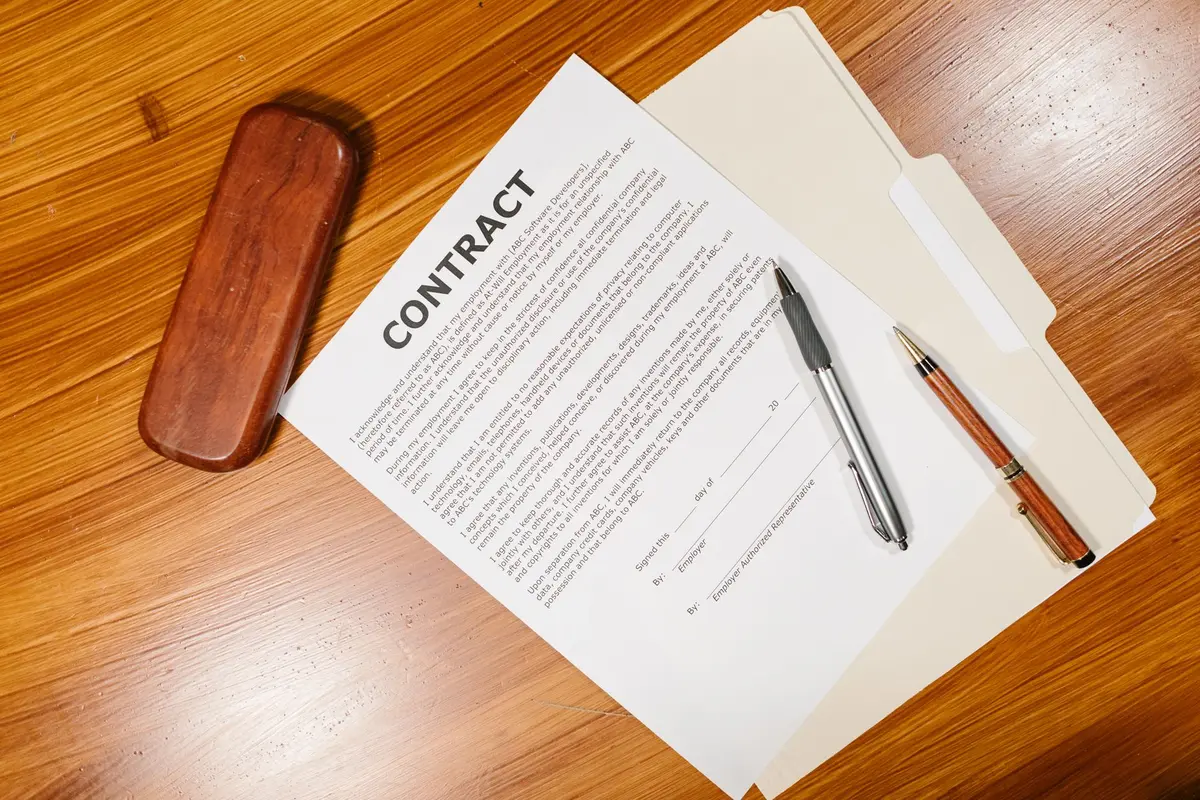
What an AI back office administrator does all day

A back office administrator spends their day on routine, repetitive tasks: capturing receipt data into expense forms, updating vendor details in your ERP, comparing payroll reports to bank records, gathering figures into spreadsheets, filing documents, and following up on missing information. These tasks are perfect for AI automation. An AI worker takes receipt photos or PDFs, extracts dates and amounts using optical character recognition, enters them into your system, and files the documents automatically. Your administrator stays to review exceptions, approve mismatches, and sign off on reports.
In short
- An AI worker handles receipt capture, invoice entry, vendor updates, document filing, and payroll reconciliation; your administrator shifts to exception handling and approvals.
- The transition takes 8–12 weeks, starting with one low-risk task run in parallel, then broadening as confidence builds.
- Your staff stays to review flagged items, approve exceptions, manage vendor relationships, and sign off on compliance—especially critical in India for GST and TDS reporting.
- Risks include credential security, compliance blunders, and vendor fraud; mitigate by starting small, keeping a human in the loop, and logging all actions.
- Automation is not worth it if your volume is very low (
What a back office administrator does all day
The work looks simple but takes up most of the day. A back office administrator typically handles six to ten recurring tasks, all manual:
- Expense report entry: collecting receipts from employees, reading amounts and dates, typing them into an expense form or spreadsheet, matching them to accounts or cost centers.
- Receipt filing: scanning or photographing receipts, naming them consistently, storing them in a folder or document management system so they can be found later for audit.
- Vendor master data updates: entering new vendor names, addresses, bank account details, and tax IDs into the ERP system when a new supplier is added, or changing existing records when a vendor moves or changes their payment method.
- Payroll reconciliation: comparing the payroll register (who was paid how much) against bank statements, timesheets, and general ledger postings to ensure no errors or duplicate payments.
- Invoice data entry: reading invoices from email or paper, typing line items, amounts, dates, and vendor details into the accounting system.
- Report compilation: pulling data from multiple sources—the ERP, a spreadsheet, email attachments—and assembling it into a monthly or weekly report.
- Follow-up: chasing missing receipts, incomplete vendor forms, or unapproved timesheets via email or chat.
- Bank reconciliation: matching deposits and withdrawals in the bank statement to entries in the accounting records.
These tasks are not complex, but they are precise, repetitive, and time-consuming. Each task involves reading, typing, checking, and filing. A single person might spend 20–30 hours a week on these eight activities alone, leaving little time for problem-solving or relationship-building with vendors or employees.
Which tasks the AI worker takes over, and what it needs
An AI automation worker takes on nearly all of the data entry and filing work. Here's how it works task by task:
Expense report entry from receipt capture
An employee submits a receipt as a photo or PDF, either by email, WhatsApp, a mobile app, or a web portal. The AI worker uses optical character recognition (OCR) to extract the merchant name, date, amount, and GST (if present). The system stores this extracted data in structured format and automatically enters it into your ERP system or accounting software—QuickBooks, Tally, SAP, or NetSuite. If the amount is unclear or the vendor is missing, the system flags it for your administrator to review. No manual typing needed.
Receipt and document filing
Once the OCR extract is complete, the system automatically renames the receipt file with a consistent naming convention (vendor name, date, amount) and files it into the appropriate folder in your document management system or cloud storage. The document becomes searchable and audit-ready. Your administrator no longer spends time manually filing or hunting for receipts.
Vendor master data updates
When a new vendor is added or an existing record needs updating, your staff submits a form (via email or a portal). The AI worker extracts the information—name, address, bank account number, tax ID—and enters it into the ERP's vendor master record. Before posting, it validates the data: checking for duplicate names, confirming the tax ID format, and flagging suspicious entries for review. If a vendor's bank details change mid-month, the AI worker flags it for confirmation before processing the next payment.
Payroll reconciliation
The payroll register is exported from your HR system. The AI worker compares each employee's gross pay, deductions, and net pay against the previous period, flags changes, and matches the total payout to your bank statement. It cross-checks that all employee tax IDs, banking details, and status changes are recorded. Discrepancies—such as a payment that was posted twice, or an employee who should have been removed from payroll—are flagged for your accountant to review and approve.
Invoice data entry
Invoices arrive in your inbox as PDFs or email attachments. The OCR system reads the invoice, extracts the vendor name, invoice number, date, amount, and line items. It then attempts to match the invoice to a purchase order in your system. If matched, it auto-routes to approval. If unmatched or if the amount is outside normal range, it queues for human review. The data flows directly into accounts payable, eliminating re-typing.
Report compilation
Your administrator defines a report template once (e.g., daily expense summary, weekly vendor aging, monthly balance sheet). The AI worker queries the ERP or accounting system on schedule, pulls the required figures, and populates a dashboard or spreadsheet. The report is ready for review and sign-off, not assembly.
Bank reconciliation
The AI worker downloads the bank statement and compares each transaction to the general ledger. It matches cleared items, flags outstanding checks and deposits, and identifies reversals or duplicates. Any item that doesn't match is flagged for investigation.
What the system needs to connect
To run this automation, the AI system needs secure access to:
- Email inboxes (for receipts and invoices)
- Your ERP or accounting software (Tally, SAP, NetSuite, QuickBooks, or similar)
- Cloud storage or document management (Google Drive, Microsoft OneDrive, SharePoint, or a dedicated system)
- Your bank account (read-only, via secure API)
- WhatsApp or Slack (if receipts arrive through these channels)
- Your payroll system (if separate from HR software)
All data moves through encrypted channels and is logged for audit compliance.
What stays with a person, and why
Not everything is automated. Your administrator's role shifts to oversight and exception handling:
- Review and approval: The administrator checks flagged exceptions—unusual amounts, new vendors, duplicate records—and decides whether to approve or ask for more information.
- Judgment calls: If a receipt is ambiguous (amount is illegible, vendor name is spelled two ways), or if an invoice amount is 15% higher than usual, a person decides what to do.
- Vendor relationships: Phone calls with suppliers about payment delays, new account details, or compliance questions still require a human.
- Sign-offs and compliance: Bank reconciliations, payroll reports, and journal entries must be reviewed and signed off by your accountant or finance manager. Regulatory compliance in India (GST reconciliation, TDS (Tax Deducted at Source) reporting, and labor law compliance) still require human judgment and sign-off.
- Exception handling: If a vendor's name appears three different ways in your system, or if the AI cannot extract a date from a blurry receipt, your administrator triages and corrects it.
- Problem-solving: If a payment fails or a reconciliation doesn't balance, your staff investigates and resolves it.
The person no longer types. They think, decide, and manage.
How this role differs by business type
| Business type | What the administrator does that is specific | What the AI worker handles |
|---|---|---|
| Accounting and bookkeeping firm | Manages clients' books, reconciles their accounts, prepares tax documents, ensures GST compliance. Works across multiple client ERP systems and formats. | Receipt capture for all clients, invoice entry into client systems, bank reconciliation, GST-eligible expense flagging, journal entry templates |
| Manufacturing | Tracks purchase orders against invoices, manages inventory, checks quality certifications, maintains bill-of-material (BOM) records, reconciles inter-company transfers. | Invoice-to-PO matching, three-way matching (invoice vs. PO vs. goods receipt), duplicate payment detection, vendor master updates with compliance docs |
| Retail and e-commerce | Handles vendor payments, tracks sales returns, manages refunds, reconciles online payment processors (cards, UPI, PayPal), updates inventory receipts. | Return processing from order systems, refund tracking, payment processor reconciliation, order-to-invoice matching, inventory adjustment receipts |
| Healthcare and diagnostic center | Processes patient billing and insurance claims, reconciles provider payments, maintains patient records, ensures compliance with healthcare regulations and HIPAA-like privacy rules in India. | Claim form data entry from patient documents, insurance verification, patient billing from lab reports, reconciliation of provider payments |
| Professional services (law, consulting) | Bills clients by project and resource, tracks time entries, reconciles billable vs. non-billable hours, manages trust accounts (for law firms), prepares fee agreements. | Time entry validation against project master, billable rate application, invoice generation from billable hours, expense categorization by project |
| Financial services (NBFC, insurance) | Manages loans or policies, tracks premium collections, reconciles customer payments, maintains policy master records, ensures RBI or IRDA compliance. | Premium collection reconciliation, policy data entry, payment allocation to loans or policies, compliance data extraction and flagging |
How the switch happens: week by week
You don't fire your administrator and switch on the AI. The transition is gradual, and your staff stays in control.
Week 1–2: Setup and parallel running
The AI system is configured: connected to your email, ERP, bank account, and document storage. A small, low-risk process is chosen first (e.g., receipt filing). Your administrator continues to do the work manually while the AI runs in the background, learning and logging every action. Results are compared daily. No expense is posted yet.
Week 3–4: Audit and trust-building
The AI's extracted data is reviewed against the manual records. If accuracy is 95% or higher, one or two simple tasks (such as receipt filing or vendor duplicate detection) go live. The AI handles them; your administrator reviews the results once a day and approves or corrects any errors. This builds confidence.
Week 5–8: Broader automation, all with review
More tasks move into the AI: invoice data entry, simple expense reports, payroll pre-reconciliation. The administrator's daily job shifts from doing the work to spot-checking the AI's output. They approve batch jobs, flag exceptions, and resolve problems. They spend 2–3 hours a day on review instead of 6–8 hours on entry.
Week 9–12: Role redefinition
The administrator becomes the exception handler and approver. Routine tasks run automatically on a schedule. They check a dashboard each morning showing flagged items, approve exceptions, handle vendor calls, and manage compliance reviews. They attend a weekly meeting with the finance manager to review any unusual patterns the AI has logged.
Beyond Week 12: Ongoing refinement
The administrator's hours drop. If the business was spending 40 hours per week on back-office tasks for one person, it may now take 10–15 hours per week to review and sign off. Depending on the size of the business, you may reduce headcount, redirect the person to other work (vendor negotiation, process improvement, financial analysis), or keep them to handle exceptions and growth.
Throughout this transition, all output is logged and traceable for audit. Nothing runs without a paper trail.
Risks and when NOT to automate this role
Automation is powerful, but it is not risk-free. Here are honest scenarios where it won't work or will cause problems:
Risks of automating this role
- Data security: The AI system must connect to your bank account, ERP, and email. If credentials are compromised, a bot can transfer funds or corrupt records. Strong access controls, encrypted credentials, and audit logging are non-negotiable. Most reputable automation platforms use OAuth or API keys, not stored passwords.
- Compliance blunders: In India, GST, TDS, and labor law compliance are strict. If the AI incorrectly categorizes an expense or flags the wrong transactions, your compliance reporting will be wrong. An approval step by a qualified accountant is essential; you cannot skip sign-off.
- Garbage in, garbage out: If your vendor master is already messy (duplicate vendors, inconsistent names), the AI will amplify the problem. A cleanup project before automation is wise.
- Loss of context: The AI reads the amount and date but doesn't know that a ₹50,000 expense for a vendor you haven't used in two years is unusual. Your administrator's judgment is still needed.
- Vendor bank details: If a vendor's bank account is compromised and a fraudster updates the vendor record in your system, the AI might happily post payment to the wrong account. Segregation of duties (one person adds the vendor, another approves the update) is critical.
When NOT to automate this role
- Extremely low volume: If your business processes fewer than 20 expenses or 30 invoices per month, the cost and complexity of setup will not pay off. Manual work is still faster.
- Highly unstructured documents: If most of your invoices are handwritten, in multiple languages, or from informal vendors with no standard formats, OCR will struggle. Training an AI system to handle this takes time and money.
- No ERP or accounting system: If your business runs on loose spreadsheets and no integrated system, automation won't help much. You'll need a system first.
- Frequent, unpredictable exceptions: If every invoice has a twist (custom discounts, unusual tax treatment, cross-border rules), the AI will flag almost everything for review. You'll spend as much time reviewing as you would have typing.
- Highly regulated, audit-heavy environment: If your business is subject to frequent audits or regulatory inspections, and your auditors want to see a human's handwriting or sign-off at each step, pure automation may not satisfy them. Hybrid approaches (AI does the work; a person reviews and approves) are safer.
Best practices to mitigate risk
- Start small: Pick one task, run it in parallel with manual work for 4–6 weeks, and verify accuracy before expanding.
- Segregate duties: The person who approves expenses should not be the only one with access to the automation system. Someone else should audit the logs monthly.
- Keep the human in the loop: Set an approval threshold. Expenses under ₹10,000 might auto-post; above that, they wait for sign-off.
- Log everything: Every action by the AI should be timestamped and recorded, so you can trace what happened if a mistake occurs.
- Review exceptions regularly: The AI will flag problems. If the same exception shows up every week (e.g., a vendor name mismatch), that is a signal to update your master data.
How AiStaffo would automate this
AiStaffo designs an AI back office administrator for your finance team. We connect the AI to your email inbox, ERP (Tally, SAP, NetSuite, QuickBooks), bank account, and document storage. The AI captures receipt images via email or WhatsApp, extracts dates and amounts using OCR, enters them into your accounting system, and files documents automatically. It updates vendor records, validates payroll figures against bank statements, and compiles reports from multiple sources. Your administrator continues to review exceptions, approve unusual transactions, and sign off on compliance work—keeping full control and audit readiness. We run the system with encrypted access, full logging, and approval workflows so nothing bypasses oversight. Your staff shrinks from data entry work to high-value review and decision-making within 8–12 weeks. Book a free automation audit.
Questions people ask
Will the AI see our sensitive banking information and vendor passwords?
What if a receipt or invoice is in Hindi or a regional language, or handwritten?
What happens if the AI makes a mistake, like posting an expense to the wrong account?
Can the AI handle our existing vendor fraud detection or compliance checks?
How long will it take to see a return on investment?
Book a free automation audit
Thirty minutes. We look at one process you run every week and tell you exactly what an AI worker would take off your desk, and what it would not.