AI transaction coordinator: automate from contract to close

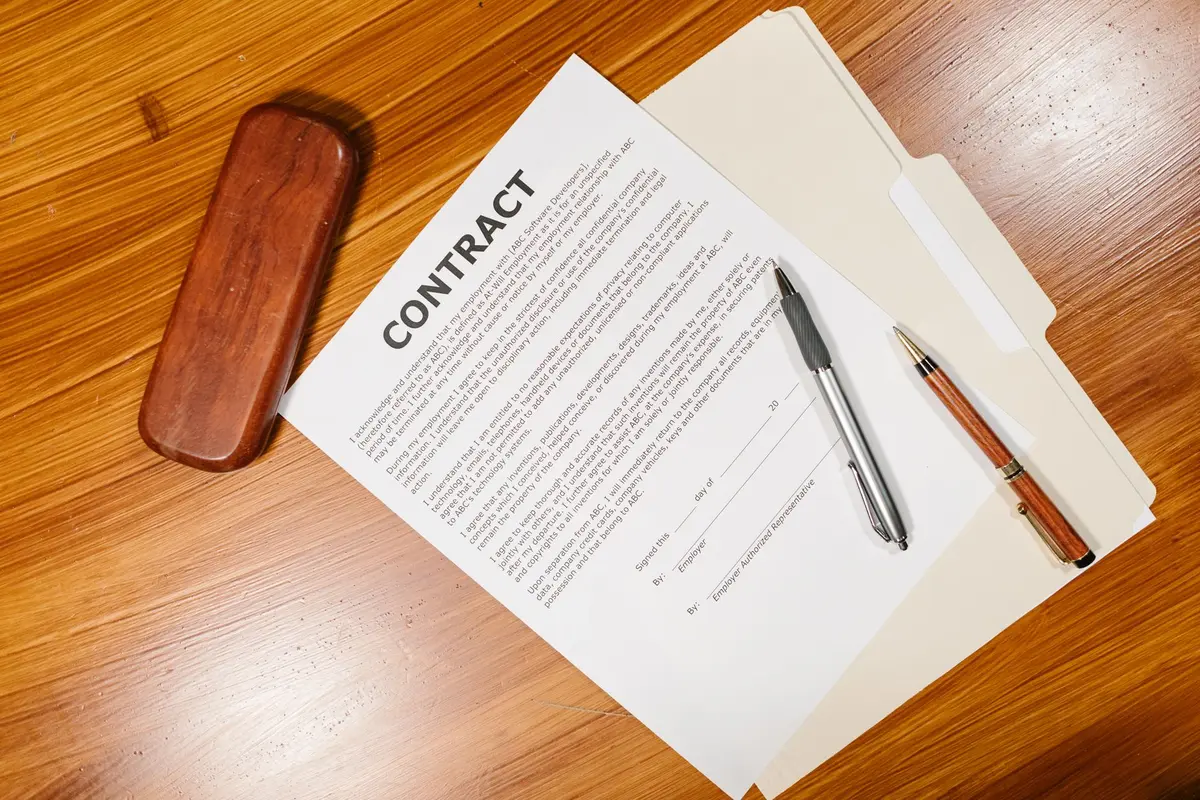
An AI transaction coordinator tracks every deadline, reminds the right people at the right time, and routes exception cases back to your staff. It reads contracts and emails, extracts critical dates (inspection deadlines, appraisal due dates, title commitment arrivals), maps task dependencies, triggers reminders days before contingency windows close, and flags missing documents or title issues before they become closing-week emergencies. Your human coordinator reviews exceptions and makes judgment calls—the rest runs on its own, saving 10 to 20 hours of manual chasing per file.
In short
- An AI worker automates document filing, deadline tracking, status email campaigns, and closing checklists, while the coordinator handles negotiations, exceptions, and client relationships.
- Most residential closings take 30–45 days; the AI extracts all critical dates from contracts and sends alerts 5 days before each deadline, shifting reminders if dates change.
- Start with a 6-week parallel run where the AI takes one task category per week while the coordinator watches for gaps; only then does the AI take full ownership.
- Commercial and estate transactions are more complex and less routine, so they benefit less from generic automation; residential high-volume brokerages see the most time savings.
- Risks include missed deadlines due to poor contract language, over-automation of exceptions, and slow adoption—mitigate by spot-checking deadlines weekly and running a careful rollout.
What a transaction coordinator actually does all day: the main recurring tasks
A transaction coordinator spends most of their time on work that repeats identically across every deal: checking that documents have arrived, updating tracking spreadsheets or databases, placing follow-up calls and emails, and watching the calendar for looming deadlines.
These are the six to ten recurring tasks that fill a coordinator's day:
- Document arrival and filing. Waiting for and logging purchase agreements, appraisals, title commitments, inspection reports, insurance binders, loan approvals, closing disclosures, and addenda. Moving them into the right folder, updating a status checklist.
- Deadline tracking and reminders. Day 1: earnest money and title. Day 10: inspections done. Day 25: clear to close. Manually checking a spreadsheet each morning or using calendar reminders to flag inspection periods, appraisal deadlines, contingency removal windows, and financing cutoff dates. Alerting the agent if a date is approaching.
- Status calls and follow-up emails. Calling the lender weekly to ask if underwriting is on schedule, emailing title to ask if the preliminary report is ready, texting the inspector to confirm appointment times, checking in with the seller's agent about repair completion.
- Title review and exception tracking. Reading the preliminary title report when it arrives, identifying liens or exceptions, logging them in a tracking sheet, following up with title on when they will be cured, confirming resolution.
- Loan and appraisal monitoring. Tracking which lender conditions are still open, requesting loan status updates, watching for appraisal results, flagging low appraisals that could affect the deal.
- Inspection coordination and renegotiation. Scheduling the inspection appointment, obtaining the report, compiling any repair requests, negotiating repair scope with the other side, tracking repair deadlines, confirming completion before closing.
- Closing disclosure and final walkthrough logistics. Ensuring the buyer receives the closing disclosure 3 business days before signing, scheduling the final walkthrough, confirming funds are ready, organizing closing day details.
- Wire transfer and funds instruction. Collecting wire instructions from the buyer, confirming bank and account details, verifying amounts, sending final wire instructions to the title company or escrow officer, confirming receipt of funds the morning of closing.
- Post-closing file assembly. Collecting signed closing documents, uploading them to the broker file, organizing the file for compliance, requesting client feedback, scheduling follow-up calls 30, 90, and 120 days after closing.
- Communication routing. Forwarding messages between agents, clients, title, lender, and inspector so nothing gets lost in separate email threads or inboxes, keeping everyone on the same page about deadlines and status.
Which of those tasks an AI worker takes over, task by task
An AI worker reads the documents and emails that flow through a transaction, extracts the dates and parties, and automates most of the tracking and reminding. Here is what each category becomes:
- Document arrival and filing. The AI worker scans incoming emails from title, lender, inspector, and appraiser. When a document arrives (contract, appraisal, inspection report, title commitment, closing disclosure), it automatically logs it, moves it to the correct folder in your document system (Google Drive, OneDrive, SharePoint, or a real estate platform like Dotloop, Nekst, or ListedKit), and updates the master checklist. No manual filing. Status is live.
- Deadline tracking and reminders. The AI worker reads the purchase agreement and extracts all critical dates: contract execution date, inspection period end date, appraisal due date, title commitment due date, loan approval deadline, and closing date. It creates a timeline, sets reminders 5 days before each milestone, and sends an alert email or task notification to the coordinator or agent when a deadline is 72 hours away. When one date shifts (closing is extended 10 days), all downstream reminders shift automatically.
- Status calls and follow-up emails. Instead of placing 6 to 8 routine status calls per file, the AI worker sends templated follow-up emails on a schedule: to the lender on day 3, day 10, and day 20; to title the day after contract; to the inspector to confirm the appointment. Responses are logged. If a response is missing after 2 days, the AI flags it for your coordinator to follow up by phone. Routine chasing is automated; exceptions surface to a person.
- Title review and exception tracking. When the preliminary title report arrives, the AI worker reads it, identifies any exceptions (liens, easements, encroachments), logs them in your transaction file or system, and alerts your coordinator. Your coordinator reviews and decides how to handle each exception; the AI then tracks the cure deadline and status until resolution.
- Loan and appraisal monitoring. The AI worker watches for appraisal and loan status emails and extracts key information: appraisal value, appraisal condition code, underwriting conditions, appraisal deadline. It triggers a reminder to the coordinator if an appraisal comes in below purchase price or if an underwriting condition requires urgent documentation. Low appraisals are flagged immediately.
- Inspection coordination and renegotiation. The AI worker confirms the inspection appointment, requests the inspection report when due, and logs repair findings from the inspection report into a repair log. It tracks the negotiation deadline and repair deadline. Your coordinator handles the negotiation conversation; the AI tracks the repair completion deadline and confirms when repairs are done.
- Closing disclosure and final walkthrough logistics. The AI worker ensures the buyer receives the closing disclosure and sets a reminder for 3 business days later (the soonest the buyer can sign). It schedules the final walkthrough email request, confirms the appointment when booked, and sends a final checklist to both parties the day before closing (funds confirmed, documents in order, wire instructions sent).
- Wire transfer and funds instruction. The AI worker collects wire instruction forms from the buyer (via email or a form link), extracts the bank details, and stores them securely in the transaction file. It confirms the wire amount against the closing disclosure, flags any discrepancies, and sends a pre-closing reminder to both parties that wire instructions are confirmed and funds are expected on closing day.
- Post-closing file assembly. The AI worker collects and organizes all signed closing documents into a broker-ready file, tags documents by category (deed, note, mortgage, closing disclosure, title policy), and prepares a compliance checklist. It triggers a 30-day follow-up task for your coordinator to call the client about any post-closing questions.
- Communication routing. The AI worker monitors all incoming emails from all parties to a shared transaction inbox or email address, extracts action items and deadlines, and logs them in the transaction record. No message gets missed or buried in a thread.
To do this work, the AI worker needs access to: the shared transaction inbox (Gmail, Outlook, or Exchange), the document repository (Google Drive, OneDrive, SharePoint, or Dotloop/Nekst/ListedKit), the transaction tracking spreadsheet or database, and the calendar or task management system (Google Calendar, Outlook Calendar, or Asana). It also needs to read and extract from PDF documents (purchase agreements, appraisals, inspection reports, title commitments).
What stays with a person, and why
Not everything can or should be automated. Some tasks require judgment, relationship management, regulatory sign-off, or negotiation.
- Judgment on title exceptions and legal issues. When a lien, easement, or encroachment surfaces on a title report, a person must decide: is this acceptable, does it need to be cured before closing, or do we waive it? The AI can flag it; the coordinator or attorney must decide. Same for any unusual contract language or contingency interpretations.
- Negotiations on repair scope and cost. When an inspection uncovers roof damage or foundation issues, the buyer may request repairs, a credit, or a price reduction. The agent or coordinator must negotiate the final resolution. The AI tracks the deadline and reminds, but a person handles the conversation.
- Client relationship and exception management. If a buyer's loan is denied at the last minute or a title issue arises, a person must speak to the client, explain the problem, and discuss next steps. This is not a task for an automated email.
- Regulatory and compliance sign-off. In some states, attorneys must review contracts or closing documents. Brokers must sign off on files for compliance. These require human authority and professional judgment.
- Coordination of external parties who are not responsive. If a lender is slow, a title company misses a deadline, or an appraiser doesn't show up, a person may need to escalate the problem, place an urgent phone call, or explore alternatives. Automated reminders help, but escalation and problem-solving are human responsibilities.
- Final closing coordination and signing. The closing table itself requires a person (often the closer or attorney). Wire transfers may need to be authorized by management. Post-closing follow-up conversations with clients are relationship work.
How this role differs by business type
The recurring tasks look similar across residential brokerages, but the specific work and tools vary by business model.
| Business type | What the transaction coordinator does there that is specific | What the AI worker handles |
|---|---|---|
| Residential real estate brokerage (1099 independent agents) | Most buyers close in 30–60 days after the offer is accepted when financing is involved. The timeline depends on inspections, appraisal, title work, and lender underwriting. TCs coordinate multiple agents' files, manage MLS updates, track earnest money deposits, schedule inspections across different days, and communicate with various lenders and title companies. High volume, time-sensitive. | Automates deadline tracking for 20+ open files, reminder emails to lenders and title companies, appraisal and inspection report logging, wire instruction collection, and compliance file organization. Handles the repetitive parts of multi-file coordination. |
| Residential real estate team (employed agents under a managing broker) | Similar to above, but TCs also manage team calendars, coordinate internal handoffs (buyer's side TC, seller's side TC), manage team marketing tasks, and submit files to the broker for compliance approval. More internal coordination; fewer parties per file. | Automates deadline tracking, internal email alerts to the managing broker, task assignments for team members, file submission readiness checklists, and post-closing file assembly for broker review. |
| Commercial real estate brokerage | A commercial real estate closing checklist is substantially longer. Environmental assessments, zoning compliance reviews, lease abstracts for tenant-occupied properties, and entity documentation for corporate buyers are all part of the process. The due diligence period in a commercial transaction is often 30 to 60 days on its own before underwriting even begins. TCs manage longer timelines, more parties, and more specialized documents. Often one deal per coordinator per quarter. | Automates extraction of due diligence deadlines, environmental report tracking, lease review logs, entity document collection, and lender/attorney progress tracking across months-long cycles. Reduces coordinator time on routine status checks. |
| Title company or escrow office | TCs (called closing coordinators) schedule closings, organize closing documents, confirm funds 24 hours before signing, and coordinate the closing table itself. Work is concentrated in the final 7 to 10 days of a transaction; earlier work is done by the agent or broker. | Automates closing schedule confirmations, final checklist generation, funds confirmation emails to buyer/lender, and post-closing document distribution. Reduces manual phone calls in the closing week. |
| Mortgage broker or loan officer team | TCs track loan application milestones, appraisal orders, underwriting conditions, rate locks, and clear-to-close status. They collect missing documents from borrowers, chase appraisals, and coordinate with real estate agents' TCs. Work is heavily underwriting-focused. | Automates appraisal order tracking, underwriting condition logs, document request reminders to borrowers, and lender condition status alerts. Reduces manual chasing of missing payoff statements, title insurance, and verification documents. |
| Law firm handling real estate closings or estate settlements | TCs (often paralegals or legal assistants) prepare legal documents, track title requirements, manage lien release and payoff coordination, and organize closing documents for attorney review. Work is more document-heavy and legally specific. | Automates lien research logs, payoff statement tracking, document status updates from title company, and legal compliance checklist tracking. Assists paralegals with routine status tracking, not legal advice. |
How the switch happens: week by week
The safest way to introduce an AI worker into a transaction coordinator role is to run both in parallel for 4 to 6 weeks. The human coordinator stays in place; the AI takes on one task category per week, and the coordinator watches for gaps or mistakes. Only once the AI is reliable does it take full ownership.
Week 1: Document arrival and filing. The AI worker begins monitoring the shared transaction inbox and automatically files incoming documents (contracts, appraisals, reports) into the correct folders. Your coordinator still manually logs them in the checklist. At end of week, compare the AI's filing against the coordinator's log. If they match, the AI is working.
Week 2: Deadline extraction and reminders. The AI worker reads all open contracts and extracts key dates. It creates a master deadline reminder list and sends email alerts for deadlines 5 days out. Your coordinator still does their manual deadline review and calendar check. At end of week, compare the AI's extracted dates against the contract language. Check if the coordinator caught any deadline the AI missed. If accuracy is 98%+, move on.
Week 3: Status email campaigns. The AI worker begins sending templated follow-up emails on a schedule (lender on day 3, title the next day, appraiser on day 15). Your coordinator still makes the important phone calls. Log how many responses come back to the AI inbox within 24 hours. If more than 60% of routine requests get answers without a phone call needed, the AI is working.
Week 4: Title review and exception logging. When a preliminary title report arrives, the AI worker reads it, identifies exceptions, and logs them. Your coordinator reviews and decides on each exception as before. By now, the AI is handling title document arrival and parsing; the coordinator handles exception decisions and cure negotiations.
Week 5: Full deadline and reminder automation. Your coordinator now relies on the AI reminders instead of their own calendar checks. The AI is sending all routine status emails. Your coordinator focuses on non-routine calls: escalations, exceptions, client relationship issues. The AI is handling about 60% to 70% of the coordinator's former day.
Week 6: Closing disclosure and file assembly. The AI worker automates the final checklist, final walkthrough scheduling, wire instruction collection, and post-closing file organization. Your coordinator reviews the final checklist before closing and handles any missing items or client questions.
Week 7 onward: Steady state. Your coordinator is now a reviewer and exception handler, not a task executor. They review the AI's deadline calendar each Monday, flag any deals that need direct attention, handle negotiations and client calls, and sign off on closing files before the title company receives them. The AI does the routine work; the coordinator does the exception work and relationship work. Your coordinator handles 60% to 70% fewer manual tasks per file and can take on more files or focus on high-touch client management.
Risks and when NOT to automate this role
Automation is powerful in this role, but it is not right for every situation.
When NOT to automate:
- Highly unusual or custom deal terms. If your business specializes in 1031 exchanges, estate sales, relocation deals, or other non-standard closings, the contract language and deadlines are often unique to each deal. Generic deadline extraction will fail. A person must still read and interpret each contract. Automation works better for high-volume, standardized residential transactions.
- Short timelines and urgent circumstances. Cash deals close in 14-21 days. In a cash deal with 14-day close, there is no room for the AI to miss a deadline or send a delayed reminder. The coordinator must be hyper-responsive. Automation can support this, but the human cannot take their eye off the ball. For a business that runs 80% cash deals, the time savings from automation are smaller.
- Unclear or poor-quality contract documents. If a purchase agreement is missing key dates (no inspection deadline listed, no financing contingency end date), an AI cannot extract what is not there. A person must read the contract and infer the deadline from local law or standard practice. If your market is known for incomplete or non-standard contracts, the AI will need heavy coordinator oversight.
- Highly personal client relationships. If your clients expect frequent personal calls and updates from their coordinator (not just automated emails), then you are paying the coordinator for relationship work, not task work. Automation addresses the task overhead, not the service expectation. Client expectations must shift for automation to pay off.
- Regulatory or legal complexity. If your state requires attorney review of every contract, or your brokerage has strict compliance review workflows, then the AI can automate the assembly of documents and the tracking of review status, but a person must still do the legal review. The value of automation here is smaller than in a simpler regulatory environment.
Risks to manage:
- Missed or misread deadlines. If the AI misinterprets a contingency deadline or the contract language is ambiguous, a date can be missed. Mitigate: have the coordinator spot-check the AI's deadline list against the contract every Friday. Use a 3-day buffer for critical deadlines (remind 3 days earlier than the minimum legal window).
- Over-automation of exceptions. The AI might send a routine reminder to a lender that is already in exception management. A person must still decide when a situation is no longer routine. Mitigate: the coordinator reviews the exception flag report weekly and manually pauses routine reminders for deals in active exception mode.
- Email overload. If the AI sends too many reminders or the coordinator is not trained to ignore routine alerts, email noise can grow. Mitigate: design the system to send weekly summary emails to the coordinator, not daily task updates. Let the coordinator pull details when needed.
- Slow or incomplete adoption. If the coordinator doesn't trust the AI or continues to do all the old tasks in parallel, the time savings never appear. Mitigate: run the 6-week parallel period. Build confidence. Measure time saved explicitly (track hours before and after by file).
- Tool integration failures. If the AI cannot read documents from your specific document platform, or if reminders don't sync to your calendar, the system breaks. Mitigate: test the AI on your existing tech stack before full rollout. Ensure API integrations (email, document storage, calendar) are live and reliable.
The role of transaction coordinator is ideal for AI automation because it is 70% to 80% routine, repeatable, deadline-driven work. The remaining 20% to 30% (judgment, negotiation, exceptions, relationships) stays with the person. When that balance is respected, automation gives the coordinator back 15 to 20 hours per week per transaction, and the business closes more deals on time with fewer errors.
Sources
- What Is A Transaction Coordinator? (With Duties And Skills) | Indeed.com India
- Real Estate Transaction Coordinator Job Description
- Real Estate Transaction Coordinator Job Description (Updated 2026 With Examples) | ACC
- The Real Estate Transaction Coordinator Checklist
- Real Estate Transaction Coordinator: Your Transaction Guide | Wise Pelican
How AiStaffo would automate this
AiStaffo designs AI workers that sit inside your email and document systems and handle the routine parts of transaction coordination automatically. The AI reads incoming contracts, appraisals, title reports, and inspection documents; extracts every critical date; and sends deadline reminders to the right people days before contingency windows close. It logs documents in your folders, collects wire instructions, and assembles the compliance file, so your human coordinator spends their time on negotiations, exceptions, and client conversations instead of chasing status updates and emails. Your coordinator reviews the AI's work and makes judgment calls; the AI does the repetitive execution. The result: 15 to 20 hours saved per transaction, fewer missed deadlines, and the ability to handle more files with the same team. Book a free automation audit to see which tasks in your transaction workflow can move to the AI worker.
Questions people ask
How does the AI extract deadline dates from a real estate contract?
Can the AI handle contracts with non-standard terms or unusual contingencies?
What happens if a deadline is missed despite the AI's reminders?
Does the AI replace the transaction coordinator, or does the coordinator still have a job?
How do I know if the AI is working correctly during the rollout?
Can the AI send messages to parties (lender, title, inspector) or does it only alert my coordinator?
Book a free automation audit
Thirty minutes. We look at one process you run every week and tell you exactly what an AI worker would take off your desk, and what it would not.