AI automation for law firms and legal practices

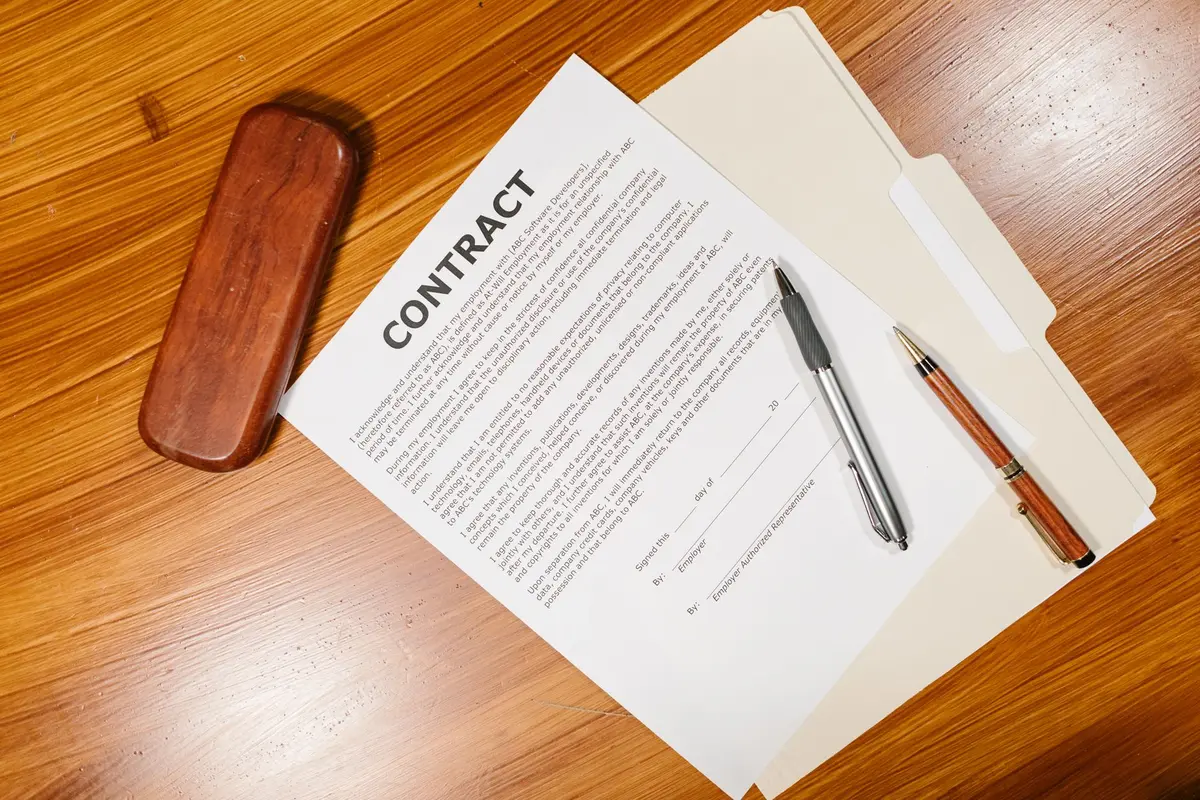
AI automation for law firms takes over document assembly, contract generation, discovery response drafting, intake form population, and routine pleading preparation. Associates and paralegals spend less time on template-based copying, clause hunting, and manual data entry. AI reads unstructured intake data, extracts relevant terms, populates approved templates, and flags gaps for human review. The work stays billable or accurate, but fewer staff hours disappear into repetitive drafting. Firms reduce mistakes from manual transcription and deliver consistent documents to clients faster.
In short
- AI automation handles routine document assembly, contract generation, discovery responses, and intake form population—work that consumes 60% of paralegal and associate time on tasks requiring reading and extraction, not judgment.
- The safest transition keeps staff in place, runs AI alongside the old process for 4–8 weeks, then shifts roles from data entry to exception handling and review.
- Compliance is non-negotiable: verify all AI outputs for accuracy, use only tools with strict confidentiality and data privacy guarantees, and follow your state bar association's ethics guidance.
- Contract libraries and templates are the foundation; without them, AI has nothing to work from. Build or audit your templates before you deploy.
What AI takes over in legal work
Law firms face a straightforward problem: associates spend hours assembling contracts by pulling clauses from prior deals, and paralegals copy client data from intake forms into templates, checking multiple times and still finding errors. This work is necessary, repetitive, time-intensive, and poorly matched to the expertise of the people performing it.
AI automation targets four high-volume tasks: contract and agreement drafting, discovery response preparation, client intake form completion, and routine pleading generation. These work because they follow templates with variable data.
AI drafting of routine instruments such as non-disclosure agreements, employment contracts, lease agreements, and corporate formation documents can reduce drafting time by as much as 70 percent according to internal assessments reported by several major firms. AI does not replace legal judgment. AI reads unstructured inputs, extracts relevant commercial terms, maps them to appropriate template fields, and flags gaps for human follow-up. A lawyer still reviews every substantive output.
Automation is especially valuable for high-volume document types such as engagement letters, fee agreements, disclosures, discovery requests, and standardized pleadings. AI scans and extracts an opposing counsel's discovery request and accurately populates a discovery shell, eliminating hours of manual copy, pasting and text formatting.
The full workflow: what happens when AI joins the team
A law firm's workflow runs intake → matter setup → drafting → review → client delivery → billing. AI changes what staff do at each stage.
Client intake and engagement: Today, a client calls or emails. A paralegal or secretary manually records matter details, copies information into multiple templates (engagement letter, conflict check form, trust account sheet), and verifies each field. With AI: AI-powered questionnaires collect the information needed to populate documents, replacing back-and-forth emails and manual data entry. The system automatically populates engagement letters, fee agreements, and disclosure forms. A paralegal reviews the outputs for accuracy and signs off. Less data entry, fewer calls to clarify missing information.
Contract drafting and generation: Today, an associate opens a Word document from the template folder, manually adjusts defined terms, searches prior deals for relevant clauses, reformats for the new jurisdiction. With AI: AI document automation software helps law firms quickly and easily create customized legal documents by using reusable templates, logic-based rules, and existing case data to automate routine drafting. The associate inputs key deal parameters. AI pulls approved language, adjusts jurisdiction-specific provisions, and generates a draft. The associate reviews for commercial terms and legal substance, not formatting or clause sourcing.
Discovery response: Today, a paralegal receives an opposing counsel discovery request. She creates a response shell manually, copying the original requests, numbering them, formatting responses, and inserting standard objections. With AI: Sophisticated AI scans and extracts an opposing counsel's discovery request and accurately populates a discovery shell, eliminating hours of manual copy, pasting and text formatting. The paralegal then reviews AI-populated responses, customizes them for the specific case, and confirms accuracy before transmission.
Pleading preparation: Today, a paralegal pulls court-approved forms, manually fills in party names, case numbers, and standard language, checks formatting against local rules, and reformats multiple times. With AI: Forms are converted to templates. The system auto-populates case metadata and generates compliant pleadings. The paralegal verifies jurisdiction-specific requirements and submits.
Review and billing: AI does not eliminate review. Every document AI drafts goes to a lawyer or senior paralegal for substantive approval. This human gate stays in place. The time saved is in the first pass and the iteration loop, not in sign-off.
Staff roles: today vs. with AI workers
| Role | What the person does today | What the AI worker takes over | What stays with the person |
|---|---|---|---|
| Paralegal | Drafting contracts from templates; conducting legal research; drafting pleadings, motions, and discovery responses; managing case files; interviewing clients; preparing for trial | Template population; clause insertion; discovery shell creation; form completion; initial document assembly; data extraction | Legal research; analysis of complex clauses; client strategy consultation; review and sign-off of all AI-drafted outputs; case management decisions; witness prep |
| Legal secretary | Scheduling; filing and document organization; managing correspondence; preparing documents like subpoenas and affidavits; communicating with clients; data entry | Data entry from client intake; document formatting; copying and reformatting documents; organizing case files from client-provided materials | Calendar and deadline management; court filing; client communication logistics; confidential matter tracking; office administration |
| Associate attorney | Contract drafting; contract review; legal writing; client counseling; due diligence review; discovery management | Routine contract assembly; standard agreement first drafts; boilerplate clause insertion; discovery request initial responses | Negotiation strategy; risk analysis; legal judgment on unusual clauses; client advice; case strategy; court representation |
| Senior paralegal or counsel | Supervising junior paralegals; quality control on drafted documents; client communication; case management | Front-line QA on routine templates; first-pass review automation flags | Complex case decisions; exceptions and unusual matters; client escalations; professional judgment; attorney supervision |
The 6 highest-value automations: effort vs. impact
| Automation task | Effort to implement | Impact (billable hours saved per year) | Most suited to |
|---|---|---|---|
| Client intake form automation | Low (3–4 weeks) | High (forms repeated across all clients) | Any firm size; immediate ROI |
| Contract template conversion and generation | Medium (4–8 weeks, depends on template library size) | High (applies to deals, NDAs, vendor agreements, engagement letters) | Firms with high-volume contract work; transactional practices |
| Discovery response automation | Medium (6–10 weeks to build question libraries and response playbooks) | High (discovery is time-intensive and repetitive across many cases) | Litigation practices; high-volume discovery environments |
| Court form and pleading generation | Medium (4–6 weeks per practice area) | Medium (forms vary by jurisdiction and practice area, but volume scales) | Solo and small firms in high-volume practice areas (family law, bankruptcy) |
| Contract review and risk flagging | High (8–12 weeks; requires extensive playbook and clause library tuning) | Very high (reduces associate hours on first-pass review; scales across matter portfolio) | Firms with large contract portfolios; corporate legal departments |
| Legal research memo automation | High (requires custom training on firm case law and local precedent) | Medium (research is boutique; tools serve specific practice areas well) | Firms with high-volume research requests in narrow practice areas |
Compliance and ethics: what the law requires
A law firm's duty to ensure AI use stays safe, ethical, and lawful means lawyers face an additional layer of accountability beyond data protection rules: the professional responsibility rules that govern conduct as officers of the court. Failing to meet those obligations can result in bar discipline, malpractice liability, and direct harm to clients. A firm must demonstrate that its use of AI tools remains consistent with ethical duties to clients, courts, and the bar.
ABA Formal Opinion 512 provides that lawyers using generative AI tools must fully consider their applicable ethical obligations, including their duties to provide competent legal representation, to protect client information, to communicate with clients, to supervise their employees and agents, to advance only meritorious claims and contentions, to ensure candor toward the tribunal, and to charge reasonable fees.
Three core rules apply globally:
- Competence. Rule 1.1's duty of competence requires legal knowledge, skill, thoroughness and preparation; supervision requires reasonable efforts to ensure that conduct is compatible with professional obligations. This means a lawyer must understand the AI tool's capabilities and limits before using it. Verify AI outputs for accuracy.
- Confidentiality. Confidentiality failures may expose clients to privilege waivers, cybersecurity risks, regulatory violations, and reputational harm. Unauthorized use of consumer AI platforms without organizational oversight presents a fundamentally different challenge, as legal departments may be unaware that confidential information, trade secrets, litigation strategy, or regulated data is being submitted to third-party systems. Use only AI tools that guarantee data privacy and are covered by your firm's confidentiality agreement with clients.
- Oversight. When AI chatbots deployed by law firms provide responses that could be misconstrued as legal advice without adequate attorney oversight, they can raise UPL concerns or attorney-client relationship misunderstandings. Lawyers deploying client-facing AI tools should ensure those tools are supervised, clearly scoped, and do not substitute for attorney judgment on matters requiring professional analysis.
AI tools, especially general tools, can fail to recognize regional laws or court formatting requirements. It is essential lawyers review any AI outputs to ensure these nuances are accounted for.
State bar associations of New York, California, and Florida have all recently published detailed guidance on how lawyers' ethical responsibilities intersect with their use of AI. Check your jurisdiction's bar association website for formal opinions applicable to your practice.
How the transition happens without disruption
The mistake firms make is replacing staff before proving the AI works. The right approach: staff stay, exceptions go to them, roles shrink to review.
Month 1–4: Parallel run. AI systems go live alongside the old process. A paralegal processes intake forms the old way and in the AI system at the same time. She compares outputs, flags errors, and trains the system. No one is displaced. The firm learns what the AI does well and where it breaks.
Month 4–8: Supervised handoff. AI now handles 80% of routine intake. New cases enter through the AI questionnaire first. Paralegals review AI outputs before the old method is used. Errors decrease. Processing time drops visibly. Staff see that AI removes busywork, not their jobs.
Month 8+: Role evolution. The paralegal who handled data entry now reviews AI outputs and escalates exceptions to the attorney. Her hours shift from copying to analysis. The role doesn't shrink—it changes. If the firm is growing, no one is laid off; the paralegal covers more cases. If the firm is stable, fewer paralegals are hired next year.
Paralegals and associates shift to higher-value tasks: analyzing flagged issues, exercising judgment on exceptions, and managing client relationships. Firms that deploy AI effectively retain talent by eliminating the work nobody wants to do.
Billing models matter. If the firm bills by the hour, AI saves time—and the firm must adjust expectations or reduce rates slightly on routine matters. If the firm works on fixed fees, AI improves margin immediately. Communicate the change to clients: deliverables are faster and more consistent, which benefits them.
Common mistakes
- Buying AI without templates. AI needs templates to work. If your firm has no contract library or discovery response shells, the AI cannot generate anything. Build your templates first, or have the vendor help. This takes 4–8 weeks and is not optional.
- Trusting AI outputs without review. Always verify the accuracy of the AI-generated output. AI can miss jurisdiction-specific requirements, insert inconsistent defined terms, or misunderstand context. Every document must be reviewed by a lawyer or senior paralegal before it leaves your office.
- Using general-purpose AI tools for legal work. ChatGPT, Claude, and Gemini can hallucinate, miss local court rules, and may log your input to train other users' systems. Use legal-specific AI tools that handle confidentiality and jurisdiction-specific requirements, or build custom integrations with privacy guarantees in writing.
- Deploying without a confidentiality agreement. Before you connect your practice management system, client database, or document repository to an AI tool, confirm in writing that the vendor will not use your data to train models or share it with other customers. Get a Data Processing Agreement (DPA) in place.
- Not setting clear role boundaries. If AI can handle 100% of a task, lawyers often assume paralegals are now redundant. In reality, exceptions always exist. A paralegal must remain in the loop to catch and escalate those exceptions, or compliance fails and errors reach clients.
- Ignoring state bar guidance. Your state bar association has issued guidance on AI use. Review it. Some states require disclosure to clients when AI is used; others set specific competence standards. Firms that ignore this end up in ethics complaints.
- Underestimating training time. Staff need to understand what the AI can do and what it cannot. They need to know how to spot an error. A 30-minute training is not enough. Budget for ongoing education as the tool evolves.
Sources
How AiStaffo would automate this
AiStaffo connects your practice management system, document templates, and client intake to an AI worker that handles document assembly, contract population, and discovery response drafting automatically. Intake data flows from your existing system straight into engagement letters and fee agreements without a paralegal copying fields. Contract templates are converted once; future deals populate in minutes. Discovery requests are scanned and shell responses generated, ready for your attorney to review and customize. All outputs stay within your firm's private environment; client data is never shared or used to train external models. Your paralegals and associates stay in place and shift to reviewing exceptions, analyzing complex clauses, and client strategy—work that draws on their expertise and billable judgment. You still review every document before it goes to a client or court. Book a free automation audit to map which documents in your practice would benefit most from this workflow.
Questions people ask
Will AI automation put paralegals and legal secretaries out of work?
Can I use ChatGPT or general AI tools for legal document drafting?
What is the risk if AI misses a clause or gets a term wrong?
Does my state bar require me to tell clients I used AI?
How long does it take to implement AI automation?
What happens if I don't use legal-specific AI and something goes wrong?
Book a free automation audit
Thirty minutes. We look at one process you run every week and tell you exactly what an AI worker would take off your desk, and what it would not.