AI automation for restaurants: order routing, inventory, scheduling
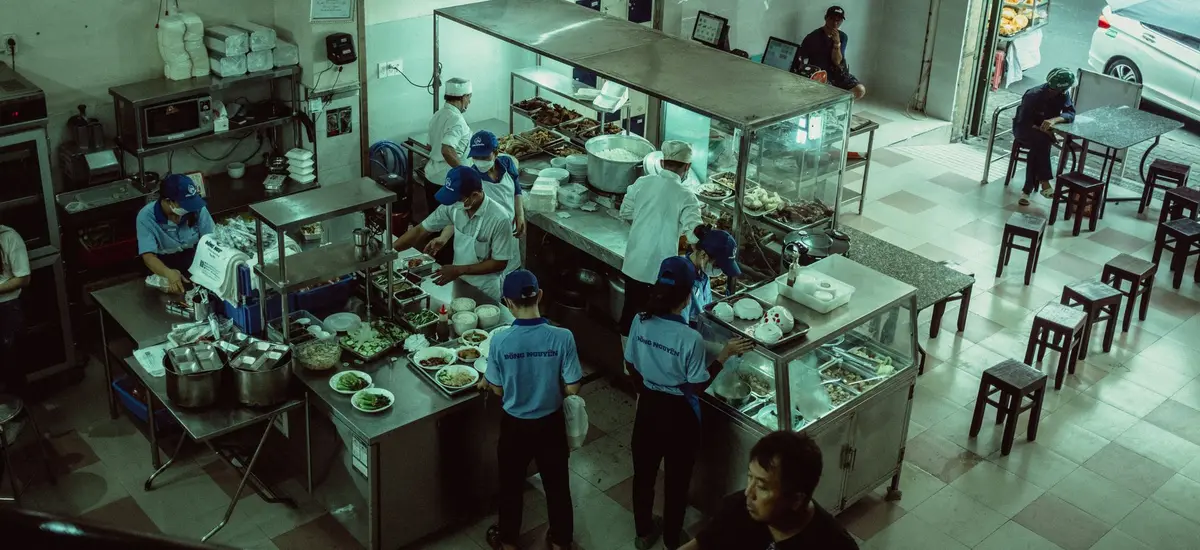
Restaurant automation connects your POS, delivery platforms, and kitchen operations into one workflow so orders route instantly to the right kitchen station, inventory depletes automatically as items sell, and staff schedules adjust to forecasted traffic. Automation moves data entry, order reconciliation, inventory counts, and labor adjustments from manual to automatic. A typical restaurant saves 15–20 hours per week of manager and kitchen staff time on these tasks, cuts food costs by 3–5%, and reduces order errors and missed deliveries.
In short
- Automation routes all orders from POS and delivery platforms to kitchen screens, eliminating manual order entry and coordination lag.
- Inventory tracking depletes stock automatically with each sale and flags reorder points, cutting food costs by 3–5% and saving 6–10 hours weekly.
- AI-powered labor scheduling predicts demand by daypart and builds optimal schedules 2–4 weeks in advance, cutting overstaffing and compliance violations.
- Multi-channel aggregation and real-time reconciliation save 4–6 hours of manager time per week on billing and exception handling.
- Most restaurants reach ROI within 3–6 months; implementation requires 90 days with data cleanup, staff training, and gradual rollout across shifts.
What automation actually does in a restaurant
Restaurant automation is not robots in the kitchen. It is software that connects the systems you already use—your POS, delivery platform integrations, supplier links, and labor tools—so that repeating tasks (order routing, inventory depletion, staff scheduling, billing reconciliation) run without daily human intervention.
In 2026, 52% of U.S. restaurants now use scheduling and forecasting automation, and 60% of North American restaurant groups embed AI-driven analytics directly in their POS platforms. Yet most restaurants still manually enter delivery orders into separate systems, count inventory by hand, and build schedules in spreadsheets. Automation closes these gaps.
The six highest-value automation processes
1. Automated order routing to kitchen stations
What staff do today: Servers or managers receive orders from POS, online channels, DoorDash, Uber Eats, and Grubhub. They print tickets or read them aloud. Cooks guess which station handles which item. Paper tickets get lost, handwriting is unclear, and during rushes, tickets back up.
What automation does: A kitchen display system (KDS) pulls orders from all channels in real-time and routes them to the correct prep station automatically. Burgers go to the grill station, fries to the fryer, desserts to cold prep. Orders appear with item modifiers, allergen flags, and time-sequencing so no dish sits waiting. Cooks see a visual queue; they swipe items as complete, and the system updates delivery time across all channels.
What data it needs: POS menu item codes linked to station names; delivery platform API credentials; kitchen station layout and equipment type.
What the owner still decides: Station assignments; which items cook in which sequence during high volume; priority rules (dine-in vs. delivery); when to alert staff about delays.
2. Automated inventory depletion and reordering
What staff do today: A manager counts inventory by hand (or spreadsheet) twice a week, noting stock levels. They compare usage to what POS should show. Discrepancies are logged but rarely investigated. Over-ordering happens when a manager feels unsafe; under-ordering creates shortages. Spreadsheets have typos; counts are guesses. A restaurant spending 8 hours per week on inventory counts has typical error rates of 5% or higher.
What automation does: When an item sells through POS, inventory decrements automatically. System tracks usage patterns by daypart and day of week. When stock hits a reorder point (set by the restaurant), an automated purchase order generates and can be sent directly to the supplier or flagged for approval. Par levels adjust for seasonal menus, catering events, or promotional weeks. Variance reports highlight theft, spoilage, or counting errors so managers can investigate specific items, not just totals.
What data it needs: POS item codes; recipe ingredient quantities; supplier catalogs and lead times; par levels by location and season; historical waste logs.
What the owner still decides: Par levels for each ingredient; which items to auto-order vs. approve manually; when to change suppliers; how to handle slow-moving stock.
3. Demand-based labor forecasting and scheduling
What staff do today: A manager looks at last week's schedule and tweaks it. Maybe Friday was busy last month, so they schedule more staff. But weather, local events, or online promotions aren't factored in. Overstaffing burns cash on idle workers; understaffing means slow service and errors. Scheduling takes 3–8 hours per week per manager across locations.
What automation does: AI forecasting ingests 400+ days of POS sales data, foot traffic, local events, weather, and holidays to predict customer count by daypart (breakfast rush, lunch, dinner, late night). System generates an optimal schedule by role and location to meet revenue targets with a specific labor percentage. If a manager adjusts schedules (due to absences or extra training), the system recalculates compliance with state overtime and break laws, flagging violations before the schedule is published.
What data it needs: 6–12 months of historical POS sales by hour and daypart; employee availability and role codes; local event calendars; wage rates by role; overtime and break thresholds for each state or region.
What the owner still decides: Labor cost target (e.g., 28% of sales); which staff are available which shifts; whether to adjust schedule for training or team building; final approval before publication.
4. Multi-channel order aggregation and priority routing
What staff do today: For cloud kitchens and delivery-heavy concepts, orders land on separate screens from Grubhub, UberEats, a direct website, and catering calls. A staff member monitors each screen, trying to balance prep time across orders from different platforms. Orders get held in separate queues; one platform's surge can starve another.
What automation does: All orders from all channels (delivery platforms, dine-in reservations, pickup, catering) flow into one aggregated queue on the KDS. The system routes based on prep time, ingredient availability, and delivery driver arrival time. Priority flags (premium orders, high-value customers) surface automatically. Real-time updates push delivery times to each platform so customers see accurate ETAs instead of best-guess estimates.
What data it needs: API integrations with each delivery platform; estimated prep times per menu item; driver GPS location data; customer tier data (loyalty members, high-frequency orders).
What the owner still decides: Priority rules for platform vs. platform (e.g., dine-in guests eat before delivery); when to pause orders during prep lag; which items to run out vs. substitute.
5. Real-time reconciliation of sales, payroll, and delivery payments
What staff do today: At end of day, accounting staff or managers reconcile POS sales to bank deposits, match delivery commissions to orders, and track what was paid to which driver. This happens in separate systems. A discrepancy (missing refund, duplicate charge, unclaimed commission) takes hours to trace. Multi-location operators reconcile across 10+ locations manually. This task consumes 5–8 hours per week per location.
What automation does: POS, delivery platforms (DoorDash, Uber Eats), bank feeds, and payroll software connect. Daily transactions auto-match: POS sales flow to accounting with journal entries pre-filled; delivery commissions and fees auto-reconcile to platform payouts; driver payments pull from timesheets and flow to payroll. Exceptions (voided orders, refunds, chargebacks) surface as alerts. Multi-location P&L rolls up in real-time. End-of-month close collapses from 8 hours to 2–3 hours per location.
What data it needs: POS API; bank account and payment processor credentials; delivery platform settlement reports; employee payroll data; chart of accounts.
What the owner still decides: Variance thresholds that trigger alerts; which discrepancies require manual review vs. auto-resolution; tax categorization of unusual items.
6. Automated order and delivery exception handling
What staff do today: A customer complains an order never arrived. A staff member searches POS records, platform records, and driver data manually. Was it ever picked up? Is the driver still en route? Did the address get entered wrong? Resolving one complaint takes 15–30 minutes. High complaint volume exhausts staff and damages reputation.
What automation does: When an order exceeds expected prep or delivery time, alerts notify management and the customer automatically. If a driver doesn't pick up on schedule, the system can reassign the order or trigger a callback. If an address is invalid or incomplete, the customer is prompted to confirm before the order is sent to the kitchen. Post-delivery, automated surveys capture feedback; repeat problems (cold delivery, missing items) flag specific drivers or menu items for retraining or menu changes.
What data it needs: Real-time driver GPS and order status; delivery time baseline data; customer feedback history; address validation service (e.g., Google Maps API).
What the owner still decides: Exception escalation thresholds; compensation policy for late or missing orders; which drivers to retain or retrain.
Effort vs. impact ranking table
| Process | Implementation effort | Time saved per week | Cost savings (typical restaurant) | Risk if not automated |
|---|---|---|---|---|
| Kitchen display system & order routing | Medium (2–4 weeks) | 4–6 hours | 3–8% faster delivery time | Missed or delayed orders, customer churn |
| Inventory automation | High (4–8 weeks) | 6–10 hours | 3–5% food cost reduction | $30,000–50,000/year waste and shrinkage |
| Labor forecasting & scheduling | Medium (2–6 weeks) | 4–8 hours | 8–12% labor cost control | Overstaffing, understaffing, compliance violations |
| Order aggregation (multi-channel) | Low–Medium (1–3 weeks) | 2–3 hours | 5–15% reduction in delivery time variance | Platform silos, bottlenecks during surges |
| Sales & payroll reconciliation | Medium (2–4 weeks) | 4–6 hours | 2–3% better close accuracy, fewer disputes | Reconciliation errors, audit risk, delayed reporting |
| Exception handling & notifications | Low (1–2 weeks) | 1–2 hours | 3–5% fewer complaint escalations | Customer churn, reputation damage, manual firefighting |
Compliance and regulatory considerations
Restaurant automation must respect a complex, geography-specific regulatory stack. Unlike many industries, restaurant operators face overlapping labor, food safety, and data privacy rules that vary by state and sometimes by city.
Labor law compliance
Scheduling automation must encode state-specific wage rules. The Fair Labor Standards Act (FLSA) sets federal minimum wage and overtime thresholds, but many states and cities have stricter rules and "predictive scheduling" laws that require advance notice of shifts and penalties for last-minute changes. California, Oregon, New York, and other states enforce these rules with fines averaging $1,000+ per violation per employee. Automated scheduling systems must flag overtime risk, enforced breaks (meal and rest periods vary by state and by shift length), and minor labor restrictions (e.g., minors cannot work past 10 p.m. on school nights in many jurisdictions). Multi-location operators must ensure schedules comply with local rules at each location, not just corporate headquarters.
Food safety and traceability
Automated inventory systems must support food safety audits. The FDA's Food Safety Modernization Act (FSMA) Section 204 mandates traceability: if an ingredient is recalled, you must be able to identify every dish it was used in within hours. Automation that links ingredient use to specific recipes, menu items, and dayparts makes this trace-back automatic. Manual tracking (spreadsheets, notes) makes compliance nearly impossible during an outbreak and risks FDA enforcement action and liability.
Data privacy and payment card compliance
When automation integrates POS, payroll, and delivery platforms, personal data (employee hours, customer addresses, payment methods) flows across systems. GDPR applies to any restaurant collecting data on EU customers; CCPA and state-level privacy laws apply in the U.S. Payment Card Industry Data Security Standard (PCI DSS) governs how customer payment data is stored and transmitted. Platforms like Toast and Oracle MICROS are PCI DSS compliant by design, but a restaurant that builds custom integrations or stores customer data in non-compliant systems risks breaches, fines, and liability.
Tips and wage crediting
Many jurisdictions allow a "tip credit," where the restaurant pays below minimum wage if tips bring the employee to the minimum. Automated payroll must track tip pools, split tips across multiple employees or shifts, and verify that base pay plus tips meets the minimum. Errors here trigger Department of Labor audits and back-wage liability.
Common mistakes when implementing automation
Mistake 1: Connecting systems without cleaning data first. If your POS has 500 item SKUs with inconsistent names, duplicate codes, or incorrect pricing, automation will amplify the errors across all connected systems. Before you integrate inventory automation, audit and standardize your menu data. A 1–2 week data cleanup upfront saves weeks of troubleshooting later.
Mistake 2: Automating a broken process. If your scheduling process is chaotic (managers schedule by preference, not data; shifts overlap; staff never know their schedule until the night before), automating it won't help. Automation works best on processes that are already repeatable. Spend 1–2 weeks documenting how you currently schedule, then improve the process before automating it. Otherwise you're just encoding the chaos faster.
Mistake 3: Assuming forecasting will work without historical data. AI forecasting requires 6–12 months of clean POS history. If your restaurant opened recently, or your data is fragmented across old and new systems, forecasts will be inaccurate for the first 2–3 months. Don't expect a new scheduling tool to solve labor problems overnight; expect it to improve month by month as it learns your patterns.
Mistake 4: Setting par levels once and forgetting them. If you use inventory automation but set par levels for beef, chicken, and lettuce in January and never update them for summer or holiday demand spikes, you'll either stockpile in low seasons or run short in high seasons. Review and adjust pars seasonally and after menu changes.
Mistake 5: Not training staff on the system. If you install a KDS but cooks don't know how to read it, they'll keep asking for paper tickets. If managers don't check the forecast dashboard, they'll schedule by habit. Invest 2–3 hours in hands-on training and create a simple reference sheet for each role. Staff adoption is the difference between a system that works and an expensive paperweight.
Mistake 6: Ignoring alert fatigue. If your automation system sends 50 alerts per day (low inventory, forecast variance, payment discrepancy, customer complaint), managers will start ignoring all of them. Start with 3–5 key alerts (critical stockout, severe forecast miss, failed payment) and add more once the team is comfortable triaging them.
A realistic 90-day rollout sequence
Month 1: Foundation
Weeks 1–2: Audit and standardize POS menu data (item codes, pricing, recipes, allergens). Identify which delivery platforms matter most (by order volume). Document current scheduling, inventory, and reconciliation processes in writing. This is unglamorous work, but it prevents catastrophic data issues later.
Weeks 3–4: Select automation tools and set up integrations. KDS systems like Toast, Lightspeed, or Upserve integrate with most major POS platforms in 1–2 weeks. Schedule onboarding calls with your vendor. Begin training one shift on the new KDS while the team still uses paper tickets in parallel. This reduces disruption and lets staff adjust gradually.
Month 2: Early adoption
Weeks 5–6: Go live with the KDS on one shift (e.g., dinner service only). Monitor for errors, confusion, or missed orders. Cooks and expo staff will be slow at first; allow extra prep time. Fix small issues immediately (relabel a station, adjust screen layout). Do not add more complexity yet.
Weeks 7–8: Expand KDS to all shifts. Train remaining staff. Set up initial delivery platform integrations so orders from Grubhub and Doordash start routing to the KDS (alongside paper tickets as backup). Start collecting 2–4 weeks of clean data for labor forecasting.
Month 3: Scale and refine
Weeks 9–10: Enable inventory automation on one category (e.g., proteins). Conduct a full manual count to establish a baseline, then let the system track usage. Compare week-to-week variance. Adjust par levels if needed. Train back-of-house staff on how to log waste and use the mobile app for stock counts.
Weeks 11–12: Launch labor forecasting and scheduling automation. Start with one location if you have multiple. Build schedules for the next 2–4 weeks using the forecast. Review with managers; explain the logic. Make manual overrides if needed, but document why. After 2–3 schedules, patterns emerge and forecasts improve. Expand to remaining locations.
After 12 weeks (Month 4 onward): Roll in reconciliation automation (POS-to-accounting sync, payroll integration). As your team gains confidence with KDS, inventory, and scheduling, they're ready for the back-office efficiencies. By this point, you've also accumulated enough data for forecasting to be highly accurate.
Expected savings and timeline to profitability
A restaurant with 30–50 staff typically saves 15–20 manager and kitchen hours per week across all automated processes. At an average manager rate of $25–30/hour, that's $375–600 per week or $19,500–31,200 per year in labor cost. Food cost reductions of 3–5% on a $50,000/month food budget save another $18,000–30,000 annually. Most restaurants see full ROI on automation investments within 3–6 months.
Cloud kitchens and delivery-heavy concepts see faster payback because labor is their largest cost (60–70% of revenue) and most time is spent on order coordination and delivery exceptions—both areas where automation has the highest impact.
How AiStaffo would automate this
AiStaffo designs and runs the back-office automation layer that connects your existing POS, delivery platforms, and labor systems so no manual work leaks through the cracks. We connect your point-of-sale, inventory supplier feeds, labor data, and billing records to one workflow. Order routing becomes automatic (KDS pulls from all channels and sends items to the right station). Inventory depletes in real-time as sales happen, and reorder triggers fire with supplier directly or to your inbox. Labor scheduling builds itself from forecasted demand without manager guesswork. Reconciliation of sales, deliveries, and payroll runs overnight so you start each day with a clean P&L. Your managers still set priorities, approve exceptions, and make final decisions—but 8+ hours of weekly data entry, count-checking, and reconciliation work disappears. Book a free automation audit to see where your restaurant is losing hours to manual process.
Questions people ask
How long does it take to set up a kitchen display system?
Do I need to replace my POS system to automate?
How much data do I need before labor forecasting works?
What if our restaurant has seasonal or unpredictable demand?
How do we stay compliant with different labor laws across multiple locations?
Can automation help with food waste and spoilage?
Book a free automation audit
Thirty minutes. We look at one process you run every week and tell you exactly what an AI worker would take off your desk, and what it would not.