Matching TDS receivable to Form 168 each month

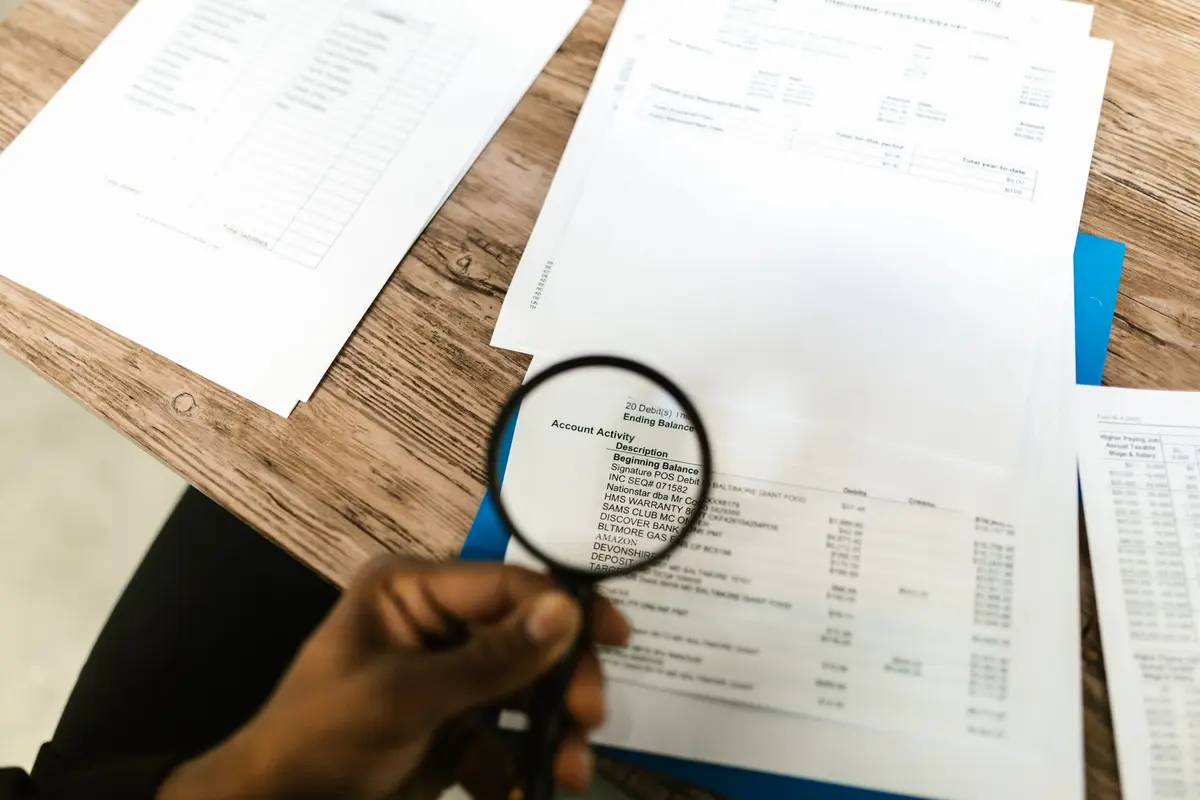
To match TDS receivable entries to Form 168 each month, record every customer deduction in a ledger keyed by the customer's TAN, invoice number and payment date. Then compare that ledger with the Form 168 statement from the Income Tax e-filing portal. For income from 1 April 2026, deductions are reflected in Form 168, while earlier years stay in Form 26AS. Run the match monthly on what you have booked, and again each quarter once deductors have filed their returns. Anything that does not agree goes onto a short exceptions list, which the finance team sends to the customer's accounts team for correction. The owner approves the list and decides on write-offs. Automation can post entries, read remittance advices and prepare the list, but a person checks each exception before a correction is requested.
In short
- For income from 1 April 2026, check customer TDS against Form 168 on the e-filing portal, and older deductions against Form 26AS.
- Match each deduction on deductor TAN, payment code or section, period and amount, not on customer name alone.
- Keep one TDS receivable ledger per major customer so differences can be traced.
- Send customers a short exceptions list with exact entries; a person approves each request.
- Measure your own hours and unclaimed amounts before choosing a tool.
What changed on 1 April 2026
The Income-tax Act, 2025 came into force on 1 April 2026, and the Income-tax Rules, 2026 renumbered many of the familiar forms with it. The old Form 26AS now covers income up to the 2025-26 year. Form 168 covers the tax year that starts on 1 April 2026. Your receivable ledger therefore needs two reference points: 26AS for older deductions, and Form 168 for anything deducted from April 2026 onwards.
The income tax department's own help page describes the route. A taxpayer logs in to the e-filing portal, opens the e-file menu, goes to Income Tax Returns and selects the option to view Form 168. The same statement can also be reached through the TDS-CPC portal under the option to view or download the annual tax statement. Some commercial guides say the statement is pulled from TRACES. The official page points to the e-filing portal, so build your monthly routine around that path.
Some secondary sites also say Form 168 applies from the 2025-26 year. The official description says tax year 2026-27 onwards. Where the two disagree, follow the official wording and confirm the first live entries against your own books in the first month.
Why the mismatch costs money
A customer's deduction is only useful to you once it appears against your PAN and is linked to the right deductor. The credit depends on what the deductor has filed, not on the certificate you hold. In practice, a deduction can be correct in your customer's books and still be missing from the statement you check. That gap is where the money sits: it is cash you have paid to the customer's bank, or a credit you have already booked, that you cannot yet claim.
The usual consequence is a notice rather than a silent loss. When the credit you claim in a return is not in the statement, the department's processing can adjust the claim and raise a demand. Refunds can also be held until the deductor corrects the filing. A common cause is a wrong PAN quoted by the deductor, which means the credit attaches to nobody's account. Another is a late filing, which means the credit simply arrives later than your return date.
Your own books can create mismatches too. One frequent error is applying TDS to the GST-inclusive invoice value when the customer deducted on the value before GST. The receivable then never agrees with the statement, however carefully it is checked. Another is recording TDS in one lump account for all customers, so that no one can trace a single difference.
We have not found a published survey that gives a typical number of staff hours per month for this task in India. The cost to your business is therefore best measured, not assumed. Count the hours the person spends downloading, keying and emailing each month, multiply by their cost to the business, and add the cash value of any credit that stays unclaimed for a quarter or more. The free automation audit measures these figures from your own ledger.
The manual way and the automated way
| Task | Manual routine | Automated routine | Who still checks |
|---|---|---|---|
| Recording a customer's deduction | Accountant types the TDS amount against each receipt | Bank or UPI credit is matched to the open invoice, and the TDS entry is posted to a ledger tagged by TAN | Owner or accountant reviews entries that did not match an invoice |
| Reading remittance advice | Someone opens each PDF or email and reads the deduction | OCR and a language model extract amount, TAN, invoice and quarter into a sheet | Accountant checks any value the reader marks as uncertain |
| Pulling Form 168 | Person logs in to the portal and downloads it | Person still logs in; the file is saved in a fixed folder and named by month | Person confirms the download is complete |
| Matching | Excel lookups by name, often unreliable when names differ | Match on TAN, payment code, period and amount, then sort the results | Reviewer signs off the matched total |
| Exceptions list | Notes scattered across emails and sticky notes | One list, one row per unmatched item, with a reason code | Owner approves what goes to customers |
| Customer follow-up | Individual emails, often weeks later | Standard request sent by email or WhatsApp with the exact entries | Owner decides on escalation or write-off |
How to automate the monthly routine
Set up the ledger first. In Tally Prime or Zoho Books, create one TDS receivable ledger per major customer, or use a tag that holds the deductor's TAN. Record the invoice number, gross amount, TDS amount, payment date and the period in each entry. A single account for everyone cannot be matched later, so this step is the foundation for everything else.
Post deductions from the bank feed. When a customer pays by NEFT, RTGS or UPI, the bank feed brings in the net amount. The routine matches the receipt to the open invoice and posts the TDS difference to the receivable ledger. Odoo, for example, describes a reconciliation module that imports the TRACES file and compares it with the receivable ledger, so check whether your ERP offers a comparable feature before building one.
Collect certificates and remittance advice. Customers often send a deduction certificate or a remittance note by email or WhatsApp. A WhatsApp Business API connection can route these files to a shared folder, and an OCR step can read the TAN, amount and period. A language model can turn the extracted text into a row in a spreadsheet. Treat every extracted row as a draft until a person has checked it.
Download Form 168 on a fixed date. We did not find a public API for downloading Form 168. The portal requires a login, so the download is a logged-in step. Keep the routine simple: pull the statement on the same working day each month, save it under a fixed name, and record the date in the log. The statement only shows credits once the deductor has filed, so the monthly pull is for watching progress, while the quarterly pull is for the formal match.
Match on four keys. Compare the ledger with the statement by deductor TAN, payment code or section, period and amount. Where the totals agree, close the entries. Where they differ, classify the difference: not yet in the statement, amount different, TAN or PAN different, or period different. A small rounding tolerance is normal, but set it yourself and record it in the routine.
Produce the exceptions list and send requests. Each unmatched item becomes one row: customer, TAN, invoice, expected amount, amount shown, reason code and the date you last asked. The routine drafts a standard request by email or WhatsApp that names the exact entries and asks the customer's accounts team to check their filing. The owner reviews the list before anything goes out, and any request for a corrected filing goes to the customer, not to the department.
Keep the list short. Most months, the useful output is a handful of rows that need a human decision, not a report of everything that matched. The automation should sort the rows so the owner can see the three or four cases that need a call.
What breaks, and how to prevent it
The first thing to break is the code mapping during the change-over. Older entries carry section references, while newer entries use payment codes. Third-party guides describe a mapping table between the two, but the official list should be the one you use, so take the codes from the statement itself and keep a copy in the workbook. Test the mapping on a few April entries before you trust it.
The second is a bad TAN in the ledger. If someone types the customer's PAN where the TAN belongs, or copies a TAN from the wrong branch, every match for that customer fails. Add a validation rule that rejects a TAN of the wrong format, and check each new customer once against the certificate.
The third is double counting. A bank feed and a manual entry can both post the same deduction. Prevent this by giving each receipt a single source of truth, and by having the routine flag any invoice that already has a TDS entry before it posts another.
The fourth is timing. A deduction made in one month may appear in the statement weeks later, because the deductor files after the deposit. Do not write off a difference in its first month. Set a rule that a difference older than a set number of quarters goes to the owner, and that anything earlier stays on the list as timing.
The fifth is the reader making a confident mistake. OCR and language models sometimes misread a digit in a PDF. Require a person to check any extracted amount that feeds the ledger, and keep the original file linked to the entry.
Finally, keep sensitive data in controlled places. Certificates and PAN numbers should live in a restricted folder, not in a WhatsApp group that includes people who do not need them. The WhatsApp message should ask for the document, not repeat the PAN.
When not to automate
Automation does not make sense when your TDS receivables are few. If only a handful of customers deduct tax from you each quarter, a monthly half-hour check in a spreadsheet is likely cheaper than building the feeds. The same applies if your ledger has never been kept by customer, because the work is then a clean-up job, and automation will only copy the mess faster.
Do not automate the decision about whether a customer's deduction is right or wrong in law. Disputes about rates, the base amount or whether a payment is taxable are for your chartered accountant. The routine can list the difference and send a neutral request. It cannot settle what the rule requires for your case.
Also avoid automatic reminders where a customer relationship is fragile. A polite message from the owner works better than a template in some cases, and a wrong template sent to the wrong accounts contact can damage the account. Automation can prepare the draft, but a person should choose when it is sent.
What the set-up takes
The time goes into four activities, and it is not the same for every business. The first is cleaning the ledger: splitting one receivable account by customer and TAN, and fixing entries that lack an invoice number. The second is agreeing the mapping between your ledger and the statement's codes, which needs an accountant's time. The third is connecting the bank feed and the document inbox, which depends on what your bank and email provider allow. The fourth is running two or three monthly cycles in parallel with your current manual method until the exceptions list matches what the person would have found.
Plan for the parallel run. The first months will show gaps in the mapping and the matching keys, and it is cheaper to find them while the old method is still in use. Your audit will measure the starting point: how many customers deduct from you, how clean the ledger is, which system holds it, and how many hours the current routine takes. The results depend on those figures, which only your own records can supply.
This explains the rule in general terms; it is not legal or tax advice for your case.
Sources
How AiStaffo would automate this
AiStaffo would connect your bank feed, your Tally or Zoho Books receivable ledger and the inbox where customers send deduction certificates. Each month, the system would post TDS entries against matched invoices, read incoming certificates and remittance notes into a draft sheet, and compare the ledger with the Form 168 file you download. The output would be one exceptions list, with a reason code on each row and a draft request for each customer. You would still log in to the portal to download the statement, check the uncertain extractions, and decide which requests go out and which differences become write-offs. Book a free automation audit to measure the hours and the open amounts in your own ledger before anything is built.
Questions people ask
Which statement do I check for TDS deducted from 1 April 2026?
Where do I download Form 168?
Why does a customer's TDS not show in Form 168 even though they deducted it?
Can I automate TDS reconciliation in Tally or Zoho Books?
Should I write off a TDS difference that stays unmatched?
Does the automation send PAN numbers over WhatsApp?
Book a free automation audit
Thirty minutes. We look at one process you run every week and tell you exactly what an AI worker would take off your desk, and what it would not.