What an AI Contract Administrator Can Take Over, and What Stays Human

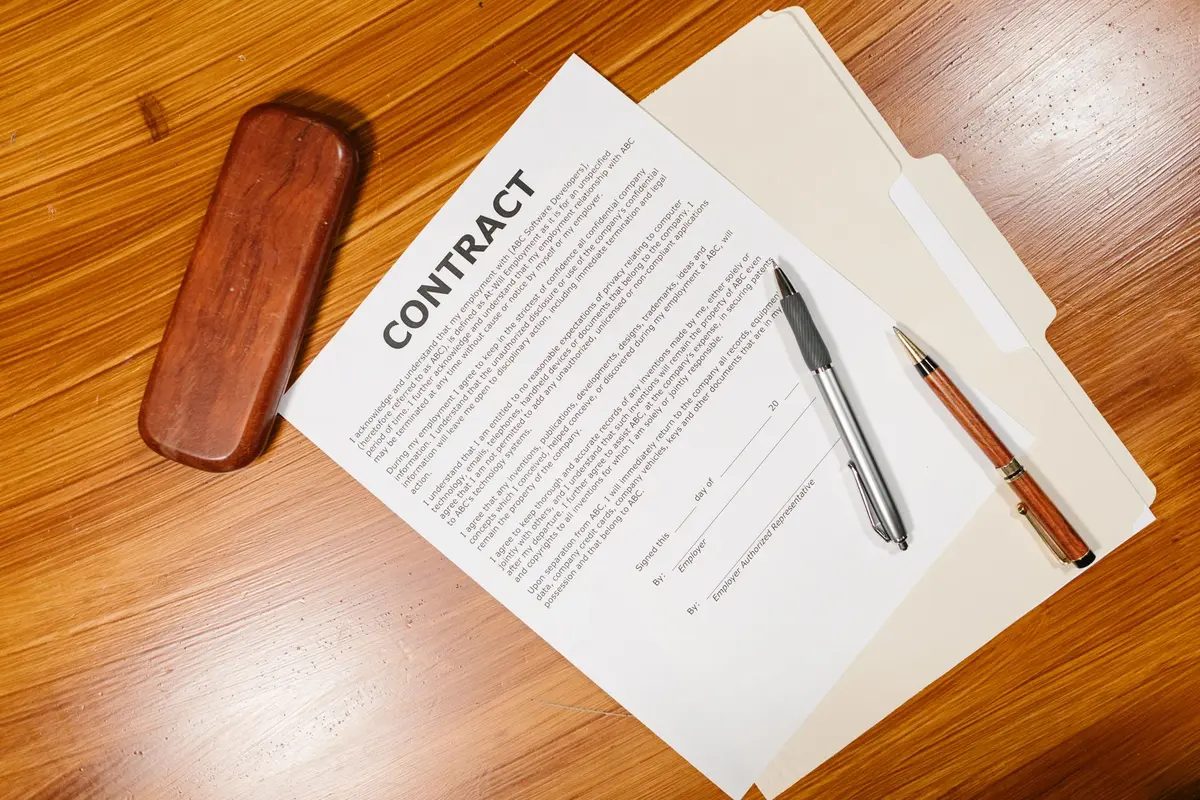
An AI worker can take over most of the clerical side of contract administration. That means keeping the contract register up to date, pulling renewal and notice dates out of signed agreements, sending reminders, chasing missing signatures and documents, filing executed copies, and producing a weekly status report. Drafting, negotiating terms, judging risk and signing off remain with people. The practical route is to connect the AI worker to the inbox, shared drive, e-signature tool and register the team already uses, let it handle routine items, and send anything unusual to the administrator. A free automation audit can show which of your contract tasks are routine enough to hand over and which are not.
In short
- Renewal and notice tracking, signature reminders, document chasing, filing and weekly status reports are the parts of this role an AI worker can run.
- Drafting, negotiating, handling disputes and signing off stay with a person, and so does any judgement about legal or regulated terms.
- Start in shadow mode, compare the AI worker's dates with the register, and only then let it send routine reminders.
- The 2026 WorldCC and Ironclad study estimates an average 11 percent loss of contract value after signature, a reason to track obligations closely.
- Do not automate a role built on one-off, heavily negotiated contracts or on a register that only exists in people's heads.
What a contract administrator actually does all day
In most businesses the role is less about writing contracts and more about making sure signed contracts keep working. Job descriptions often list drafting and negotiation first, but the daily work tends to be administrative. A useful way to see the role is to list what the person touches in a normal week.
- Keeping the contract register, the master list of every live agreement with its parties, value and owner
- Checking end dates, renewal terms and notice periods, and working out the last day to give notice
- Sending documents for signature, following up with signers, and resending when they go quiet
- Chasing suppliers, customers or subcontractors for missing certificates, insurance papers, signed amendments or invoices tied to a contract
- Filing executed originals in the shared drive or contract system, with the right names and version numbers
- Logging change orders, amendments and scope changes, and checking that each one was approved
- Tracking milestones, deliverable deadlines and payment schedules against what the contract says
- Answering questions from finance, operations or department heads about what a contract allows
- Writing a status report for management on what is due, what is late and what needs a decision
- Preparing files for audits or internal reviews when someone asks for the paper trail
Many of these tasks are repetitive, and they are where errors creep in. The job descriptions published by recruiters and public job boards describe the same mix. One widely used description lists tracking payments and deadlines, maintaining files and preparing contract summaries as ordinary duties, next to negotiation. In practice the administrator spends much of the week on the first group.
The reason this matters is money. The World Commerce & Contracting body published a 2026 study, produced with the contract platform Ironclad, that estimates organisations lose an average of 11 percent of contract value after signature. The study ties much of that loss to weak tracking: unrecorded scope changes, price adjustments that are missed, auto-renewals on unfavourable terms and obligations that nobody monitors. Other estimates in circulation are higher or lower, so treat 11 percent as a directional figure, not a measure of your own business. Your own register is the better place to measure the gap.
Which of those tasks an AI worker takes over
An AI worker is software that runs a defined routine from start to finish, reads what arrives, takes the standard action and logs the result. For contract administration, the routine parts are the ones with clear rules: a date is in the contract, a document is missing, a signature is overdue. The AI worker does not decide whether a clause is acceptable. It makes sure the person who decides knows the clause exists and the date is close.
Renewal and notice tracking is the first task most teams hand over. Dedicated tools such as ContractSafe, PandaDoc and Juro read uploaded agreements, extract renewal dates, notice periods and termination windows, and send alerts before the deadline. An AI worker can do the same job on the contracts you already hold. It needs read access to the folder where signed PDFs live, and write access to the register, which can be an Excel or Google Sheets file or a field inside your ERP or CRM. Every extracted date should be shown next to the source sentence so a person can check it once when the contract is first loaded. After that, the date is calculated and reminded automatically.
Signature chasing is the second. Most e-signature tools already have reminder settings. In DocuSign, the sender can add reminders to an envelope in Advanced Options, and an account admin can set defaults under Reminders and Expiration. An AI worker sits on top of this. It watches the envelope status, sees which signers still show as needing to sign, and sends a polite follow-up from the right person's email after the set number of days. It also raises the item to the administrator when a signer has not responded after the last reminder. DocuSign's own support pages describe these statuses and reminder rules, so check your account settings before you rely on them.
Missing documents are the third. Supplier insurance certificates, signed amendments, bank details and delivery confirmations often come by email or WhatsApp Business. An AI worker can compare the list of documents each contract requires against what is filed, send a request through email or WhatsApp to the named contact, and file the reply into the right folder with a standard name. Messages that do not match a known contract go to a person.
Filing signed copies is the fourth. When a fully signed PDF arrives, the AI worker checks that all signatures are present, renames the file to the register's convention, saves it to the correct folder and links it to the register entry. This is simple work with clear rules, and it is where a missing file usually causes the most trouble later.
Status reporting is the fifth. Each week the AI worker can compile the register into a report: contracts ending in the next 90 days, notice deadlines in the next 30, open signature requests, overdue documents and open change requests. It sends the report to the administrator and the managers named in the register. The administrator then adds comments and decides what to escalate.
Logging change requests, and checking whether an approval exists, is a sixth task that can be partly automated. The AI worker can record each change request from a form or email, match it to the contract, and check whether the approver named in your approval workflow has signed off. It cannot judge whether a change is wise.
Access is the practical constraint. The AI worker needs the inbox or shared mailbox where contract emails arrive, the folder where signed copies sit, the register, the e-signature account and, if you use one, the ERP or CRM record for each supplier or customer. Automation tools such as Microsoft Power Automate, Zapier or a custom workflow connect these pieces. Give the AI worker its own account with the narrowest permissions that still let it work, and keep an audit log of what it sent and filed.
What stays with a person, and why
Drafting, negotiating and signing off stay with people. An AI worker can produce a first draft from your standard template, but the choice of terms, the fallback positions and the decision to accept a risk belong to someone who understands the commercial relationship and carries the responsibility. Negotiation depends on trust, timing and knowing when to give ground, and an AI worker has none of that context unless a person supplies it.
Judgement also covers disputes. When a supplier says a delivery was late for reasons outside their control, or a customer claims a service level was missed, the administrator has to read the contract, the history and the relationship together. The AI worker can gather the emails and the milestone dates for that case, but the decision about what to say next belongs to a person.
Regulated and high-value matters need a named human. Contracts that touch employment terms, data protection, financial reporting, public procurement or government rules have legal consequences that depend on local law and on the facts. An AI worker can flag that a clause exists and that a date is near. It should not decide whether a contract complies with those rules, and it should not sign anything on the company's behalf.
Here is the limit to keep in mind: automation can miss what the text does not say. A contract may depend on an email, a side letter or a verbal agreement that never reached the register. Extracted dates can be wrong when a scanned file is poor or a clause is unusual. For that reason, every new contract should be checked by a person once when it is loaded, and every notice deadline should be confirmed before the notice is sent.
How this role differs by business type
The core clerical work is similar across sectors, but the documents, deadlines and counterparties change. The table below shows the most common settings where this role is employed and where an AI worker fits.
| Business type | What the contract administrator does there that is specific | What the AI worker handles there |
|---|---|---|
| Construction and civil engineering contractors | Tracks subcontract milestones, change orders, retention amounts and insurance certificates for each site, and keeps the paper trail for disputes. | Requests missing insurance and method statements from subcontractors, logs change orders against the register, and flags milestones that have passed without a signed certificate. |
| Property management and facilities | Manages service contracts for cleaning, lifts, security and maintenance across many buildings, each with its own renewal and notice dates. | Builds the renewal calendar for every building, sends notice reminders to the budget owner, and collects signed service reports from contractors. |
| Hospitals and clinic groups | Administers supplier and equipment service agreements, data-processing terms with software vendors, and staff training or licence renewals linked to contracts. | Tracks renewal dates and certificate expiries, requests documents from vendors, and files signed copies. Clinical and data decisions stay with named clinical and compliance staff. |
| Software and SaaS companies | Manages customer agreements, reseller terms and vendor subscriptions, including auto-renewal clauses and price escalation terms. | Extracts renewal and price-change dates from signed agreements, reminds account owners before notice windows close, and updates the CRM record. |
| Manufacturing and distribution | Handles supply agreements, minimum volume commitments, price adjustments and quality agreements with suppliers and customers. | Compares delivered volumes and invoices with contract price schedules, flags differences for review, and chases missing quality certificates. |
| Professional services and agencies | Tracks client engagement letters, scope changes, retainers and payment milestones, often across many clients at once. | Logs scope change requests, checks that each has an approval, sends signature reminders, and produces a weekly list of milestones due for billing. |
The table shows a pattern. The more contracts a business holds with recurring renewals, the more the clerical work adds up. The less standard the contracts are, the more the person's judgement matters. A group with a few hundred long, bespoke agreements needs a person close to every negotiation. A business with many repeat supplier contracts on standard terms has more routine work that can move to an AI worker.
How the switch happens, week by week
The switch should not start with removing anyone. It should start with a copy of the work the person already does, so that you can check the AI worker against a known result. The sequence below assumes the contract administrator stays in the role throughout.
Weeks 1 and 2: map and measure
List every contract in the register and every folder where signed copies live. Note which ones are missing from the register. Ask the administrator to keep a simple log for two weeks of every reminder sent, document chased and file saved, with the time each took. This gives a baseline based on your own work, which is the only figure that matters for a decision. A free automation audit can help structure this step.
Weeks 3 and 4: run in shadow mode
Connect the AI worker to the register and read-only access to the folders and inbox. Let it extract dates and build the renewal calendar, but do not let it send anything. The administrator compares the AI worker's dates with the register and corrects any that are wrong. Each correction is a rule to fix. Expect the first pass to miss unusual clauses and scanned documents.
Weeks 5 to 8: send routine items, route exceptions
Turn on the routine actions: reminders for signatures that are overdue, requests for documents on a named list, and filing of completed signed copies. Exceptions go to the administrator: a reply that disagrees with the contract, a signer who refuses, a document that does not match the contract, and any request to change a term. Track how many items reach the administrator each week. A rising count means the rules need work. A falling count means the routine is settling.
After week 8: review, not handling
As the exception queue shrinks, the administrator's role moves toward review. Each week the person reads the AI worker's status report, approves any new contract entries, decides on escalated items and handles negotiations and disputes. Keep sampling the register each month to check it against the source documents. Any change to the person's responsibilities, hours or pay should be agreed with them in writing. The country's notice, consultation and severance rules apply to any reduction in role, and a lawyer or your HR adviser should check the process before it starts.
Risks, and when not to automate this role
The main risk is a wrong date that nobody checks. If an extracted notice date is off by a week, a contract can renew on terms the business did not want, which is the very loss the register is meant to prevent. Build a monthly sample check into the process and keep the source document linked to each date.
The second risk is over-reach. An AI worker with permission to send messages can send the wrong one to the wrong supplier, or a reminder that contradicts a live negotiation. Limit what it can send, use approved templates, and route anything that mentions money, legal terms or a dispute to a person.
The third risk is poor data going in. If the register is incomplete, the AI worker will produce a tidy report on incomplete information. Clean the register before connecting anything.
Do not automate this role when most of your contracts are one-off, heavily negotiated or governed by rules that need case-by-case legal reading. Do not automate it when your register is kept only in someone's memory or in email threads that cannot be searched. In these settings a person with good judgement and a clear process will do better than a tool. A business with only a handful of contracts may find a shared calendar and a checklist cover the work without any AI worker at all.
Results depend on your own contract count, the state of your records and how many exceptions your suppliers and customers generate. The free audit measures those figures for your business before any decision is made.
Sources
How AiStaffo would automate this
AiStaffo would start by connecting an AI worker to the inbox where contract emails arrive, the folder with signed copies, the contract register, and the e-signature account, with read access first and write access once the register checks pass. It would extract renewal, notice and milestone dates from each signed contract and show the source sentence beside each date for the administrator to confirm. Once confirmed, it would send signature and document reminders from approved templates, file completed copies, and compile a weekly status report. Anything that involves a dispute, a changed term or a regulated point would go to the named person. The owner still approves the register, decides on negotiations and signs off. To see which of your contract tasks fit this pattern, book a free automation audit.
Questions people ask
Can an AI worker replace a contract administrator completely?
How does an AI worker know when a contract renews?
Which tools does the setup need?
How much money can a business lose from contracts it does not track?
What should I do before I reduce the contract administrator's role?
Is it safe to let an AI worker send reminders to suppliers?
Book a free automation audit
Thirty minutes. We look at one process you run every week and tell you exactly what an AI worker would take off your desk, and what it would not.