UAE Tax Invoice Requirements: Full vs Simplified Invoice Rules

A UAE tax invoice must carry the words "Tax Invoice", the supplier's name, address and Tax Registration Number (TRN), and the other particulars listed in Article 59 of the VAT Executive Regulations. A simplified tax invoice carries fewer details and is allowed in two cases: when the buyer is not VAT-registered, at any value, or when the buyer is VAT-registered and the amount is AED 10,000 or less. Reverse-charge supplies always need a full invoice. The invoice must be issued within 14 days of the date of supply under Article 67 of Federal Decree-Law No. 8 of 2017. Mandatory e-invoicing starts in phases from 1 January 2027. Use the free calculator on this page to check which invoice type fits your sale.
Work it out: UAE Tax Invoice Generator (5% VAT, 2026). Free, no sign-up.
In short
- A full UAE tax invoice needs the Article 59(1) particulars, including the buyer's TRN when the buyer is VAT-registered.
- A simplified invoice is allowed for unregistered buyers at any value, and for registered buyers up to AED 10,000.
- Reverse-charge supplies always need a full invoice, and the invoice is due within 14 days of the date of supply.
- Large businesses with AED 50 million or more in revenue face mandatory e-invoicing from 1 January 2027; check the provider deadline of 30 October 2026 on mof.gov.ae.
- Confirm the current Article 59 wording on tax.gov.ae before you publish a template or set up your software.
The direct answer
The rule sits in Article 59 of Cabinet Decision No. 52 of 2017, the Executive Regulations of the UAE VAT law. Article 59(1) lists what a full tax invoice must show. Article 59(2) lists a shorter set for a simplified tax invoice. The test that decides between them is who the buyer is. The size of the sale matters only in one case, which is covered below.
A full invoice has to show the words "Tax Invoice" clearly, the supplier's name, address and TRN, a sequential invoice number, the date of issue, the date of supply if it differs, a description of each good or service, and the amounts. A simplified invoice needs only five things: the words "Tax Invoice", the supplier's name, address and TRN, the date of issue, a description, and the total consideration with the tax charged. The Executive Regulations set the content of the invoice, not its layout. Any format that carries the required items is valid, whether it comes from an accounting package, a spreadsheet or a point-of-sale terminal.
What each invoice must show
The table below sets the two lists side by side. It follows the structure of Article 59(1) and Article 59(2) as published in the official Cabinet Decision text on tax.gov.ae. Check the current wording there before you rely on a template, because the Executive Regulations have been amended several times since 2017.
| Particular | Full tax invoice (Article 59(1)) | Simplified tax invoice (Article 59(2)) |
|---|---|---|
| Words "Tax Invoice" clearly shown | Required | Required |
| Supplier name, address and TRN | Required | Required |
| Buyer name, address and TRN | Required where the buyer is VAT-registered | Not required |
| Sequential or unique invoice number | Required | Not required |
| Date of issue | Required | Required |
| Date of supply, if different from the issue date | Required | Not required |
| Description of goods or services | Required | Required |
| Unit price, quantity, tax rate and amount for each item | Required | Not required |
| Discount, if one is given | Required | Not required |
| Tax amount and total in AED | Required, with the gross amount payable | Required, as total consideration and tax charged |
Two items are easy to miss. The full invoice needs the buyer's TRN only when the buyer is registered for VAT. A simplified invoice does not need the buyer's details at all. Also, the tax rate shown on each line must match what you charged. The standard rate under Federal Decree-Law No. 8 of 2017 is 5%.
How to work out which invoice you issue
Work through these checks in order. Most sales are settled at the first or second check.
- Is the supply reverse-charged under Article 48 of the VAT law? If yes, issue a full tax invoice. A simplified invoice is not allowed for reverse-charge supplies, a point the Executive Regulations were amended to confirm with effect from 15 November 2024 under Cabinet Decision No. 100 of 2024.
- Is the buyer VAT-registered? If the buyer is not registered, a simplified tax invoice is allowed, and there is no value ceiling under Article 59(5).
- If the buyer is registered, is the consideration AED 10,000 or less? If yes, a simplified invoice is allowed. If the amount is above AED 10,000, issue a full invoice.
- If the buyer asks for a full invoice, issue one, whatever the amount.
Some guides measure the AED 10,000 test with VAT included. The Executive Regulation text refers to consideration, and it does not settle the point in the way those guides do. If a sale sits close to the line, use the full invoice. The cost of doing so is small.
The 14-day window
Article 67 of Federal Decree-Law No. 8 of 2017 requires a registrant to issue a tax invoice within 14 days of the date of supply. The same 14-day rule was extended to periodic payments and consecutive invoices from 1 January 2023 by Federal Decree-Law No. 18 of 2022, according to the EY tax news summary of that amendment. The clock starts on the date of supply, not the date you decide to bill. Preparing the invoice later does not move the supply date, which is set by Article 25 of the Decree-Law.
A simplified invoice has a shorter window. According to FTI Consulting's 2024 summary of the Executive Regulation amendments, a simplified invoice must be issued on the day the date of supply is triggered, while a summary invoice can follow within 14 days after the end of the calendar month. Check the exact wording in the Executive Regulation before you set this in your system.
Worked example
Take a consultancy in Dubai that sells two pieces of work in the same quarter. Both are standard-rated at 5% VAT.
The first job is training services worth AED 9,000 to a company that holds a TRN. VAT is AED 450, so the total is AED 9,450. The buyer is registered, and the amount is under AED 10,000 whether or not VAT is counted. A simplified invoice is allowed. It must show the words "Tax Invoice", the consultancy's name, address and TRN, the date of issue, the description, and the total of AED 9,450 with the AED 450 tax.
The second job is a project worth AED 11,000 to the same company. VAT is AED 550, so the total is AED 11,550. Above AED 10,000 under either reading, so a full tax invoice applies. It must be issued within 14 days of the date of supply. It needs a sequential number, the buyer's name, address and TRN, a line for each item showing unit price, quantity, the 5% rate and the amount, any discount, the gross amount of AED 11,550 and the AED 550 tax.
The same consultancy could also sell a one-off service to a private individual who is not VAT-registered. A simplified invoice is allowed for that sale at any value, so the AED 10,000 limit does not apply to it.
Cases that change the answer
Four cases change the answer most often.
Unregistered buyers. This is the case where the AED 10,000 limit does not apply. Many local guides still state the threshold as if it applied to every simplified invoice, which is a common source of error.
Reverse charge. Where the recipient accounts for the VAT under the reverse-charge rules, a full invoice is required. Simplified invoices are not an option, even for a small amount.
Zero-rated supplies. Article 59(3) of the Executive Regulations has allowed businesses not to issue a tax invoice where sufficient records exist to show the supply is zero-rated. A 2026 alert from Alvarez and Marsal notes that this relief will not apply to businesses in e-invoicing scope. Confirm the position with your adviser before you rely on it.
Monthly or periodic contracts. A retainer or subscription has its own supply dates. Each billing period has its own 14-day clock, and the date of supply can be set by an invoice, a payment due date or a payment received, whichever is earliest, for contracts running up to one year.
There is no minimum service value for a full invoice, and the AED 10,000 figure is a cap on simplified invoices between registered businesses, not a floor for full ones.
E-invoicing: the timetable and what changes
The UAE is moving B2B invoicing onto a national e-invoicing system. Ministerial Decision No. 244 of 2025 sets the timetable. The Electronic Invoicing Guidelines, Version 1.1, dated 1 June 2026, published by the Ministry of Finance on mof.gov.ae, is the main operational source. The Federal Tax Authority still handles registration and tax reporting.
The pilot and voluntary phase began on 1 July 2026. Voluntary participants must appoint an accredited service provider and use the technical standard, but they carry no e-invoicing penalties in that phase. The mandatory dates are shown below.
| Group | Appoint an accredited service provider by | Mandatory e-invoicing from |
|---|---|---|
| Annual revenue of AED 50 million or more | 30 October 2026 | 1 January 2027 |
| Annual revenue below AED 50 million | 31 March 2027 | 1 July 2027 |
| Government entities | 31 March 2027 | 1 October 2027 |
The first deadline moved. Earlier reports gave 31 July 2026 for large businesses to appoint a provider. A later decision moved it to 30 October 2026, as reported by Banqup in 2026 and by Vatupdate in September 2026. Because today is 22 October 2026, that date is close. Confirm it on mof.gov.ae before you act.
Once you are in scope, the system changes the invoice itself. E-invoices are issued in a structured XML format. The guidelines state that UAE e-invoices will not carry a QR code or barcode. Simplified invoices cannot be used by businesses in e-invoicing scope, according to Alvarez and Marsal's 2026 alert, so every invoice must carry the full particulars. A reporting note from October 2026 says the e-invoice must be issued and transmitted within 14 business days of the transaction. That figure comes from commentary on the amending decision and is not yet confirmed on the Ministry's own site, so check it there.
Common mistakes
Calling a quote or a proforma invoice a tax invoice. A document only supports a VAT claim if it is a tax invoice or a permitted alternative document. Quotes and proformas do not qualify.
Using the AED 10,000 cap for an unregistered buyer. The cap applies only to registered buyers. Applying it to everyone leads to full invoices that are not needed, or to missing invoices for large retail sales.
Issuing a simplified invoice for a reverse-charge sale. This is the most expensive mistake in the list, because the simplified format is not allowed at all for those supplies.
Dating the invoice to the day you send it. The 14-day clock runs from the date of supply. A late invoice is a penalty risk even if the sale was real and the VAT was declared.
Leaving out the buyer's TRN on a full invoice when the buyer is registered. The buyer details are a required item for registered buyers, and a missing TRN is among the easiest defects for a client's finance team to reject.
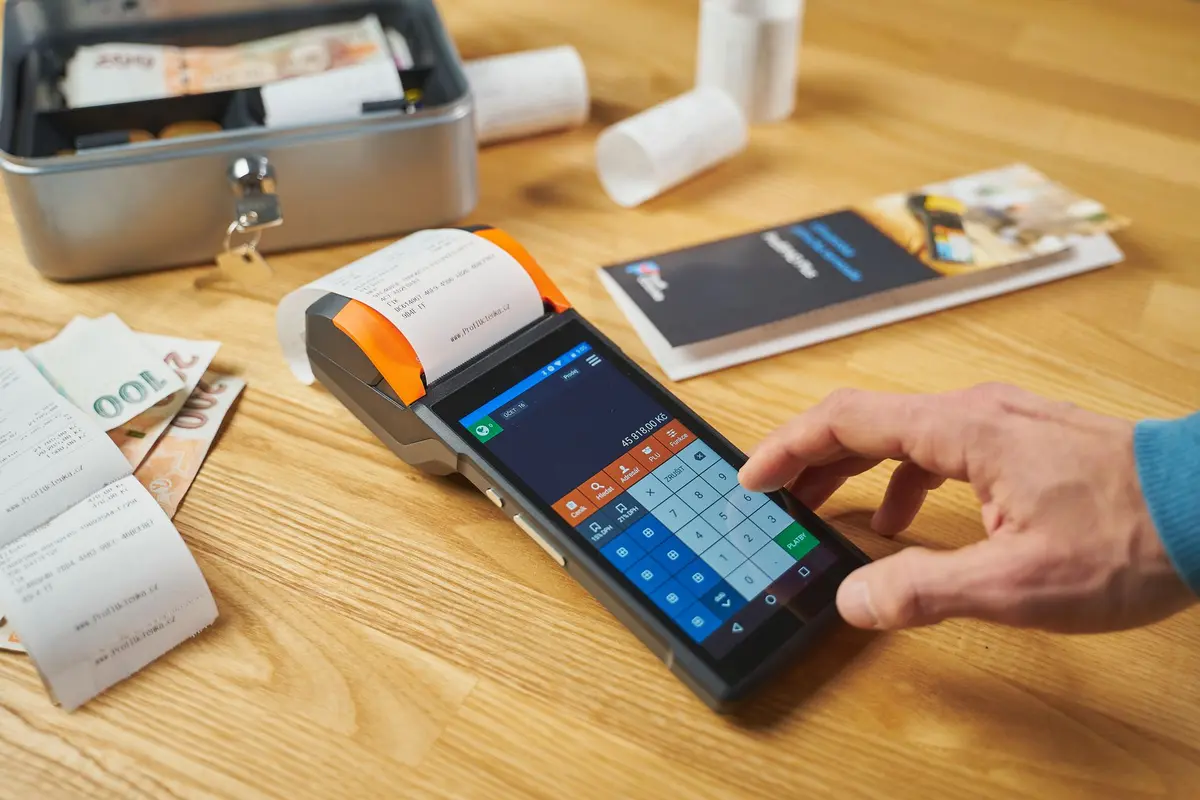
Relying on a till receipt for a B2B sale. A receipt can serve as a simplified invoice only if it carries the required items and the buyer falls within the simplified rules. A registered buyer buying above AED 10,000 needs a full invoice.
The penalty for each defective or late invoice is AED 2,500 per detected case under the penalty schedule in Cabinet Decision No. 129 of 2025, in force from 14 April 2026, as reported by commentary on the schedule. Confirm the amount on tax.gov.ae before you rely on it.
What to check with your adviser or the FTA
Confirm the current text of the Executive Regulations on tax.gov.ae, because the Article 59 numbering has changed through amendments. Check your annual revenue band against the e-invoicing table and confirm your provider deadline. Ask your accountant whether the AED 10,000 test applies to amounts with or without VAT in your contracts. Ask whether your accounting software can produce the XML fields the guidelines require. If you make zero-rated or reverse-charge supplies, have a tax adviser confirm how those invoices should look before the mandatory date.
This explains the rule in general terms; it is not legal or tax advice for your case.
Many finance teams spend part of every week preparing invoices, matching payments to them and chasing missing buyer details. Routine invoice work of this kind can be handed to AI workers that read sales records from the accounting system, apply the checks above, fill in the required fields and send exceptions to a person. The person still decides the tax treatment of each unusual sale, signs off the format and keeps the records. The same approach can be applied to routine HR and payroll paperwork, where a person still checks the rules and the employee's agreement.
Sources
- Tax Invoice Rules Clarified: Key UAE VAT Guidance for Businesses
- UAE Tax Invoice Format 2026: FTA VAT Invoice Requirements and Sample
- VAT Public Clarification VATP040 - Amendments to the Executive Regulations of Federal Decree-Law No. 8
- VAT Invoice Requirements in UAE: What Every Business Must Know
- This is an unofficial translation 1 Cabinet Decision No. (52) of 2017
How AiStaffo would automate this
AiStaffo would connect to the sales ledger or invoicing system where your sales are recorded, so the AI worker can read the buyer's VAT status and TRN, the amount, the date of supply and the tax rate on each line. It would run the checks in order: reverse charge, buyer status, the AED 10,000 test, and whether a full invoice was requested. It would then produce the invoice with the required fields and queue any sale it cannot classify. You still decide the tax treatment of unusual sales, confirm your e-invoicing deadline and check the output once a month. Book a free automation audit.
Questions people ask
Can I issue a simplified tax invoice to a customer who is not VAT-registered for any amount?
How long do I have to issue a tax invoice in the UAE?
Does a simplified tax invoice need the customer's TRN?
When does UAE e-invoicing become mandatory?
Is a quote or a till receipt a tax invoice?
Book a free automation audit
Thirty minutes. We look at one process you run every week and tell you exactly what an AI worker would take off your desk, and what it would not.