AI automation for waste management and recycling operators
AI can take over the checking and drafting work that sits between the weighbridge and the customer invoice. It can match each ticket to the booked job and the customer's agreed rate, draft the invoice the same day, and hold back any ticket with a missing weight, an unknown vehicle or a contamination charge until the yard supervisor has looked at it. For the office, that means the billing clerk stops retyping tickets and starts reviewing a short exception list. People still own the scale, the sorting decisions, the disputed loads and the final sign-off on anything that goes out under your name. The rest of this page walks through the full operating chain, the roles affected, the automations worth building first, and the points where automation is the wrong choice.
In short
- Match weighbridge tickets to jobs and rates automatically, then send only the exceptions to a person.
- Keep weights, contamination grading and waste codes with trained staff; the AI worker checks and records them.
- Start with ticket-to-invoice drafting and the exception list, then move to compliance record checks.
- For UK sites, digital waste tracking becomes mandatory for receiving sites in England and Wales from October 2026, so plan the record link now.
- Run the automation alongside the current billing process until the drafts match what the clerk produces.
Direct answer: what AI can take over in a waste or recycling business
Most of the office work in a waste or recycling operation is copying. A weighbridge records a number, someone writes or keys a ticket, someone else checks it against a booking, someone looks up the customer's rate, and then an invoice is typed. An AI worker connected to the weighbridge software and your accounting system can do the matching, rate lookup, drafting and record filing automatically. It can also send the doubtful tickets to a named person.
What that means for the office team is a change in the shape of the job rather than a sudden empty desk. The billing clerk moves from typing to reviewing exceptions. The scale house operator spends less time on paperwork at the gate and more time on the vehicle in front of them. The compliance administrator stops chasing paper and starts checking that every load has a complete record. Fewer hours go to routine work. The judgement calls stay with people.
The whole workflow, end to end
The chain below follows a load from first enquiry to cash in the bank. For each stage we describe what staff usually do today and what an AI worker would do instead. The examples assume a commercial operator that takes mixed waste or recyclables, but the same chain applies to skip hire, transfer stations, materials recovery facilities and scrap yards.
1. Enquiry and contract set-up
Today a salesperson agrees a price with a new customer, and an administrator enters the customer, the site address, the agreed rates and any special terms into the billing system. Mistakes at this point become billing disputes months later. Many operators also keep rates in a spreadsheet that is not linked to the weighbridge.
An AI worker can pull the contract details from a signed order form or a rate sheet, create the customer and rate records, and ask a person to confirm the figures before they go live. It can also flag a rate that does not match the last version on file. Setting the rates still needs a person who knows the commercial deal.
2. Booking and dispatch
Dispatch coordinators take calls and emails, confirm pickup or delivery windows, assign vehicles and tell drivers which site to use. Much of this is repeated messaging. An AI worker can read incoming booking requests, check them against the customer's contract and available slots, send the confirmation and reminders, and record the expected material type. If a request asks for a material the site does not accept under its permit, the AI worker should send it to the dispatcher rather than confirm it.
3. Gate and weighbridge
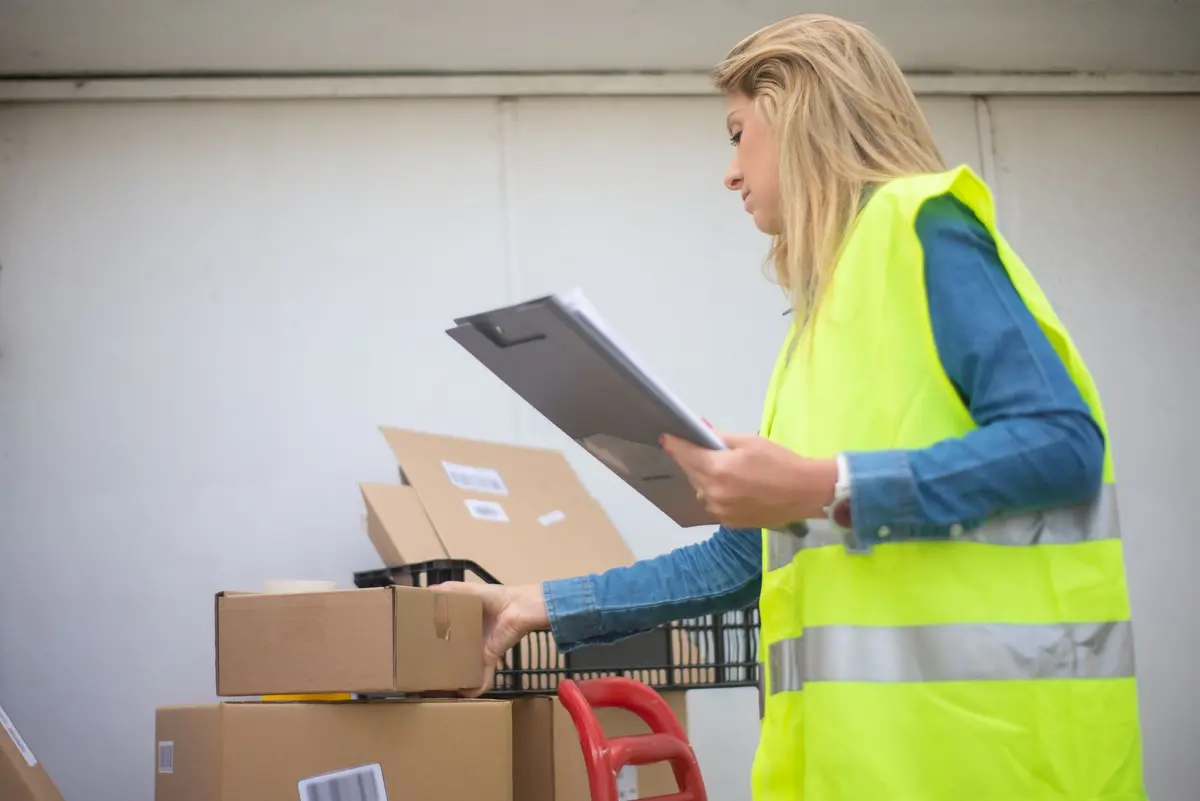
At the gate, the scale house operator checks the vehicle, captures the first weight, records the material, and after the load is tipped or loaded, captures the second weight. Modern weighbridge software can capture gross, tare and net weights and store tare values for known vehicles so repeat loads clear faster. This is where the weight is born, and it should stay with a trained operator. An AI worker should not decide what a load weighs. Its job begins once the weights are in the system.
4. Sorting, grading and contamination
At a materials recovery facility or a transfer station, a yard supervisor or a sorting lead judges what came in. Contamination is often found when the load is tipped or sorted, and the charge depends on what is found. A single customer account can carry a fixed monthly charge, a per-lift or per-load charge, a weight-based charge, a one-off extra and a contamination surcharge in the same billing period. That complexity is why contamination should be recorded as a coded entry by a person, not guessed later from a weight.
An AI worker can read the code and the notes entered by the supervisor, apply the matching surcharge to the draft, and hold the ticket for approval if the contamination code is entered without a photo or note. It cannot judge contamination from a distance, and it should not be trusted to do so.
5. Ticket to invoice
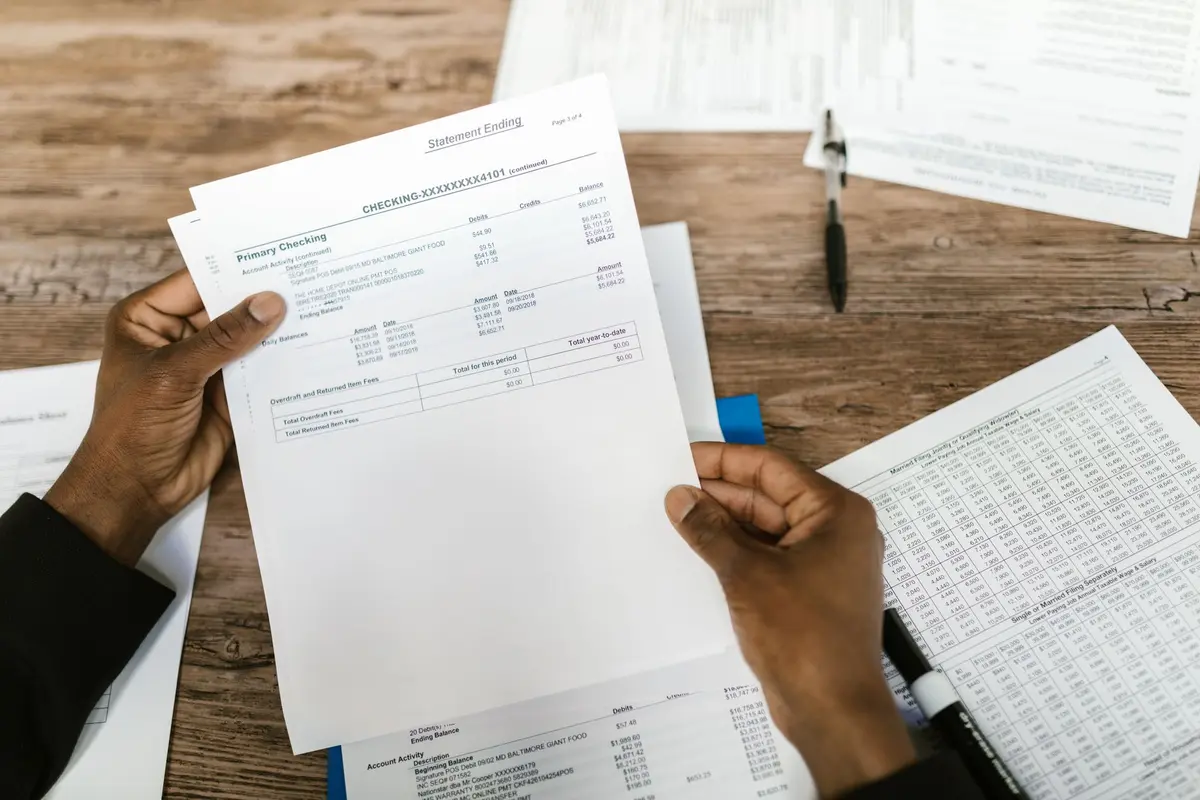
This is the stage most operators want to automate first. Today a billing clerk pulls the day's tickets, matches each to a booking or job number, checks the vehicle and material, looks up the rate, types the invoice, and then emails or posts it. Weighbridge and waste systems that link tickets to invoices exist, and some accounting packages accept tickets directly. One example found in our research is a weighbridge product that pushes ticket information to Sage One for invoicing.
An AI worker can run the same checks at the end of each day. It matches each ticket to a job, compares the material and grade with the customer's agreed rate, drafts the invoice, and groups the drafts for batch review. Tickets with a missing second weight, an unknown vehicle, a rate that is not on file or a contamination code without a note go to the yard supervisor's exception list. Nothing is sent to the customer until the batch is approved. The office then spends its time on the exceptions instead of the full list.
6. Compliance records and reporting
Every load in a regulated waste chain has paperwork. In England and Wales, the duty of care under the Environmental Protection Act 1990 applies to anyone who produces, holds, carries or disposes of controlled waste. Records must be kept, and for non-hazardous waste the transfer document has to be held for at least two years. A compliance administrator usually chases missing signatures, enters EWC codes by hand and prepares tonnage returns.
An AI worker can check that each load has a waste code, a description, a quantity, the parties' names and addresses, and a date and place before the load is released or invoiced. It can file the record and build the monthly tonnage summary. From October 2026, permitted waste receiving sites in England and Wales have to record every load through a government service, and the AI worker should be set up to push those records through the service's interface or to produce the upload file. The compliance administrator still owns the record and answers any regulator query.
7. Collections and month-end
Accounts staff send payment reminders, match bank receipts to invoices, and reconcile the weighbridge totals to the ledger at month end. An AI worker can send reminders on a fixed schedule, match payments by reference, and flag any month where the tonnage in the weighbridge system and the amount invoiced do not agree. Credit decisions and disputes with long-standing customers still belong to a person.
Staff today vs with AI workers
The table lists the office roles that waste and recycling businesses usually employ, using the titles operators tend to use. The right-hand column is what stays with a person in each role after automation. These are role changes, not headcount targets. Your own team size depends on your volumes, your sites and your contracts.
| Role | What the person does today | What the AI worker takes over | What stays with a person |
|---|---|---|---|
| Scale house operator or weighbridge clerk | Captures weights, records vehicle and material, writes or prints tickets, handles gate queries | Prints or sends tickets, fills vehicle and customer details from the last visit, flags repeat vehicles with missing tare values | Captures weights, checks the vehicle and load, deals with drivers and inspectors at the gate |
| Billing clerk or accounts receivable clerk | Matches tickets to jobs, looks up rates, types invoices, sends them and chases payments | Matches tickets, applies rates and surcharges, drafts invoices in batches, sends scheduled reminders, matches bank payments | Reviews the exception list, approves batches, handles disputes and credit decisions |
| Dispatch coordinator | Takes bookings by phone and email, assigns vehicles and sites, updates drivers | Reads booking requests, checks them against contracts and capacity, sends confirmations and reminders | Decides on unusual requests, reassigns loads when a vehicle breaks down, handles urgent changes |
| Yard supervisor or sorting lead | Judges incoming material, codes contamination and grade, signs off loads | Holds tickets with contamination codes that lack a note, sends the exception list to the supervisor each shift | Judges contamination and grade, decides what is accepted or rejected, owns site safety |
| Compliance administrator | Checks transfer documents, enters EWC codes, files records, prepares tonnage returns | Checks each load record for required fields, files records, pushes records to the government service, builds the tonnage summary | Answers regulator and customer queries, signs off returns, decides when a record is incomplete |
| Customer service administrator | Answers questions about invoices, bin or container services, collection times and paperwork | Answers routine questions about past invoices and sends copies of tickets and transfer documents | Handles complaints, disputes about weights, and any question that changes a contract |
In most operations the biggest change is in billing and compliance, not on the gate. The gate needs a trained person who can see the vehicle. The office needs someone who can judge a strange ticket, not someone who copies two hundred of them each day.
The highest-value automations, ranked by effort and impact
The table ranks the automations by how much work they remove against how hard they are to build. Effort and impact are rated low, medium or high from our own assessment of typical operations. They are not measured savings. Start at the top of the list, and only move down when the ones above are running and trusted.
| Rank | Automation | Effort | Impact | Why it sits here |
|---|---|---|---|---|
| 1 | Ticket to invoice draft with rate check | Low to medium | High | Removes the most repeated typing and catches rate errors before the customer sees them |
| 2 | Exception list for missing weights and unknown vehicles | Low | High | Stops incomplete tickets from being billed and gives the yard supervisor one list to clear |
| 3 | Contamination surcharge check requiring a note | Low | High | Keeps surcharges consistent and gives a record if a customer disputes them |
| 4 | Load record check against required fields | Medium | High | Catches missing transfer document details before a load leaves the site or is invoiced |
| 5 | Push of load records to the government digital waste tracking service | Medium to high | High | Removes double entry for sites that must report every load, once the software link is in place |
| 6 | Scheduled payment reminders and bank matching | Low | Medium | Reduces the chasing and the manual matching at month end |
| 7 | Repeat vehicle tare lookup | Low | Medium | Speeds up repeat loads at the gate and reduces missing tare values |
| 8 | Tonnage summary and monthly returns draft | Medium | Medium | Turns filed records into the summary your contracts and regulators ask for |
| 9 | Booking confirmations and driver reminders | Low | Low to medium | Frees dispatch time, but the benefit is smaller unless booking volume is high |
Compliance and regulatory points
Waste is one of the more regulated parts of business. The rules differ by country and sometimes by region, so treat the points below as the UK example and check your own regulator's rules before you change any process.
In England, Wales and Northern Ireland, the Environmental Protection Act 1990 places a duty of care on anyone who handles controlled waste. In Scotland, the equivalent rules sit in separate regulations, and transfer notes there must state the six-digit European Waste Catalogue code for the waste. An automation that fills the code from a drop-down list is useful. An automation that guesses the code from a material name is not.
The larger change is digital waste tracking. The UK government is replacing paper waste transfer notes and hazardous consignment notes with one digital recording system under Section 58 of the Environment Act 2021. Permitted waste receiving sites in England and Wales must record every load from 1 October 2026, and sites in Scotland and Northern Ireland follow from January 2027. Waste carriers, brokers and dealers are expected to follow from October 2027. A government service has been built around an interface, so compatible software can send records directly, while a temporary spreadsheet upload exists for sites without software. Check the dates against the official government guidance before you commit, since sources we reviewed were not fully consistent on the exact start day.
Retention matters too. Non-hazardous transfer documents must be kept for at least two years, and hazardous consignment records for at least three years. Your automation should keep the record and its audit trail for at least that long, and it should never allow a closed record to be edited without a logged reason.
Outside the UK, the same workflow holds but the forms and the regulator change. Many countries require a transfer or manifest record, a waste code and a tonnage return. Your local legal metrology rules for scales also apply, and a scale that is out of calibration makes every ticket questionable. An AI worker cannot prove a scale is accurate. That check belongs to a qualified service engineer, on the schedule your regulator sets.
Finally, the scale of the problem explains why regulators are tightening records. A 2024 UNEP and ISWA report projects municipal solid waste to grow from about 2.1 billion tonnes in 2023 to 3.8 billion tonnes by 2050. The same report puts the global recycling rate for municipal solid waste at 19 per cent in 2020. More tonnage means more tickets, more invoices and more records for the same office team to handle.
How the transition happens without disruption
Do not switch off the existing process on day one. Run the AI worker alongside the billing clerk for two to four weeks, and compare the drafts with what the clerk produces. Where they match, the clerk can approve the batch faster. Where they differ, the rule is wrong or the data is wrong, and both need fixing before the automation is trusted.
Keep the current staff in place first. Move them from typing to reviewing. The billing clerk owns the exception list, the scale house operator owns the weights, the yard supervisor owns the contamination codes, and the compliance administrator owns the records. Once the exception list is small and the drafts are accurate, the role can be narrowed to review, and any change to headcount should follow from the actual volumes you see over several months, not from the software's promise.
Write the rules down before you automate. Rates, surcharges, required fields and hold conditions should be agreed in a one-page sheet signed by the operations head and the finance lead. The AI worker follows that sheet. When a rule changes, the sheet changes first, and the change is logged.
Plan for the day the weighbridge software or the accounting system changes. Keep the ticket numbers and the record IDs in a form that can be exported, so the data is not held hostage by one vendor.
Common mistakes
The first mistake is automating a bad rate sheet. If the rates in the system are out of date, the AI worker will draft wrong invoices quickly. Clean the rates before you connect anything.
The second is letting the AI worker decide what is billable when the weight is missing. A ticket without a second weight should be held, not estimated. Estimates create the disputes that cost the most time.
The third is treating contamination as a number. Contamination is a judgement made by a person at the tip or on the sorting line. The automation should record that judgement, apply the agreed charge and keep the note. It should not guess.
The fourth is ignoring the compliance link. If your records are invoiced before the transfer document or the government record is complete, you have created a legal gap, not a billing shortcut. Make the record check a gate before the invoice step.
The fifth is removing the people who know the site. The scale house operator and the yard supervisor catch the odd load that no rule anticipated. Keep them in the loop, and keep a monthly review where they can change the rules that are not working.
Sources
How AiStaffo would automate this
AiStaffo would connect your weighbridge software, your rate sheet, your job bookings and your accounting system, so each day's tickets are matched to jobs and drafted into invoices without retyping. Tickets with a missing second weight, an unknown vehicle, a rate that is not on file or a contamination code without a note would be held and sent to the yard supervisor in one exception list. The same workflow would check each load record for its required fields before the invoice step and prepare the records for the compliance administrator. The owner or operations head still sets the rate sheet, approves the daily batch, decides on disputes and answers to the regulator. Book a free automation audit to see which of these steps fits your operation first.
Questions people ask
Can AI read the weight from the weighbridge itself?
Will automating tickets to invoices remove the billing clerk's job?
Does the UK digital waste tracking service apply to my recycling site?
How long must waste transfer records be kept in the UK?
Can contamination charges be automated?
What is the first automation a waste operator should try?
Book a free automation audit
Thirty minutes. We look at one process you run every week and tell you exactly what an AI worker would take off your desk, and what it would not.