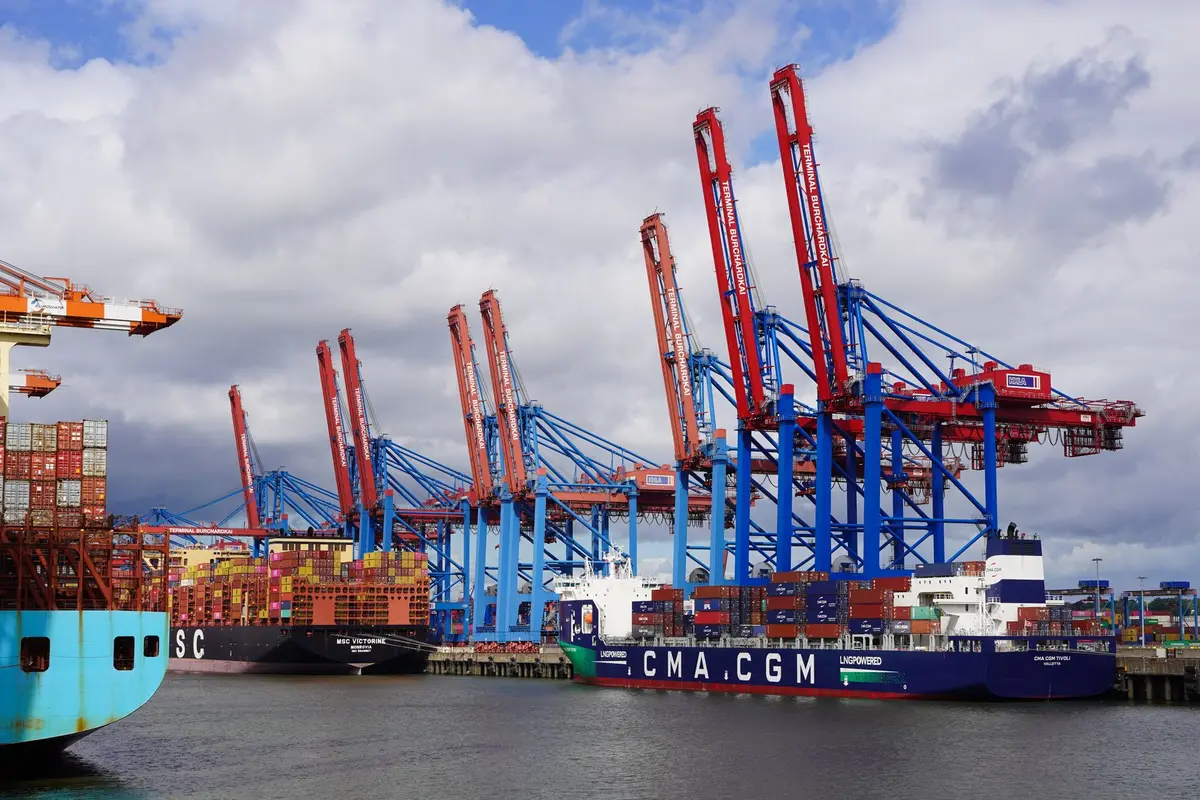
Automating Shipping Document Data Entry for Freight Forwarders

Most freight forwarders still re-key shipment data. A person opens the carrier email, the commercial invoice and the packing list, then types shipper, consignee, weights, package counts, container numbers and HS codes into the transport management system (TMS) or ERP. Automating this means three things: a tool reads each document and pulls out the fields, the system compares those fields against the booking and against each other, and only a clean, complete record is posted. Fields that do not match, such as gross weight, package count, marks or Incoterm, go to a named person in a review queue. The owner still decides on classification and on anything the documents do not explain. Results depend on your own document volumes, which a free automation audit measures.
In short
- Measure your own re-keying time for one or two weeks before comparing any tool or figure.
- Automate the reading and matching, but post only records that pass every field check.
- Gross weight, package count, marks and invoice-to-packing-list quantities are the first rules to build.
- OCR output needs checking, especially for handwritten or faded documents.
- Keep a person on the exception queue and on all HS code and customs decisions.
What the problem looks like on a normal day
A shipment rarely arrives as one clean file. The booking confirmation comes by email, the supplier sends a commercial invoice as a PDF, the packing list arrives as a spreadsheet or a photo of a printed page, and the bill of lading comes from the carrier as a separate document. Some suppliers send these through WhatsApp. Each document carries the same facts in a different layout, and a clerk has to read all of them and type the matching details into one shipment record.
The forwarder's operations team usually does this after the documents land. Traditionally the commercial invoice, packing list and bill of lading are each keyed into the TMS by hand, and the work is repeated for every consolidated or split shipment. Where one supplier ships from several factories, each factory sends its own invoice and packing list, and the forwarder has to merge them into one bill of lading record.
The work is not hard in any single step. The cost comes from volume, repetition and the fact that one wrong character can cause a mismatch later at the port, the customs broker or the bank.
What it costs you, and how to measure it
There is no reliable public figure for what this costs a typical forwarder, because shipment volumes, staff wages and document quality differ too much. Any number you find online should be treated with care, especially where the page sells a product that removes the work. The honest way to size the cost is to measure your own team for one or two weeks.
Use a simple formula. Count the shipments that arrive each week. Count the documents per shipment, usually three to six. Time how long a person takes to key one commercial invoice and one packing list from start to finish, including opening the file and re-checking it. Multiply the hours by the fully loaded hourly cost of the people doing it, which means wages plus employer-paid social costs and overheads. Then add the time spent correcting errors found later.
For example, a team that handles 40 shipments a week, keys three documents per shipment, and spends 15 minutes per document has about 30 hours of typing each week. At a loaded cost you know from your own payroll, that is the weekly figure to compare against any automation. The example uses invented inputs to show the method; your own timings will differ.
Why the cost is not only the typing
Re-keying causes errors, and errors cause holds. A mistyped gross weight or a package count that does not match the packing list can delay a release, trigger a query from the carrier, or lead a customs officer to ask for documents. Industry analysts often point out that most discrepancies start with manual entry. The exact share varies by source, so use your own exception log to measure how often this happens in your business.
There is also a timing cost. When the record is posted late, the TMS shows an incomplete shipment, the invoicing team waits for the final figures, and the customer asks for an update that nobody can give yet.
The manual way and the automated way
The table below shows the same job done two ways. The automated column describes what a system is built to do. A person still checks the exceptions.
| Step | Manual way today | Automated way |
|---|---|---|
| Receiving documents | Someone checks the shared inbox, WhatsApp and the courier for new files and forwards them. | Mail rules and WhatsApp webhooks collect every file into one folder per shipment reference. |
| Reading the documents | A clerk opens each PDF or photo and reads the fields by eye. | OCR and an AI extraction step pull shipper, consignee, weights, packages, marks and HS codes into a staging sheet. |
| Matching | The clerk opens the booking, invoice and packing list in separate tabs and compares them. | Rules compare each field across the booking, invoice and packing list and flag any difference. |
| Posting | The clerk types the agreed record into the TMS or ERP. | Records that pass every check are written to the TMS or ERP through its import or API. |
| Exceptions | Problems are found late, often at the port or by the customer. | Mismatches go to a named person with the two conflicting values side by side. |
| Audit trail | Depends on whether the clerk left notes. | Each posted field can be traced back to its source document and time. |
How to automate it, step by step
Most forwarders do not need a new TMS. They need a clean path from the documents into the system they already use. The steps below work for a TMS, an ERP, or a spreadsheet in front of either.
- List the fields you must post. Write down every field your TMS or ERP needs for a shipment, and note which document each one comes from. Include the shipper, consignee, notify party, origin, destination, Incoterm, container and seal numbers, package count and type, gross and net weight, volume, description, HS code and invoice value.
- Choose the intake channels. Most shipments arrive by email. Set up a dedicated shared mailbox for shipping documents. Power Automate (Microsoft) and Zapier both connect mailboxes to spreadsheets and databases. If suppliers or drivers send photos through WhatsApp, connect that channel using the WhatsApp Business Platform Cloud API. Meta's developer documentation describes the Cloud API as a hosted service that uses webhooks to receive incoming messages, and Meta states that access to the Cloud API is free, although message charges apply under Meta's current pricing.
- Extract the fields. Use OCR for printed documents. Academic testing of OCR on invoice images has reported character accuracy around 92 to 95 percent, and accuracy drops on handwritten pages. A character error rate of this size still means errors in long fields like addresses and descriptions, so OCR output must be checked. Many teams add a language model step to map the OCR text to the right fields, because layouts differ between carriers and suppliers.
- Write the output to a staging sheet first. Google Sheets, Excel or a small database table works well. Each row is one shipment, each column is one field, and each value has a note showing which document it came from. Nothing should go straight into the TMS at this point.
- Compare the documents. Set rules that compare the same field across sources. Compare gross weight on the packing list with the weight on the booking. Compare package count across the packing list and the bill of lading. Compare invoice line totals with the total on the invoice. Compare the Incoterm on the invoice with the freight and insurance lines.
- Post only clean records. When every required field is present and every comparison passes, write the record to the TMS or ERP through its import template or API. Check the vendor's current documentation for the exact method, because import rules vary by product and version.
- Send exceptions to a person. Anything that fails a rule goes to a review queue with the two conflicting values, the source documents and a link to the shipment. The reviewer corrects the value or contacts the shipper, then approves the posting.
- Log everything. Keep a record of what was extracted, what was changed by hand and who approved it. This makes audits and disputes easier, and it shows you which suppliers send the messiest documents.
For electronic bills of lading, the work changes. The DCSA's adoption guide says eBL uptake was relatively low in early 2025, at about 5.7 percent of container bills of lading. Breakbulk reported that adoption reached about 11 percent by August 2025, up from roughly 1 percent in 2021. Expect a mix of paper and electronic documents for some years, and design your intake to handle both.
What breaks, and how to prevent it
The most common mismatch is gross weight. Estimated weight at booking often differs from the actual weight at the warehouse or on the packing list. Line quantities on the commercial invoice must reconcile to the packing list. Marks and numbers, container numbers and seal numbers must match the physical cargo. Consignee names differ between the invoice and the bill of lading when a trading company is involved. Each of these should be a named rule with a named reviewer.
Handwritten packing lists, faded photos and multi-page scans cause most extraction failures. The fix is to request cleaner files from the suppliers that send them, and to route low-confidence extractions to a person automatically. A second risk is duplicate uploads. The same invoice can arrive by email and by WhatsApp, and a posted duplicate can double-count a shipment. Give each document a unique hash or invoice number and check for it before posting.
A third risk is a change of supplier format. A new carrier template can break a rule that worked last month. Review the exception rate every week for the first two months, then monthly. A sudden rise in exceptions usually means a new format, not a new problem with the cargo.
When not to automate
Automation is not worth it for every freight business. If you handle a few shipments a month, the setup and checking time may exceed the typing time. If your documents are mostly handwritten, from many small suppliers with no fixed format, the exception queue can grow faster than the saved typing. If your TMS or ERP has no import route and no API, you may end up with a copy-and-paste step that is no better than the manual one. In those cases, fix the source first: ask suppliers to use one template, agree a document cut-off time, or move the simplest lanes onto a standard format.
Automation also should not decide classification or customs treatment. HS code selection, valuation disputes and any declaration that goes to a customs authority need a trained person. The extraction can suggest a code, but the person must confirm it against the official tariff for the destination country.
What it typically takes
The time is mostly spent on three things: collecting one month of real documents, agreeing the field list and the match rules with the people who will review exceptions, and testing the posting route into your TMS or ERP. Testing with live shipments in parallel with the manual process is the step most teams skip, and it is the step that shows where the rules are too strict or too loose.
Plan for a period where the old and new methods run side by side. Check a sample each day and record every difference. Once the exception rate is stable and the reviewers trust the queue, you can reduce manual checks on the cleanest lanes. The length of this period depends on how many carriers, suppliers and document formats you handle, and on how much access your IT team can give. A free automation audit measures these inputs for your operation before any build starts.
Your own staff remain part of the process. Someone still owns the exception queue, decides on unclear cases, and checks the rules each month. Automation changes what those people spend their day on. It does not remove the need for them.
How AiStaffo would automate this
AiStaffo would start by connecting the shipping mailbox and, where suppliers use it, the WhatsApp Business Platform Cloud API, so every document for a shipment lands in one folder with its reference. An AI worker would extract the fields into a staging sheet, compare gross weight, package count, quantities and Incoterm across the booking, invoice and packing list, and post only the records that pass to the TMS or ERP through its import route. Anything that does not match would go to a named reviewer with both values shown. The owner or operations lead still approves exceptions, confirms HS codes and decides on anything the documents do not explain. To see how this would work with your own document volumes, book a free automation audit.
Questions people ask
Can software read a commercial invoice and fill in the TMS automatically?
How accurate is OCR on shipping documents?
Which fields must match before a shipment is posted?
Can I use WhatsApp to collect shipping documents?
Do electronic bills of lading make this work unnecessary?
Is it worth automating if we only handle a few shipments a month?
Book a free automation audit
Thirty minutes. We look at one process you run every week and tell you exactly what an AI worker would take off your desk, and what it would not.