OpenAI Disbands Standalone Robotics Team, Folds Staff Into Research
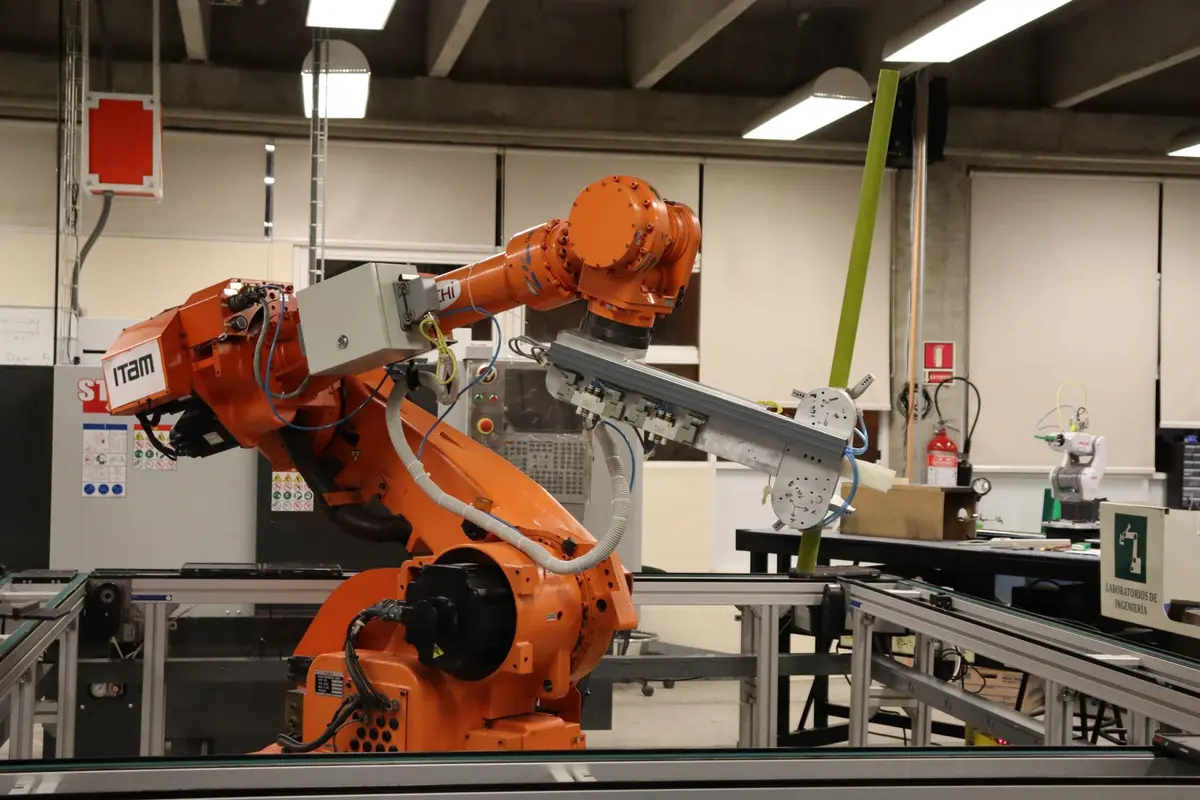
OpenAI has disbanded its standalone robotics team and moved the researchers into other groups, according to Fortune, which reported the change on 13 November 2026. Robotics researchers now sit in the main research team under Chief Research Officer Mark Chen. Applied robotics and hardware staff have joined the Applied organisation led by President Greg Brockman. OpenAI says the change is meant to speed up robotics work rather than end it. For businesses that automate routine work, the news does not change any software tool available today. It signals that the company expects general AI models, rather than robot-specific models, to drive future robot control.
In short
- OpenAI disbanded its standalone robotics team and moved the researchers into the main research team and the Applied organisation, according to Fortune on 13 November 2026.
- OpenAI says general models such as GPT-6 Astra can now be applied to robots directly, which is why it sees no need for a separate team.
- Evidence so far is mostly simulated and early, and a 2026 NVIDIA study reports an average of 18.56 seconds per inference call.
- For businesses automating office work, the news changes vendor direction, not the tools available today.
What happened
According to Fortune, which reported the change on 13 November 2026, OpenAI has disbanded its stand-alone robotics team and reassigned the researchers to other parts of the company. The robotics research group now reports to Chief Research Officer Mark Chen. The applied robotics and hardware staff have moved into the Applied organisation, which reports to President Greg Brockman. A company spokesperson told Fortune that robotics remains a core part of the long-term vision and that the move is intended to accelerate progress.
The reason OpenAI gives is a change in its own expectations. Researchers had first expected robotics progress to build on video models such as Sora. Since then, the company says its general-purpose frontier models, including the one it calls GPT-6 Astra, can be applied to robots directly. Fortune cites an Nvidia study in which an Astra-powered agent reached a 74.8% success rate on a simulated manipulation benchmark, against 51.0% for the best specialised robot models on the same leaderboard.
This is not the company's first reorganisation of robotics. Benzinga reports that OpenAI wound down an earlier robotics effort in 2020 and rebuilt one in 2024, including a collaboration with the humanoid robotics startup Figure. The Decoder describes the 2026 move as the second time the standalone team has been dissolved.
Why it matters for businesses that automate work
Most owners who automate office work will never buy a robot. The reason the news matters to them is the direction of travel. OpenAI is treating robot control as one more application of its general models, the same models that already power text, documents and data tasks. If that approach holds, the skills and tools used to automate desk work may carry over to physical tasks sooner than specialist robotics would have allowed.
The evidence behind that bet is still early. The results cited so far come from simulations, from company-run tests and from preprints that have not yet been through peer review. The announcement also does not say when OpenAI will sell a robot or what one would cost.
What changes in practice
For a business that already automates routine work, the change is about vendor direction, not about the tools you use this quarter. The table below sets out the points an operations head can check against any claim about AI-driven robots.
| Question | What the reporting says | What it means for an operations decision |
|---|---|---|
| Does a robot need its own AI model? | OpenAI says general models can now be applied to robots directly. | Ask vendors which general model they use, and whether they depend on one provider. |
| Is it fast enough? | NVIDIA's Astranomy study, posted in 2026, reports that GPT-6 Astra averages 18.56 seconds per inference call. | Delay of this size rules out fast physical work such as sorting on a moving line. Slow, planned tasks are a better fit for now. |
| Is it reliable? | An arXiv preprint on GPT-6 Astra concludes that general-purpose models remain far from delivering consistently safe and reliable robotic control. | A person must still supervise any physical action, and must be able to stop it. |
The software side of automation follows a different timeline. Invoice entry, payment follow-ups, order records and monthly reports run on existing systems, and this announcement does not alter how those systems work. Whether you run a clinic in Mumbai or a distributor in Manchester, the questions to ask remain the same: which steps repeat, which data they touch, and who approves the exceptions.
What to watch next
- Whether OpenAI publishes results from physical robots, not only simulations.
- Whether the Applied organisation builds out hardware staff under Greg Brockman.
- Independent benchmark results from outside OpenAI, including the StationeryBench comparison that The Decoder describes.
- Whether robotics vendors start to name the general models they use, and at what speed and cost.
How AiStaffo would automate this
AiStaffo would start with the routine office work that already runs on screens, such as invoices, payment follow-ups, order records and reports, and connect the mailboxes and accounting or spreadsheet tools the business already uses. The AI worker would read incoming documents, prepare entries, send scheduled follow-ups and draft the regular report without a person starting each step. Anything it cannot match or classify would go into a review queue rather than being guessed. The owner or finance lead still approves payments, decides exceptions and signs off anything that leaves the business, and the free audit shows which of the current tasks are worth automating. Book a free automation audit.
Questions people ask
Did OpenAI stop working on robotics?
What is GPT-6 Astra?
Are general AI models ready to run robots in factories or warehouses?
Does this news change which automation software I should buy?
What should I ask a robotics vendor that claims general AI runs its machines?
Book a free automation audit
Thirty minutes. We look at one process you run every week and tell you exactly what an AI worker would take off your desk, and what it would not.