Small Firms Using AI Expect More Hiring and Sales, Study Finds

The Federal Reserve Bank of New York said on 8 October 2026 that US small firms already using AI were significantly more likely than non-users to expect higher employment and revenue over the next twelve months. The finding comes from the 2025 Small Business Credit Survey and describes an association, not proof that AI caused those expectations. The survey counts 46 percent of firms with at least one employee as using AI tools. A separate Census Bureau measure of all US businesses put use at 19.8 percent in May 2026. For businesses that automate routine work, the result shows that adopters are more optimistic. It does not show that automation delivers the growth they expect.
In short
- The New York Fed found US small firms already using AI more likely to expect higher employment and revenue over the next year.
- The finding is an association from 2025 survey data, not evidence that AI caused the expected growth.
- The 46 percent AI-use figure covers firms with at least one employee, while Census put business-wide use at 19.8 percent in May 2026.
- Only 31 percent of respondents said AI had raised their sales, so expectations are not outcomes.
- Owners should measure time saved on named tasks before judging any automation by its headline numbers.
What the New York Fed found
The Federal Reserve Bank of New York published an analysis on 8 October 2026 in its Liberty Street Economics series. Economists Will Aarons and Asani Sarkar based it on the 2025 Small Business Credit Survey, which was fielded between September and November 2025. The AI section covered 5,248 employer firms, weighted to reflect the national population of employer firms. According to the authors, firms currently using AI are significantly more likely than non-users to expect higher employment and revenue over the coming year, even after allowing for firm characteristics, owner characteristics and location.
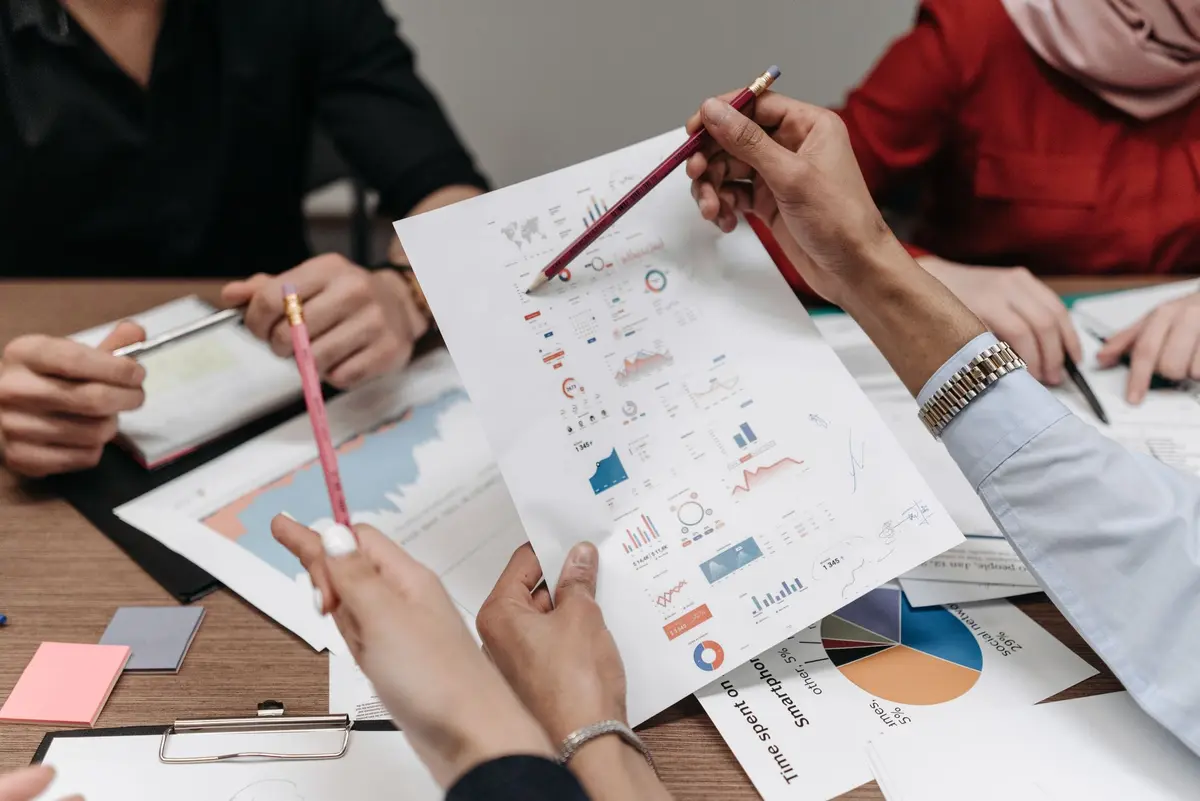
The gap shows up in the numbers. TechRadar, reporting on 9 October 2026, said AI adopters recorded a net expectation of 33 percentage points for higher employment, compared with 15 points for non-adopters. The New York Fed's own figures on revenue show a similar split. Among AI users, the share expecting revenue to rise exceeded the share expecting it to fall by 48 percentage points. Among non-users, the gap was 21 points. Only 31 percent of respondents said AI had increased their firm's sales.
| Measure (2025 survey data) | AI users | Non-users |
|---|---|---|
| Net expectation of higher employment, percentage points | 33 | 15 |
| Revenue expectation gap (rise minus fall), percentage points | 48 | 21 |
The 46 percent figure needs a careful reading. TechRadar described it as the share of US small businesses using AI. The New York Fed's base is firms with at least one employee, and the question covers employees using AI tools as well as owners. A broader Census Bureau measure, the Business Trends and Outlook Survey, put AI use across US businesses at 19.8 percent as of 3 May 2026. The two numbers ask different questions over different periods, so they should not be read as competing readings of the same thing.
Why it matters for businesses that automate work
The study is correlational, and the authors say so. They suggest AI may be helping some small firms get past specific operational or technical limits that hold back revenue. They also say the results do not reflect broad optimism about expanding through hiring. The survey records what owners expect, not what happened afterwards. Whether adopters get the results they anticipate is, in the authors' view, a question for future research.
The authors also explain why small firms may face a different path from large ones. Larger firms tend to build their own AI infrastructure. Smaller firms may lack staff time, technical knowledge and resources to decide how to apply AI tools. They may, however, face fewer coordination problems when they bring a tool into daily work. For an owner, the practical question is which routine task to move first.
What changes for a business that automates work, in practice
For a firm that already runs some back-office automation, the study does not change the next step. It does change how to judge the result. A firm with five staff in Manchester and a firm with several thousand staff in Mumbai face the same test. Each needs to show that a specific task now runs with less human effort, rather than pointing to a forecast.
- Name the repeated task, such as invoice matching, payment follow-ups or a weekly sales report.
- Time that task for two or three weeks before any change, and again afterwards.
- Decide where the saved hours go, whether to other work or to fewer hours.
- Keep a named person responsible for exceptions, because unusual cases still need human review.
Staffing is the sensitive part. The New York Fed's regional business surveys cover New York State and northern New Jersey, not the whole country. Their August 2026 round found 61 percent of service firms using AI, up from 40 percent in 2025 and 25 percent in 2024. A September 2026 analysis of the same surveys reported that firms were more often retraining staff than cutting jobs.
What to watch next
The current study measures twelve-month expectations, so it cannot show whether those expectations came true. Later rounds of the Small Business Credit Survey, or a follow-up from the New York Fed, would be the first place to test that. Watch also for changes in how the Census Bureau asks about AI. The Federal Reserve Board has noted a methodological change in late 2025 that affected how adoption rates compare over time. Until those definitions settle, owners should compare survey numbers only with others that use the same question.
Sources
How AiStaffo would automate this
AiStaffo would start by listing the repetitive work in your business, such as data entry, payment follow-ups, reconciliations and monthly reports, and then connecting the systems where that work lives. Once connected, the automation runs those steps without a person keying in each one, and it keeps a record of what it did. You still decide which tasks go first, and you review the exceptions the system flags for you. We would also record the hours each task takes before and after, so the result rests on your own figures rather than on a survey average. Book a free automation audit.
Questions people ask
Did the New York Fed prove that AI makes small businesses hire more?
Which businesses were included in the New York Fed study?
Why do the 46 percent and 19.8 percent AI-use figures differ?
Should my business adopt AI to increase revenue?
Does AI cause job losses according to the New York Fed?
How should a non-technical owner begin?
Book a free automation audit
Thirty minutes. We look at one process you run every week and tell you exactly what an AI worker would take off your desk, and what it would not.