AI patient records coordinator for everyday records work

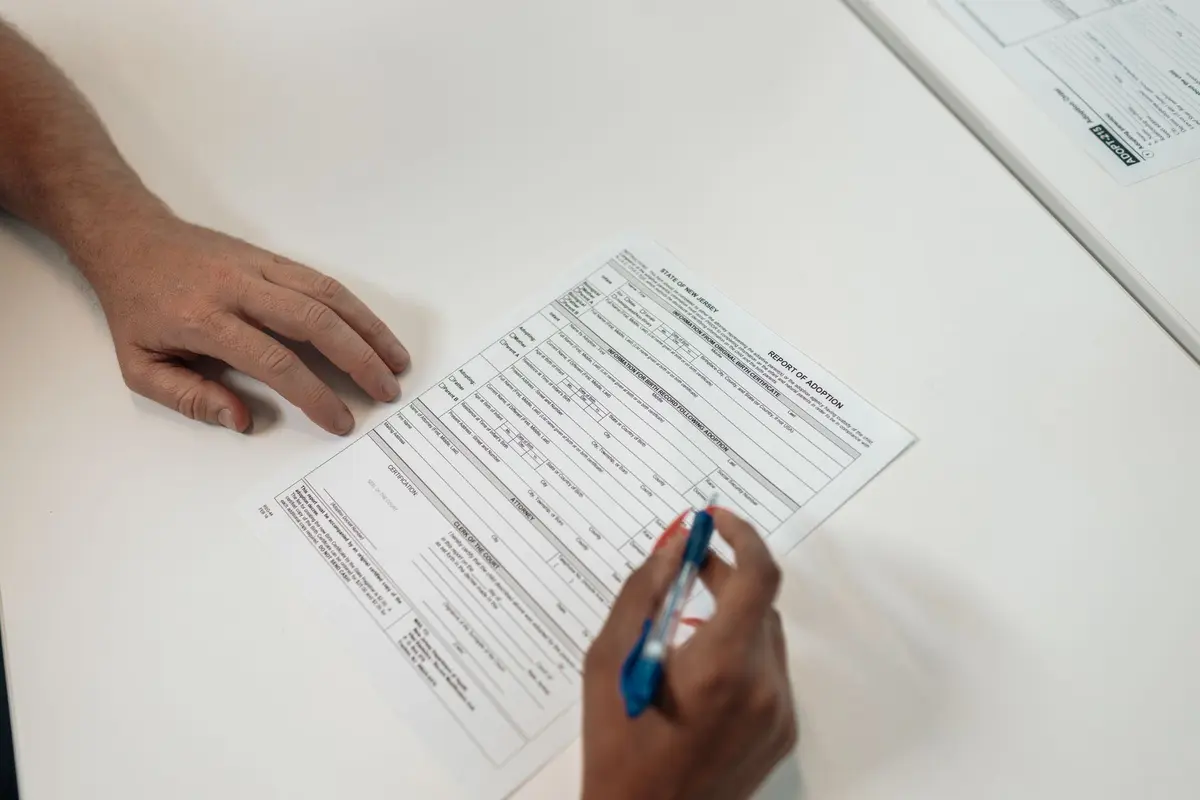
An AI patient records coordinator is an automated worker for the repeatable administrative steps behind patient records. It can monitor an agreed inbox or fax queue, sort incoming documents, compare patient details with existing records, prepare documents for filing, track missing paperwork and route record requests to the right staff queue. It should not independently resolve uncertain patient matches, decide whether sensitive records can be disclosed or make clinical judgements. A person remains accountable for reviewing exceptions and approving decisions that affect privacy, patient identity or release of information. The useful starting point is a stable workflow with clear rules and a human review path.
In short
- An AI worker can sort routine incoming records, prepare filing details, track missing paperwork and route requests.
- Patient identity conflicts, sensitive disclosures and clinical interpretation stay with authorised staff.
- Start in draft-and-review mode, then automate only stable steps with clear exception routing.
- Use approved system connections and privacy controls for every channel that handles patient information.
What a patient records coordinator actually does all day
The title varies by organisation. You may call this person a medical records coordinator, health information clerk, records administrator or document imaging coordinator. The work is recognisable: get the right document into the right patient file, keep incomplete cases moving, and help staff answer requests for records.
Common recurring tasks include:
- Checking shared email, secure message, portal and electronic fax queues for incoming records.
- Opening attachments, checking whether pages are legible and separating mixed or multi-patient batches.
- Reading names, dates of birth, record numbers, dates of service and document type from forms and reports.
- Searching the EHR or electronic medical record (EMR) for the likely patient and encounter.
- Indexing and attaching documents to the right patient record and choosing a document category.
- Sending ambiguous matches, poor scans and incomplete paperwork to a staff review queue.
- Following up with patients, other providers or internal teams for missing forms, signatures or records.
- Logging incoming record requests, tracking progress and routing them to health information management (HIM), clinicians or authorised release-of-information staff.
- Keeping a queue or tracking sheet current so open items do not disappear between shifts.
These duties are reflected in medical records job descriptions from organisations such as Beth Israel Lahey Health and the US Department of Veterans Affairs, which describe scanning, indexing, routing incoming documents, managing queues and handling requests. The systems and exact division of work differ, but the administrative pattern is similar.
Which tasks an AI worker takes over, and what it needs
An AI worker can handle defined steps across systems, but it needs a known source for each item and a permitted way to update the record. That may be an approved EHR integration, an interface provided by the EHR vendor, or a controlled staff-facing queue. Avoid designing the process around an unapproved method of accessing patient information.
| Recurring task | What the AI worker can do | What it needs |
|---|---|---|
| Watch incoming records | Check a designated shared mailbox, secure intake folder or e-fax queue; identify new messages and attachments; create a work item. | The selected inbox or fax system, access rules, and a list of accepted senders or channels. |
| Sort and describe documents | Read legible text, classify common document types such as referral, lab report or consent form, and capture basic details for staff. | Scanned files or digital documents, the organisation’s document categories and examples of how routine items are named. |
| Find a likely patient file | Compare available identifiers and suggest a match when the configured rules agree; flag inconsistent or incomplete details. | Permissioned EHR/EMR search or a patient index, plus the approved identifiers and match rules. |
| Prepare filing | Populate an upload or indexing queue with the likely patient, document type and encounter details. Where a supported integration and approval exist, submit routine documents for filing. | The EHR’s supported integration, document-management system or staff review queue; the destination categories and audit requirements. |
| Track missing paperwork | Update an authorised tracking sheet or case queue, note what is missing, set a follow-up task and prepare a reminder for review or sending. | A controlled spreadsheet or work-management system, approved message templates and a clear follow-up schedule. |
| Route record requests | Extract request details, categorise the request and send it to an appropriate review queue; flag missing authorisation or unclear scope. | The request inbox, request log or case-management system, routing rules and named staff queues. |
| Report queue status | Summarise new, waiting, completed and exception items for the responsible team. | The source queue and agreed definitions for status, ownership and completion. |
Real systems matter. Many organisations use an EHR such as Epic or Oracle Health, alongside a document-management or fax system. Epic documents support for receiving structured clinical documents and filing them to an appropriate chart through supported exchange workflows. Microsoft Excel or Google Sheets may be used as a tracker where approved, while a ticketing or case-management system can hold follow-up work. WhatsApp should not be treated as a suitable patient-record channel by default; use it only if the organisation has approved it for that purpose and configured it to meet its privacy and security requirements.
The AI worker’s matching step should produce a suggestion, not silently create a new patient or merge records. The US Office of the National Coordinator for Health Information Technology describes matching as linking patient data using multiple demographic fields, and its SAFER guidance stresses reliable patient identification in the EHR. In practice, the organisation defines the identifiers and thresholds; a person handles conflicts, near-matches, missing identifiers and possible duplicates.
What stays with a person, and why
A person should retain the decisions that require judgement or authority. That includes resolving conflicting patient details, deciding whether two records belong to the same person, handling requests involving a representative or minor, assessing unusual authorisations, interpreting unclear requests, and deciding whether a sensitive document needs restricted handling. The AI worker can gather the relevant information and flag the issue, but should not make the final call.
Clinical interpretation also remains with qualified staff. A records coordinator may route a report to a clinician or alert an established team queue, but should not decide whether a result is important, explain it to a patient or change a care plan. Patient conversations that require reassurance, context or negotiation should also stay with staff, even if an automated worker drafts a routine acknowledgement.
Release of information needs particular care. In the United States, the HIPAA Privacy Rule gives individuals access rights to information in designated record sets, with limited exceptions, and HHS says covered entities generally must act on an access request within 30 calendar days. Other countries have different legal frameworks and procedures. A global operation should apply the rules and approved policies relevant to the patient and provider, rather than assume one country’s deadline or permission rules apply everywhere.
Staff also own the controls: who can access which records, which systems may receive data, how activity is logged, how exceptions are reviewed and what happens when a system is unavailable. The UK Information Commissioner’s Office treats health information as special category data under UK GDPR. That is one example of why health-record automation needs a privacy and security review for the applicable jurisdiction, not just a working technical connection.
How this role differs by business type
The underlying work is similar, but the documents, queues and escalation contacts change. The examples below describe common operating settings, not a rule that every organisation assigns the role in exactly the same way.
| Business type | What the coordinator does there that is specific | What the AI worker handles there |
|---|---|---|
| Hospital or health system | Routes documents across departments and encounters, manages high-volume intake and sends incomplete items to the right service. | Sorts incoming files, prepares indexing details and directs routine items to department queues. |
| Primary-care or specialist clinic | Collects referral records, consent forms and prior test reports before appointments or ongoing care. | Tracks missing referral paperwork, organises incoming records and prepares likely chart attachments. |
| Diagnostic laboratory | Handles requisitions and supporting documents, checks that intake records are associated with the correct patient and order. | Extracts identifiers and document types, flags missing fields and routes unclear patient or order matches. |
| Medical imaging centre | Coordinates referral paperwork, prior imaging reports and documentation linked to imaging appointments. | Sorts referral attachments and routes reports or incomplete requests to staff queues. Imaging itself may be held in a separate PACS system. |
| Rehabilitation or therapy provider | Tracks referrals, care-plan paperwork and forms requiring completion by a patient or clinician. | Maintains the missing-document list and prepares routine reminders for authorised staff review. |
| Health insurer or claims administrator | Routes records supporting claims, appeals or case-management work under internal access and handling rules. | Classifies incoming documents, updates the request queue and flags missing or mismatched identifiers for review. |
These are practical workflow examples, not a claim that all six settings employ the same job title. In a hospital, the destination may be a departmental EHR queue; at a clinic it may be a referral or appointment worklist; in imaging, image files and reports may live in separate systems. The connection plan should follow the organisation’s actual records process.
How the switch happens
Do not remove the coordinator from the workflow on day one. Begin with a narrow process and keep the existing person responsible while the AI worker learns the organisation’s categories, queue names and exception rules. A week-by-week change might look like this:
- Week 1: Map the work. Document each intake channel, record destination, document category, follow-up rule and exception. Agree who can access patient information and which tasks need a person’s approval.
- Week 2: Observe and compare. The AI worker reads a limited, approved sample and proposes classifications, matches and routing. The coordinator checks each suggestion and records errors or missing rules. Nothing is filed or sent automatically.
- Week 3: Run routine preparation. The worker creates draft queue entries, filing details and follow-up tasks. Staff still approve every patient match and any action that changes a record or communicates externally.
- Week 4: Automate agreed low-risk steps. If testing supports it, routine sorting and tracking can run automatically within defined boundaries. Uncertain matches, poor scans, sensitive categories, unusual requests and system failures go straight to a named staff queue.
- After rollout: Review exceptions and controls. The coordinator initially handles exceptions and checks a planned sample of routine work. The owner or records lead reviews errors, queue ageing and access logs, and changes the rules through a controlled process.
“The role shrinking to review only” is an outcome to assess, not a guaranteed schedule. It is reasonable only if the incoming work is predictable, the integrations are reliable, exception volume is manageable and staff have authority and time to review issues. Where the worker is still preparing a large share of records for approval, retain that work in the role rather than relabelling the workflow as fully automated.
Risks and when not to automate this role
The main operational risk is a document being attached to the wrong patient or encounter. A confident-looking text match is not proof of identity. Names can be shared, details can be out of date, and source documents can contain errors. The ONC’s 2025 SAFER Guides include a patient-identification guide because accurate patient identification is a safety issue. Make uncertain matches stop for human review; do not let the system guess its way past missing or conflicting details.
Other risks include poor scans, incorrect document categories, duplicate filing, a missed attachment, an unnoticed follow-up failure, excessive access to health information and disclosure to the wrong requester. Records requests can also involve special circumstances, such as an unclear authority to act for a patient, a request with an ambiguous scope or information subject to additional protections. Set clear escalation rules and keep a record of what the worker did and what a person approved.
Do not automate this role yet if the source documents are routinely unreadable, patient records are poorly organised, staff cannot agree on filing rules, or there is no safe way to integrate with the EHR. Avoid automation that depends on shared passwords, bypasses access controls or sends identifiable records through tools that have not been approved for health information. If staff cannot see the incoming queue and correct a wrong match promptly, the workflow is not ready.
It may also be a poor fit where volume is low and irregular, manual handling is already quick, or nearly every item needs individual clinical, legal or privacy judgement. In those cases, automate only the tracking or queue summary, or leave the process manual. The right boundary is the repeatable clerical step, not the decision that requires accountability.
Sources
- Beth Israel Lahey Health, Medical Records Coordinator job description
- US Office of the National Coordinator for Health Information Technology, Patient Identity and Patient Record Matching
- Epic, Exchanging Clinical Findings
- US Department of Health and Human Services, HIPAA access request timing
- UK Information Commissioner's Office, special category data
How AiStaffo would automate this
AiStaffo can connect an approved intake inbox or fax queue with the organisation’s EHR work queue, document store and authorised tracking sheet. The AI worker can sort incoming files, prepare patient and document details for filing, flag missing paperwork and route record requests to staff review. A coordinator or records lead remains responsible for uncertain matches, sensitive requests and final approval where policy requires it. Book a free automation audit
Questions people ask
What does an AI patient records coordinator do?
Can AI attach documents to the correct patient file?
Can an AI worker process requests for medical records?
Which systems can an AI patient records coordinator work with?
Is patient records automation safe?
When should a clinic not automate patient records work?
Book a free automation audit
Thirty minutes. We look at one process you run every week and tell you exactly what an AI worker would take off your desk, and what it would not.