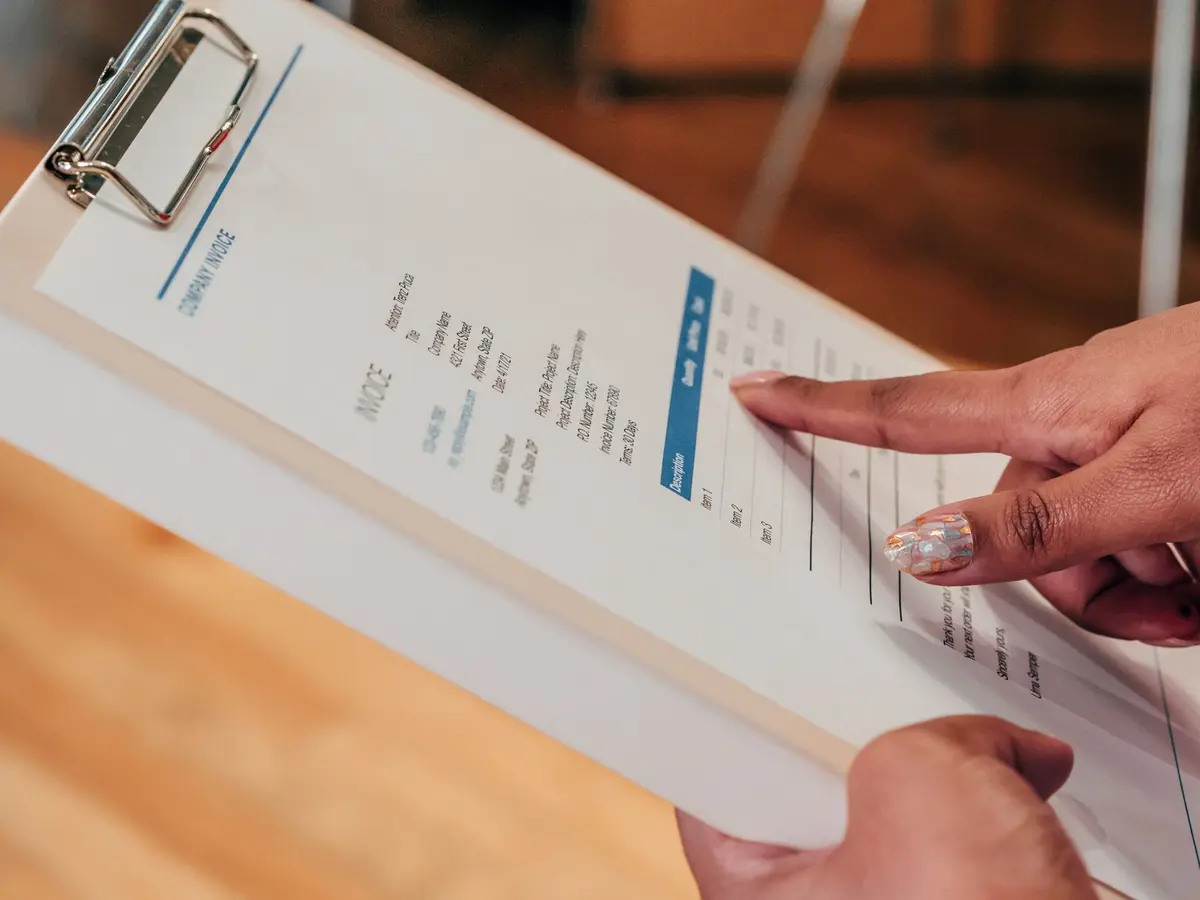
How to Automate Customer Credit Application Paperwork

To automate customer credit application processing, connect the channels where applications arrive to a secure document store, use OCR to extract fields, check required items against a defined checklist, and route complete files to a human review queue. Send applicants a clear request when something is missing, then record each follow-up and status change. Tools such as Microsoft Power Automate, Azure AI Document Intelligence, email connectors and an ERP or CRM API can support this workflow. Keep credit limits, terms and approval decisions with an authorised person. Automation should organise evidence and reduce rekeying, not decide who receives credit.
In short
- Automate intake, document extraction, completeness checks and queue updates, not the credit decision.
- Use a defined checklist and preserve links to original documents so reviewers can verify extracted fields.
- Route missing, unclear, conflicting or low-confidence information to a person instead of guessing.
- Measure your own handling time and local labour cost; public figures are not a universal cost-per-application benchmark.
Why credit application paperwork costs money
The expense is not only the minutes spent typing. An incomplete application can trigger several rounds of email, leave a sales order waiting, or cause staff to work from an outdated version of a form. If required financial documents, trade references or business details are scattered across inboxes and shared drives, the reviewer spends time assembling a file before assessing it.
There is no reliable universal public benchmark for the cost of processing one customer credit application across industries and countries. A transparent way to estimate the direct handling cost is to measure your own active staff time per file, then multiply it by your local loaded hourly labour cost. For context rather than a global rate, the US Bureau of Labor Statistics reported a median hourly wage of $21.00 for data entry and information processing workers in May 2024. At that wage, a planning scenario of 15 to 45 minutes of active handling would equal about $5.25 to $15.75 in direct wages per application, before benefits, overhead or the cost of delayed business. The time range is an example to test against your own workflow, not a published industry average.
Start by timing a sample of applications from receipt to a review-ready file. Separate active work from waiting time: a file waiting three days for a missing reference does not mean staff spent three days processing it. Track rework, repeat requests and queue age as well as handling minutes. Those figures will show whether paperwork volume is large enough to justify a change.
Manual handling versus an automated workflow
| Task | Manual approach | Automated support | Human control |
|---|---|---|---|
| Receive the application | Staff search inboxes and shared folders, then save attachments. | Email rules or a form trigger create a case and store files in a controlled location. | Staff handle unusual channels or suspected duplicates. |
| Read and enter details | Staff open PDFs, type company details and rekey them into a queue or ERP. | OCR extracts candidate fields and records them with a link to the source document. | A reviewer corrects uncertain or conflicting values. |
| Check completeness | Someone compares the file with a checklist and writes follow-up emails. | Rules compare required fields and documents with the checklist, then prepare a missing-items message. | Staff resolve ambiguous requirements and exceptions. |
| Prepare review | Staff assemble information and notify the credit team. | A queue record shows status, timestamps, missing items and document links. | An authorised reviewer assesses evidence and decides the outcome. |
Automating the administrative sequence is different from automating credit underwriting. This guide covers intake, completeness checks, file organisation and routing. It does not recommend using a language model or workflow rule to grant credit, set a limit or decline an applicant.
How to automate customer credit application processing
1. Agree on the checklist and status names
Write down what a review-ready file needs for each customer type and product. Possible items include the signed application, registered business name and address, requested terms, authorised contact, trade references and financial documents required by your own policy. Do not require every document from every applicant by default; define requirements with the credit team and legal or compliance advisers for the jurisdictions you serve.
Use a small set of statuses that staff understand, such as Received, Incomplete, Ready for review, In review and Closed. Define who can move a case between statuses. A checklist is the foundation: without it, automation can only reproduce inconsistent requests at greater speed.
2. Choose intake channels and create one case record
For email, use a dedicated mailbox or a rule in Microsoft 365 or Gmail to trigger a workflow when a message arrives with an application attachment. For web intake, use a form that asks for structured business details and uploads, rather than relying on free-text email alone. If customers send documents through WhatsApp, the WhatsApp Business Platform Cloud API can receive message events through webhooks; a standard chat inbox is not itself a dependable document-processing queue. Configure the channel and consent practices for the markets you serve.
Each submission should create one case ID in a system the credit team already uses. That may be a CRM, an ERP with an API, or a controlled database and queue. Store the original email or message reference, received time, applicant name and secure document links. Use a duplicate check based on stable identifiers and human review for possible matches; two similarly named businesses are not necessarily the same applicant.
3. Store documents securely before extracting them
Save originals in an access-controlled document repository, such as SharePoint or Azure Blob Storage, with retention and access rules appropriate to your organisation. Do not treat a spreadsheet attachment folder as a permanent document archive. The case record should point to the original file, and the workflow should record who accessed or changed the case where your systems support it.
Decide which file types, size limits and languages the intake accepts. Send unsupported, password-protected or unreadable files to a manual exception queue rather than silently dropping them.
4. Extract fields, then validate them
Optical character recognition (OCR) turns text in scans and PDFs into machine-readable content. Azure AI Document Intelligence offers OCR and custom extraction models that can return structured fields; Microsoft AI Builder can also process custom documents in Power Automate. For a credit form, define fields such as legal business name, registration identifier, billing address, requested terms and contact details. Test extraction on real, authorised examples from the document layouts you receive.
Use ordinary workflow rules for clear checks: required field is blank, email format is invalid, a requested document is absent, or the application does not include a signature where policy requires one. Compare extracted data with the applicant's form fields and flag mismatches. Keep the original image beside extracted values so a reviewer can verify the evidence.
A large language model (LLM) can help classify an incoming document or turn extracted text into a proposed structured summary, but do not let it fill missing facts by inference. Require it to return only fields supported by the submitted material, and route unclear or conflicting output to a person. OCR confidence is not proof that a value is correct.
5. Ask for missing items and update the queue
When a required item is missing, create a task and draft a message listing only the outstanding items. A staff member can approve the wording before it is sent, especially during the initial rollout. If you later send messages automatically, include a way to reply, capture delivery failures and stop reminders when the requested material arrives.
Update the queue as a case moves. A useful record includes case ID, customer identifier, received date, missing-item list, current status, last contact date, owner and source-document links. Avoid putting sensitive financial documents or unnecessary personal data into spreadsheet cells or chat messages. If a spreadsheet is used for a pilot, limit access and define how its data is moved into the system of record.
6. Route review, not the decision
When all checklist items appear present, route the file to an authorised reviewer. The reviewer should be able to inspect the original documents, see extracted values and correct errors. The workflow can record a decision entered by that person and pass the approved terms to an ERP or CRM through its supported API, with a confirmation step before changing a customer account.
Where no reliable API exists, avoid building the core process around a fragile bot that clicks through a changing screen. Use a controlled manual handoff or investigate a supported integration with the system vendor. Log failed updates and alert an owner so the queue does not show a case as complete when the ERP was not updated.
What breaks, and how to prevent it
- Different forms and poor scans: Test representative layouts, phone photos and scans. Route low-confidence or unreadable fields for checking, and keep the original file.
- Duplicate applications: Use a duplicate warning based on business identifiers and recent cases, not an automatic merge. Let a person confirm identity.
- Wrong or unsupported extraction: Validate formats and compare key fields with source documents. Record corrections so the team can improve templates and rules.
- Messages sent to the wrong contact: Verify recipient details against the application and use controlled message templates. Track failed delivery and replies.
- Queue and ERP disagree: Use a clear system of record, log each update and alert on API or connector errors. Reconcile open cases on a schedule.
- Sensitive information is overexposed: Restrict document access by role, retain only what policy requires, and review storage, transfer and retention rules in each relevant jurisdiction.
Automation cannot determine whether a business is creditworthy simply by reading its paperwork. It cannot resolve a disputed identity, verify every claim against an authoritative registry, or replace an authorised decision-maker's assessment. Treat missing, conflicting or suspicious information as a reason to pause and escalate, not a signal to guess.
When not to automate
Keep the process manual, or automate only a small part, if applications are rare, each one follows a materially different legal or commercial process, or the required checklist changes frequently. A workflow that takes longer to maintain than staff spend on the task is not a useful saving. Avoid automation when the destination system has no safe integration path and screen-based entry would create more operational risk than the existing process.
Do not introduce automated credit decisions just to reduce queue time. Credit decisions can affect customers and engage different rules across markets and product types. Have qualified advisers determine what laws, notices, recordkeeping and review rights apply before using automated decision-making in any jurisdiction.
What it typically takes
Time depends on how many intake channels, document types and destination systems are involved. For planning, a tightly scoped pilot using one intake channel, one application type and one review queue can often be organised over several weeks: first map requirements and access, then configure extraction and routing, then test with staff and a limited set of real cases. A broader rollout across multiple countries, languages, ERPs or credit policies takes longer because each variation needs its own testing and controls. These are planning ranges, not a guaranteed delivery schedule.
Before launch, test complete and incomplete applications, duplicate submissions, poor scans, conflicting values, bounced follow-ups, API failures and staff corrections. Keep a manual route available. Review exception rates and queue age after launch, and adjust the checklist or extraction model when actual submissions expose gaps.
Sources
How AiStaffo would automate this
AiStaffo can connect application email, supported messaging intake, document storage and your review queue or ERP. The workflow can collect attachments, extract candidate fields, check required items, prepare follow-up messages and route complete files to a named reviewer. Your authorised person still assesses the evidence and makes every credit decision. Book a free automation audit.
Questions people ask
Can AI approve a customer credit application?
What documents should a business credit application include?
Can applicants send credit documents through WhatsApp?
Which tools can extract fields from credit forms?
How much does manual credit application processing cost?
How long does it take to automate credit application paperwork?
Book a free automation audit
Thirty minutes. We look at one process you run every week and tell you exactly what an AI worker would take off your desk, and what it would not.