AI tele-caller for appointment reminders in India

An AI tele-caller handles the routine outbound calls your tele-caller makes every day: appointment confirmations, payment reminders, feedback checks and call-back bookings. It works from your booking list, billing export or CRM, places the call at the time you set, records the outcome and writes it back to the CRM. It calls only numbers with a valid consent record and a DLT-registered sender, and it passes complaints, disputes and anything sensitive to a person. Your staff still owns scripts, escalation rules and anything that involves money being waived or health advice. For most Indian businesses that run a few hundred routine calls a day, the switch takes about six weeks, with the tele-caller in place throughout.
In short
- The routine calls to automate are confirmations, due reminders, COD checks, feedback questions and callback bookings.
- Every automated call needs a consent record in the CRM and a DLT-registered sender before it goes live.
- Complaints, disputes, refunds, hardship and health questions stay with a named person.
- Run the switch one task at a time over about six weeks, with the tele-caller in place and reviewing exceptions.
- Test any vendor's language accuracy on your own recordings before you rely on the numbers.
What a tele-caller actually does all day
In most Indian offices the tele-caller works from a call list. The list is either a sheet exported from the billing or booking system or a screen inside the CRM. The job is less talking than the title suggests. A large part of the shift goes to dialling, waiting for pickup, leaving messages and typing short remarks. Owners tend to describe the work in a handful of phrases, and those phrases are the real task list:
- Confirmation calls, the day-before check that a patient, student or customer will still turn up.
- Due calls, the reminder for an EMI, school fee, invoice or service bill.
- COD confirmation, checking that a cash-on-delivery order is genuine and the address is right before dispatch.
- Enquiry follow-up, calling someone who asked for a quote, a demo or a site visit.
- Feedback check, asking how the visit, delivery or service went.
- Renewal calls, reminding a policyholder or customer that a plan or contract is about to lapse.
- Callback booking, fixing a time when the person says to call later.
- Remarks entry, writing "not answered", "promised to pay on the 5th" or "wrong number" into the CRM or sheet.
The remarks are the least visible part of the job and the most important one for the business. When the day is busy, remarks are the first thing skipped, and a CRM with blank outcomes cannot tell the owner who is still owing money or who asked for a callback. The tele-caller also keeps the calling list clean, removing numbers that asked not to be called and passing odd cases to a supervisor.
Which of those tasks an AI worker takes over
An AI tele-caller can run the calls in the first group almost without change: confirmations, due reminders, COD checks, feedback questions and callback bookings. Each of these follows a fixed purpose, a short script and a small set of outcomes. The AI reads the day's list, dials at the set time, speaks in the customer's language where the platform supports it, and records one of a fixed set of results such as confirmed, rescheduled, paid on a promised date, wrong number or no answer.
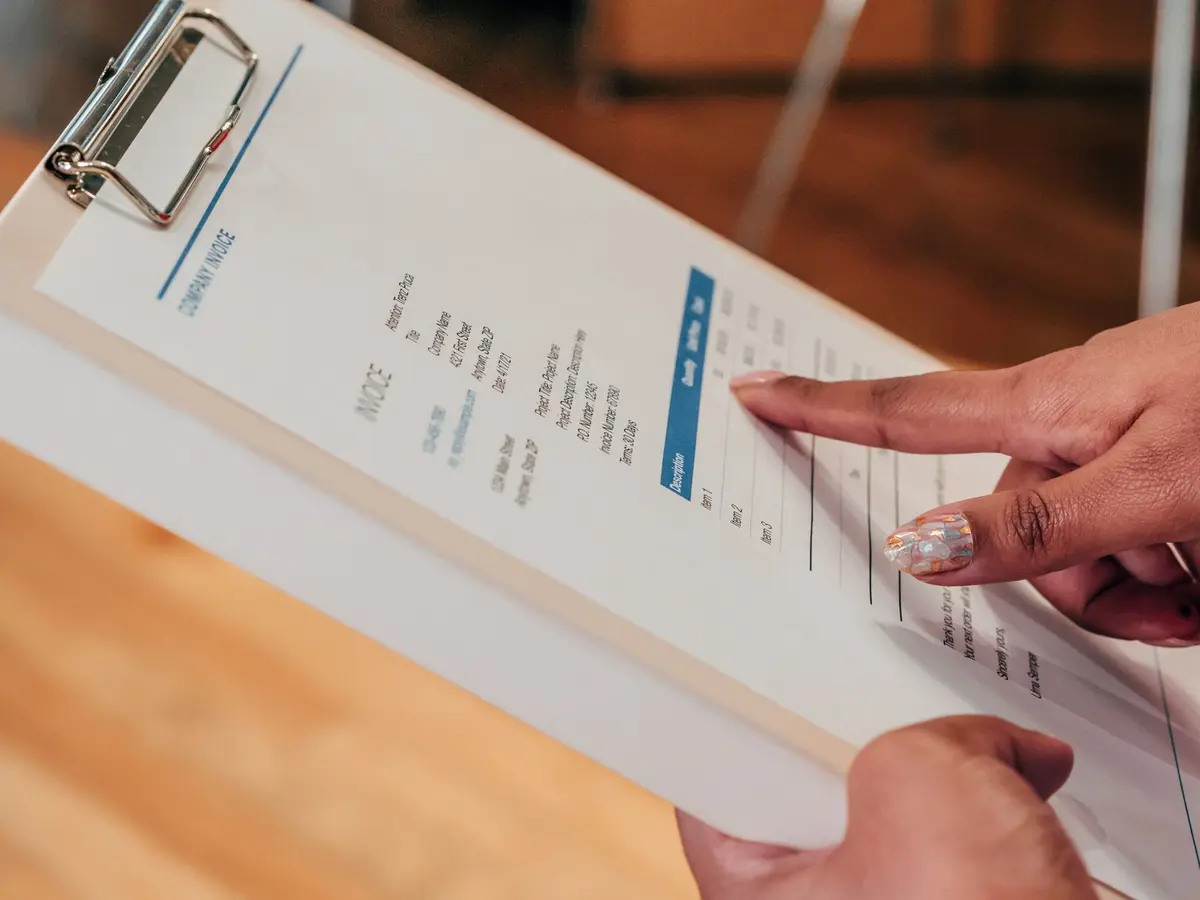
Confirmation and reminder calls need three inputs: the appointment list from your clinic or booking software, a calendar or slot list to offer alternatives, and a telephony line with a sender ID registered on the Distributed Ledger Technology platform that TRAI requires for commercial calls. For due reminders the source is the billing record. An accounts system such as Tally Prime can supply invoice and receipt status through an export, and the AI should read only the fields it needs, the amount, due date and account name.
Outcomes must reach the system of record. A CRM such as Zoho CRM can accept outcome updates through its API, or the AI can write to a controlled Google Sheet if the CRM has no API access. Callbacks should land in a calendar, so a person sees them. WhatsApp Business is useful for the follow-up message after a call, for example the appointment address or a payment link, but only with templates your business has had approved. Handover alerts for exceptions go to a shared inbox in Gmail or Outlook, with the call summary attached.
Consent is the input most businesses forget. Before any list is loaded, each contact needs a consent flag in the CRM that says whether the business may call, for which purpose and since when. The AI should check that flag on every call and drop anyone who has opted out, whatever the list says.
What stays with a person, and why
Some work stays with a person because it needs judgement, a relationship or a signature. A caller who is angry, a customer who disputes a bill, or a patient who describes new symptoms during a feedback call should reach a human at once. The AI should not argue, waive a late fee, offer a discount, promise a refund or give medical guidance. Those decisions carry money, legal exposure or clinical risk, and they need a named person to own them.
Collections are the clearest case. Lenders in India must follow the fair practice rules set by the Reserve Bank of India, and a call about default, restructuring or hardship needs a trained staff member who can explain options accurately. The same holds for insurance renewals. Advice on cover or a claim must come from a licensed agent, not from a script. Key accounts and long-standing trade relationships also stay with people, because the owner or account manager knows the history behind the phone number.
The main limit is language and accent. Automated callers handle common Hindi, English and some regional languages, but accuracy varies by language, dialect and line quality, and a call the system misunderstands must be handed over quickly rather than repeated. Anything that needs a decision outside the script stays with a person.
How this role differs by business type
The same calls look different in different sectors. The table shows the most common business types that employ a tele-caller in India, and where the AI worker fits in each.
| Business type | What the tele-caller does there that is specific | What the AI worker handles there |
|---|---|---|
| Clinics, hospitals and diagnostic labs | Confirms OPD and sample-collection slots, gives preparation instructions such as fasting, and calls patients when a report is ready. | Calls the day before, confirms or reschedules the slot, sends a WhatsApp message when there is no answer, and logs the result. Symptoms or clinical questions go to reception or a nurse. |
| E-commerce and D2C brands shipping cash-on-delivery orders | Confirms COD orders, corrects addresses and landmarks, and handles requests to cancel before dispatch. | Confirms each order soon after it is placed, checks the address, flags suspicious orders, and writes the status back to the order system. Refund or complaint calls go to a person. |
| Schools, colleges and coaching institutes | Chases fee dues, answers parents' questions about balances, and books follow-up calls with the accounts office. | Sends fee reminders in the parent's language, records a promised payment date, and books a callback with the accounts team. Fee waivers and hardship requests go to the office. |
| Lenders and microfinance institutions | Makes EMI due calls and follow-up calls after a missed instalment, under the RBI's fair practice rules. | Makes due-date reminders, records promise-to-pay dates, and keeps a clear log. Default, restructuring and hardship calls stay with trained staff. |
| Car service workshops and dealerships | Calls owners when a service is due, books pick-up and drop-off slots, and collects feedback after delivery. | Books service slots against the workshop calendar, confirms pick-ups, collects a rating after delivery, and logs it in the service record. Estimates and disputed charges go to the service advisor. |
| Insurance agencies | Calls policyholders before renewal, follows up on missing documents, and tries to prevent lapses. | Sends renewal reminders, checks document status, and books a call with the agent. Advice on cover and claims is given only by a licensed agent. |
How the switch happens, week by week
The switch should be slow enough that the team trusts the output and quick enough that the old manual work stops. The plan below assumes one task moves at a time, the tele-caller stays in place for the whole period, and exceptions always reach a person.
Week 1: map the calls and clean the data
Pull a week of call records and sort every call into a type: confirmation, due, COD, feedback, lead or other. Count how many of each end in an action a person must take. Check the consent field in the CRM. Any contact without a clear consent record is excluded from automated calls until the record is fixed. Agree the list of outcomes the AI may record and the list it must never record on its own.
Week 2: confirmations on a single list
Start with the most routine call, the appointment confirmation. The AI places calls for one day's list while the tele-caller watches the log. Any caller who asks for a person, sounds upset or raises a question outside the script is transferred to the tele-caller or flagged in the inbox. The tele-caller listens to a sample of recordings each day and corrects the script where the wording confuses people.
Week 3: add due reminders on approved amounts
Move payment reminders onto the same process, but only for amounts that already appear on an issued invoice or schedule. The AI must not negotiate, offer discounts or mention late charges unless the owner has approved that wording. Every promised payment date goes into the CRM with the time of the call, so the accounts team can check it the next morning.
Week 4: route the exceptions to a queue
Set up a single exception queue, a shared sheet or CRM view, that holds every complaint, dispute, unclear answer and request for a human. The tele-caller works the queue first each morning. The aim is to make sure nothing sits unseen in an automated call log, which is where things fall through when no one owns them.
Week 5: feedback checks and callbacks
Move feedback questions and callback bookings to the AI. Keep the feedback questions to a few fixed items and a free-text comment, and keep a person reading every comment that scores low. Callbacks booked by the AI should show up in the tele-caller's calendar, so the person can see what is due before the day starts.
Week 6: the tele-caller moves to review
By now the routine calls run without the tele-caller dialling. The role becomes review: reading flagged calls, checking the consent log, tuning scripts, working the exception queue and speaking to the people who need a human. Whether the team needs fewer people after that is the owner's decision, based on the call volume the business sees in the following months.
Risks and when not to automate this role
The first risk is consent. TRAI's rules under the Telecom Commercial Communications Customer Preference Regulations, 2018 let a business reach a customer who is on the Do Not Disturb register only if it holds explicit consent. TRAI's 2025 amendment also limits the validity of consent for a commercial transaction to seven days from the date it was taken. A consent record that is old, vague or unverifiable is a compliance problem, not a data problem. The National Customer Preference Register is reached by texting or calling 1909, and customers can block all commercial calls or only some categories.
The second risk is the call type. Service and transactional calls to existing customers use a different numbering series from promotional calls. Promotional calls use the 140 series and service calls use the 160 series. A feedback call that pitches a new product is promotional, even if the script starts with a service question. TRAI's guidance is clear that a promotional call dressed up as a service call is treated as misuse. Confirm the category of each script with your telephony provider before it goes live.
The third risk is personal data. The Digital Personal Data Protection Act, 2023 requires notice and consent for personal data, and the DPDP Rules, 2025 set out practical steps for consent, notices and breach reporting. Your vendor becomes a processor of customer data, so the contract should say where data is stored, who can access call recordings and how long they are kept.
The fourth risk is over-trust in accuracy. Vendor claims are not independent evidence. One AI caller platform publishes accuracy figures of 88 to 93 percent for Tamil, Telugu and Kannada and 92 to 96 percent for Hindi on its 2026 product page. Those are the vendor's own numbers. Test the system on recordings from your own customers before you rely on it.
Automation does not guarantee attendance. An MGMA Stat poll from August 2024 found that 37 percent of responding US medical groups saw no-shows rise that year, even though automated reminders were widely used. A reminder call moves the odds, but it does not replace a decision about slot policy or follow-up.
Do not automate this role in three situations. The first is when the call volume is low, perhaps a few calls a week, because the setup effort can cost more than the saving. The second is when the consent records are incomplete and cannot be fixed in the next month. The third is when most calls are relationship calls with long-standing accounts, where a personal voice is the product. In those cases a tidy list of scripts and a good CRM will serve the business better than an automated caller.
Sources
How AiStaffo would automate this
We would connect your appointment list or billing export, your CRM and a registered calling line, then map each call type to a script and a fixed set of outcomes. The AI places confirmation, reminder and feedback calls at the times you set, checks the consent flag before every call, writes each result back to the CRM and books callbacks into the calendar. Any complaint, dispute or unclear answer goes to a named person in your team, with a short summary of the call. You still approve the scripts, the consent rules and the escalation list, and you decide what the tele-caller does once routine calls stop. Book a free automation audit.
Questions people ask
Is it legal to use an AI caller for customer calls in India?
What happens if a customer is on the DND register?
Will an AI caller understand Hindi, Tamil or other regional languages?
Does this replace the tele-caller?
How long does the switch take?
What do we need to start?
Book a free automation audit
Thirty minutes. We look at one process you run every week and tell you exactly what an AI worker would take off your desk, and what it would not.