AI automation for printing and packaging firms: what to hand over
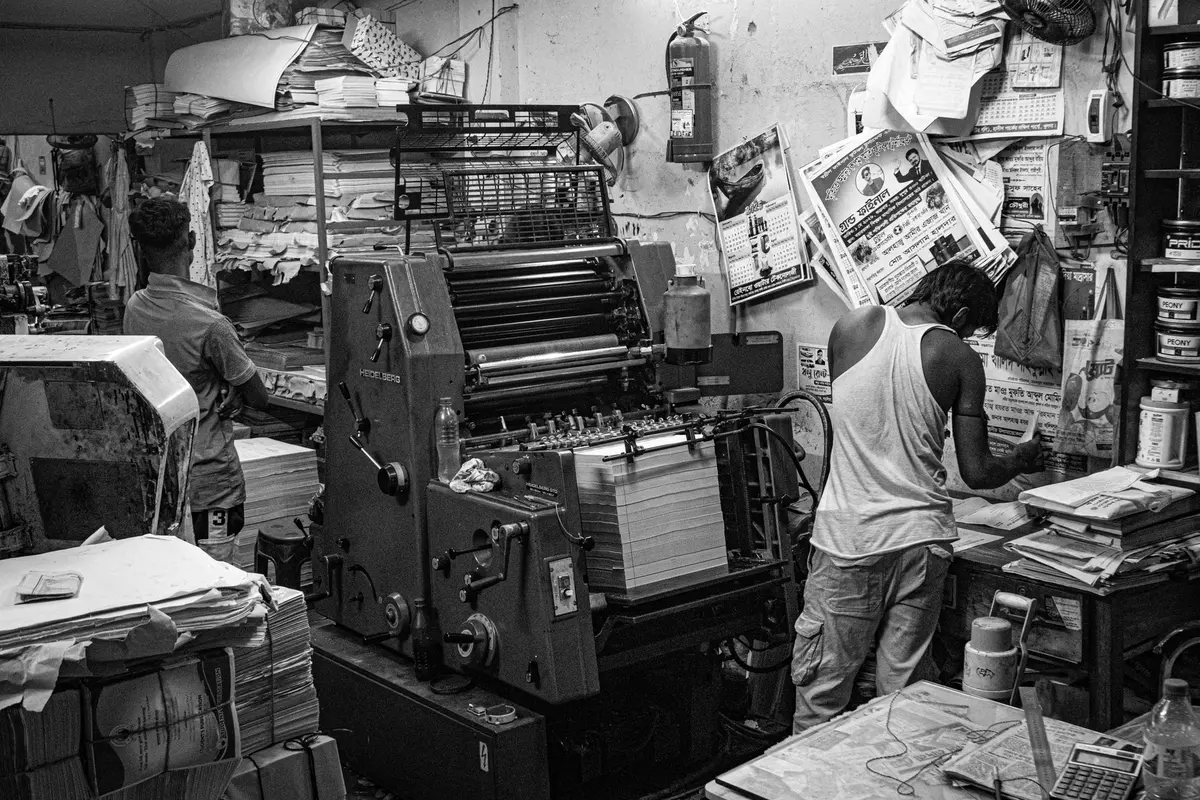
In a printing or packaging firm, an AI worker can take over the repeatable paperwork between a customer's first message and the dispatch truck. That covers logging enquiries that arrive by email and WhatsApp, pricing standard jobs from your rate card, checking artwork for missing bleed or unembedded fonts before a proof goes out, chasing proof approvals, issuing GST invoices from approved orders and sending dispatch reminders. For the office team, the enquiry desk, estimating, prepress checking and billing stop being retyping and chasing jobs and become review of the items the system flags. Colour matching, press settings and quality calls stay with the production head, because they depend on paper, ink and machine conditions that a file check cannot see. Fewer office staff is realistic for a press with many repeat jobs.
In short
- An AI worker can log enquiries, price standard jobs, run artwork checks, chase proofs and draft GST invoices from approved orders.
- Colour matching, press settings and quality calls stay with the production head.
- Start with enquiry logging and rate card pricing, then move to artwork checks and invoicing once exceptions are small.
- Confirm the HSN or SAC code and e-invoice status with your chartered accountant before the AI issues any invoice.
- Keep staff in place for the first stage and let roles shrink to exception review only after the system has run cleanly.
Direct answer: which office work an AI worker can take over
In a printing or packaging firm, an AI worker can take over the repeatable paperwork that sits between a customer's first message and the dispatch vehicle. That means logging enquiries that arrive by email and WhatsApp into one job register, pricing standard jobs from your rate card, checking customer artwork for missing bleed or unembedded fonts before a proof goes out, chasing proof approvals, raising GST invoices from approved orders and sending dispatch reminders. For the office team, the enquiry desk, the estimator, the prepress checker and the billing clerk stop retyping and chasing. They spend their time on the jobs the system flags as unusual.
Colour matching, press settings and quality calls stay with the production head. A file check can see that an image is in RGB or that a font is missing. It cannot see how a particular stock takes ink on a particular press on a particular day, and that judgement is what the production head is paid for. Fewer office staff is a realistic result for a press with many repeat work types, such as visiting cards, invoice books, labels or corrugated cartons built on a known dieline. It is much less realistic for a shop where most jobs are one-off custom work that needs a sample before anyone can quote.
The whole workflow, from enquiry to payment
Below is the chain as it usually runs in an Indian press or packaging unit, in the order it happens. For each stage, the first part describes the office work as it is commonly done today. The second part describes what an AI worker would do instead, and where a person still signs off.
Enquiry intake
Today, enquiries arrive on the counter phone, on a sales executive's WhatsApp, on the shared email inbox and sometimes as a photo of a handwritten sample. Someone copies the quantity, size, paper and deadline into a register or a spreadsheet, and often the same customer is entered twice. An AI worker reads each incoming email and WhatsApp message, creates one job enquiry per customer request, fills in the fields it can find and asks the customer for anything missing, such as paper grade, finished size or delivery city. The sales executive reviews the list each morning instead of building it from scratch.
Quotation from the rate card
Today, the estimator opens the rate card, works out sheet counts, plate or setup charges, finishing and packing, then adds GST separately. Quotes for repeat items can take longer than the job itself, and the rates drift when different people use different versions of the card. An AI worker prices standard jobs using the rate card you already maintain, shows the working line by line and sends the quote for approval. Non-standard jobs, such as special inks, unusual board thickness or rush orders, are routed to the estimator with the reason attached.
Order confirmation and job card
Today, once a customer says yes, someone converts the quote into an order, writes a job card, and passes it to production by hand or on a printed slip. Errors appear here when a revised quantity or a changed delivery date is not carried across. An AI worker creates the order from the approved quote, issues the job card with the same figures, and records every change to quantity or date with the message that caused it. The customer service executive confirms the order and handles any dispute about what was agreed.
Artwork receipt and preflight
Customers often send artwork as a coloured PDF made in a word processor, a JPG pulled from a website, or a file in a folder shared on a messaging app. Prepress staff open each file, check the page size, bleed, colour mode, image resolution and fonts, and send back a note when something is wrong. An AI worker runs the same checks automatically on every file the moment it arrives. It flags missing bleed, RGB colour, low-resolution images and fonts that are not embedded, and sends the customer a plain message listing what to fix. A DTP operator still handles layout problems, and a person decides whether a flagged file can be run as it is.
Proof approval
Today, the proof goes out by email or WhatsApp, and then someone calls the customer two or three times when no reply comes. Jobs wait in the approval queue for days, and the press schedule has gaps that nobody planned. An AI worker sends the proof with a clear approve or request-change choice, follows up on a timetable that you set, and tells the production head when a proof is still open on a job due for the press. The customer decides the content. The production head decides whether the job goes to the press once approved.
Production planning, printing and quality
Scheduling the press, the bindery and the die-cutting machine stays a human task in most units, because one machine breakdown or one paper delay changes the whole day. An AI worker can list approved jobs by due date, flag the ones that need a paper or ink that is not in stock, and produce the day's sheet for the shift supervisor. Colour matching, press make-ready, registration, and the decision to accept or reject a printed sheet remain with the production head and the press operators. Automation does not replace that work.
Finishing, packing and job completion
Today, the store or finishing supervisor writes the quantity packed, the number of cartons and the rejects on a sheet, and someone types the figures into the system later. Differences between the job card and the packed quantity surface only when the customer complains. An AI worker takes the packed quantities that supervisors enter at the end of each job, compares them with the order, and flags any shortfall or overrun above the tolerance you have agreed with the customer. The supervisor still inspects the goods.
GST invoicing
Today, the accounts executive raises the invoice after the dispatch slip is signed, often by copying figures from the job card into billing software. Mistakes in HSN or SAC codes, place of supply and tax rate are common, and they are expensive to correct after filing. An AI worker raises the invoice from the approved order, applies the HSN or SAC code and tax rate stored in your master data, and places it in a queue for the accountant. It also checks the customer's GSTIN format before the invoice is sent. The accountant or your chartered accountant decides the classification of unusual jobs.
Dispatch and e-way bill data
Today, the dispatch in-charge chases transporters, writes lorry receipts, and checks whether the consignment needs an e-way bill. Late dispatch is often discovered when the customer calls. An AI worker sends a reminder to the dispatch in-charge on the due date, pulls the consignment value and destination from the invoice, and prepares the e-way bill details for entry on the GST portal. A person still generates and checks the e-way bill and confirms the vehicle.
Payment follow-up and reconciliation
Today, the accounts executive checks bank statements or UPI credits against open invoices, then phones customers who are overdue. Partial payments and bundled payments for several invoices make this slow. An AI worker matches incoming payments to invoices where the reference is clear, sends a polite reminder to customers with overdue invoices on a schedule you set, and lists the cases it cannot match. Credit decisions and disputes stay with the owner or the accounts head.
Reports to the owner
Today, the owner asks for the week's open jobs, pending proofs and unpaid bills, and each manager compiles a separate list. An AI worker produces one daily summary of enquiries received, quotes sent and won, proofs pending, jobs due, dispatches and overdue invoices, so the owner sees the same numbers as the staff. Interpreting the numbers and deciding on pricing stay with the owner.
Staff today versus AI workers
The table below lists the office roles that printing and packaging firms in India usually employ, using the titles most often seen on job cards and in payroll sheets. The right-hand columns show the split between automated work and the work that stays with people. Titles and duties vary between a small offset press and a large packaging plant, so treat each row as a starting point for your own job descriptions.
| Role | What the person does today | What the AI worker takes over | What stays with a person |
|---|---|---|---|
| Sales executive | Takes calls and WhatsApp enquiries, copies details into the register, follows up quotes | Logs every enquiry, asks for missing details, sends standard quote follow-ups | Relationship calls, negotiation, new accounts, deciding which enquiries are worth pursuing |
| Estimator | Works out costs from the rate card for each job and prepares quotes | Prices standard jobs from the rate card and shows the working | Non-standard jobs, special finishes, rush pricing, margin decisions |
| Customer service executive | Converts quotes into orders, writes job cards, answers status queries | Creates orders from approved quotes, issues job cards, answers routine status questions | Complaints, changed specifications, disputes over what was agreed |
| DTP operator or prepress operator | Opens artwork, checks bleed, fonts, colour and resolution, corrects files | Runs the file checks on arrival and writes the list of problems for the customer | Layout correction, colour separation decisions, deciding whether a flagged file can run |
| Accounts executive | Raises invoices, applies GST, matches payments, chases overdue bills | Drafts GST invoices from approved orders, matches clear payments, sends scheduled reminders | HSN or SAC classification, credit limits, disputes, GST return filing and reconciliation |
| Dispatch in-charge | Plans deliveries, books transporters, prepares e-way bill details, chases dispatch | Sends dispatch reminders, pulls consignment value and destination for e-way bill entry | Generating the e-way bill, vehicle checks, handling damaged or short consignments |
| Store keeper | Records paper, board and ink received and issued, counts stock | Tracks stock against open jobs and raises reorder alerts when stock falls short | Physical counts, quality checks on incoming paper, storage conditions |
The highest-value automations, ranked by effort and impact
The ranking below weighs how much work each automation takes to set up against how much daily office time it removes. Effort depends on how clean your data is. A rate card that exists only in one estimator's head is a larger job than any software setup. Start at the top of the list and move down only when the one above it has been running without new exceptions for several weeks.
| Rank | Automation | Effort to set up | Impact on office time |
|---|---|---|---|
| 1 | Enquiry logging from email and WhatsApp into one register | Low | High |
| 2 | Pricing standard jobs from a maintained rate card | Low to medium | High |
| 3 | Artwork preflight on arrival, with a fix list sent to the customer | Medium | High |
| 4 | Proof approval chasing on a set timetable | Low | High |
| 5 | GST invoices drafted from approved orders, sent to the accountant for review | Medium | High |
| 6 | Payment matching and overdue reminders | Low | Medium |
| 7 | Dispatch reminders and e-way bill data preparation | Medium | Medium |
| 8 | Paper and ink reorder alerts against open jobs | Medium to high | Medium |
Compliance points for printing and packaging firms in India
The e-invoice rule is the first thing to check. Under the CBIC's Notification 10/2023-Central Tax, which took effect on 1 August 2023, businesses whose aggregate annual turnover crossed Rs 5 crore in any financial year since 2017-18 must generate e-invoices for B2B supplies. Once a business has crossed that line, the obligation stays even if turnover later falls. Your AI worker can prepare the invoice data, but the invoice needs an Invoice Reference Number from the Invoice Registration Portal when the rule applies to you, and the system should block dispatch of a B2B invoice that lacks one.
The GST rate on printing is the second point, and the sources disagree. Printing job work, commercial printing, printed packaging and printed books each fall under different codes, and the rate has changed since the GST rate revision of September 2025. Some guides place job work at 18 percent, others at 5 or 12 percent, depending on who supplies the paper and what is printed. Do not let the automation choose the HSN or SAC code on its own. Have your chartered accountant set the code for each product type once, and let the AI worker apply it.
The e-way bill is the third point. The standard threshold for interstate movement of goods is Rs 50,000 under Rule 138 of the CGST Rules. Goods sent for job work across a state border need an e-way bill regardless of value, under Section 143 of the CGST Act. That matters for printed sheets sent to a binder or laminator in another state, even when the invoice is small.
The Digital Personal Data Protection Act, 2023, and the DPDP Rules, 2025, notified in November 2025, apply to the customer data your automation handles. A customer's name, phone number and delivery address are personal data, and your business is the Data Fiduciary responsible for them. The Rules give organisations a phased period, and one compliance guide places the full deadline at 13 May 2027. Consent for marketing messages, a clear notice about how the data is used, and a 72-hour breach notification process are the points to build in now. Keep the WhatsApp messages you send to customers in the categories Meta sets, since utility and marketing messages are priced and approved differently. Check Meta's current rate card before you budget, because published third-party figures for 2026 vary slightly.
How the transition happens without disruption
The safest route keeps every current person in place for the first stage and changes what they review, not who they are. Most presses can move in four steps.
- Write down the rate card, the HSN or SAC codes for each product type, and the standard artwork checks, and have the production head and the accountant sign them off. The automation can only follow rules that someone has written down.
- Run the enquiry log and the preflight checks alongside the existing process for four to six weeks. Compare the AI worker's output with what the staff produced, and correct the rules where they differ.
- Send only exceptions to people. Any enquiry with an unknown product, any artwork with a flag the AI cannot classify, and any invoice above the value you set goes to the named person, with the reason written on it.
- Let the team's roles shrink to review only after the exception queue has been small for a month. Reduce hours through attrition or redeployment, and keep the production head and the prepress lead in their current roles.
Common mistakes
The first mistake is automating a rate card that nobody trusts. If the estimator quotes from memory for half the jobs, the AI worker will quote the wrong price quickly and confidently. Fix the rate card before switching anything on.
The second mistake is treating a clean preflight report as proof of good print. A file can pass every check and still print poorly on a particular stock. Colour decisions and press make-ready stay with the production head, and the team should not read a passed check as approval to run.
The third mistake is letting the system send invoices without a human look at unusual jobs. Mistakes in tax codes, place of supply and quantities are cheaper to catch before the invoice leaves the building. A quick accountant review queue costs far less than an amended return.
The fourth mistake is sending WhatsApp messages to customers who never agreed to hear from you. Under the DPDP framework, consent and a clear purpose matter, and marketing messages cost more than utility messages. Keep marketing lists separate from transactional updates such as proof links and dispatch notices.
The fifth mistake is cutting prepress or accounts staff before the exception queue is small. Customers send unusual files, quotes come in with odd specifications, and a dispatch problem always arrives on the busiest day. Keep the people until the system has handled a full season of work without surprises.
Sources
- E-Invoice Limit 2026: Rs 5 Crore Threshold & Exemptions
- E-Invoice Turnover Limit Explained: Is ₹5 Crore Rule Applicable in 2026?
- Free e-Invoice Applicability Checker FY 2026-27 — GST ₹5 Cr Limit
- ₹5 Crore E-Invoice Turnover Rule in 2026: GST Limit Explained
- GST e-Invoice: Meaning, eligibility, format, limit (2026)
How AiStaffo would automate this
AiStaffo would start by connecting your enquiry inbox, your WhatsApp business number, your rate card, your artwork folder and your billing software, so every job has one record from first message to payment. The AI worker would log each enquiry, price standard jobs from your rate card, run the bleed, font and colour checks on arriving artwork, chase proof approvals and draft GST invoices from approved orders for your accountant to review. Dispatch reminders and overdue payment follow-ups would run on the schedule you set. Your production head would still decide colour, press settings and quality, and the owner would still approve pricing exceptions and credit decisions. Book a free automation audit.
Questions people ask
Can an AI worker replace the prepress or DTP operator in a printing press?
Do I need to issue e-invoices if my printing business is small?
Is WhatsApp safe to use for job enquiries and proof approvals?
What does WhatsApp messaging cost for a press in India?
When does an e-way bill apply to printed goods sent to a binder?
Which jobs should stay fully manual in a printing business?
Book a free automation audit
Thirty minutes. We look at one process you run every week and tell you exactly what an AI worker would take off your desk, and what it would not.