How to Automate Field Visit Reports from Staff to the Office

You can automate field visit reports without asking staff to learn a new app. Keep the channel they already use, usually WhatsApp, email or a phone call, and let an automated worker do three jobs. First, it collects each message, voice note or photo as it arrives. Second, it turns the content into the same fields every time, such as client, visit time, outcome and next step, and files them in your spreadsheet, CRM or ERP. Third, at the end of the day it lists planned visits with no report and sends a reminder to the person who owns each one. A manager still reviews any report that involves money, complaints or safety. A first version usually takes a few weeks, and most of that time goes into templates and testing.
In short
- Keep the channels staff already use, such as WhatsApp, email and voice notes, and automate the collection and filing behind them
- Fix a short template with clear fields before any model is asked to structure reports
- Let the system leave fields blank rather than guess, and keep the original audio and photos attached
- Run a daily check that compares planned visits with received reports and reminds the owner of each open visit
- Keep a manager's review for pricing promises, complaints, safety incidents and regulatory findings
Why missing and late visit reports cost money
Field reports are the only record of what happened at a customer site. When they arrive a day late, or not at all, the office prices the next quote on stale information, a complaint waits in someone's phone, and a manager cannot tell whether a territory was covered. The cost is hard to see on any single day, which is why it tends to be ignored until a client leaves or a dispute drags on.
The best public figure on the time involved comes from SPOTIO's 2026 State of Field Sales survey. It found that about 21% of a field rep's working week goes to administrative tasks, roughly 8 hours per rep per week. The same survey reported that 71% of field reps spend five or more hours a week on manual CRM entry, and that only 3% have automated it. SPOTIO sells field sales software, so treat these numbers as a vendor's view of the market, not a neutral audit. Still, they are the most specific current figures I could find on this problem.
Surveys also disagree on how much of the week is spent selling. Salesforce's 2026 State of Sales report puts non-selling time at about 60%, while SPOTIO's survey puts field selling time a little higher. Because the sources do not agree, this guide avoids quoting a single selling-time percentage. The reliable number to use is the admin hours on your own team.
To price the problem for your own business, use this simple calculation. Take the number of field staff who write reports, multiply by the hours each one spends on reporting per week, then multiply by 52 weeks and by the fully loaded hourly cost of those staff. Add the cost of the reports that arrived late and caused a second visit. If you have not timed the reporting work, run a two-week sample: ask each person to note the minutes they spend on reports, and use that figure instead of any industry average.
The manual way and the automated way
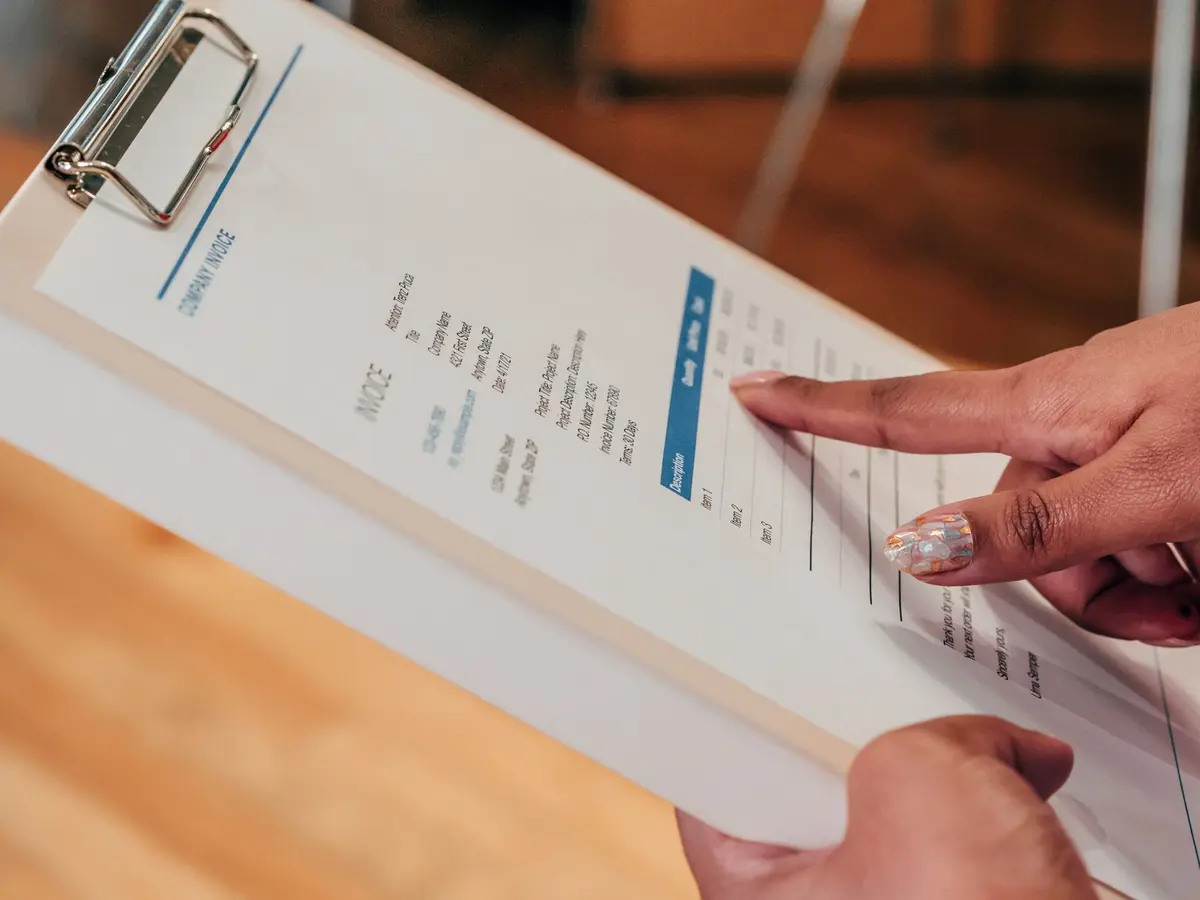
Most field reporting runs on habit. Staff type a summary on the way back to the car, a manager copies it into a spreadsheet, and someone in the office re-keys the key facts into the CRM or accounting system. The table below shows where the work sits in each model.
| Step | Manual process today | Automated process |
|---|---|---|
| Capturing the report | Staff write a message, call the office, or forget | Staff send the same WhatsApp message, voice note, photo or email they already use |
| Structuring the content | An office person reads each message and re-types the fields | A language model converts the text into fixed fields and flags anything missing |
| Reading handwritten or photographed forms | Someone deciphers the form by hand | Optical character recognition reads the form, and a person checks any low-confidence value |
| Filing | Copy into a spreadsheet, then the CRM or ERP | Written to the spreadsheet, CRM or ERP through its API, with photos stored in a shared folder |
| Finding missing visits | A manager asks around at the end of the week | A daily check compares planned visits with received reports and sends reminders |
| Escalation | Depends on who noticed | Complaints, payment promises and safety notes route to a named manager the same day |
| Typical delay | Often a day or more, sometimes a week | Minutes after the staff member sends the message |
The automated column does not remove the manager. It removes the re-typing and the chasing. The manager still decides what matters and what needs follow-up.
How to automate it, step by step
Map the channels people already use. List every way a report reaches the office today: WhatsApp groups, direct chats, voice notes, email, call logs and photos of paper forms. Count how many reports come through each channel in a normal week. Start with the channel that carries most reports, because that is where the most time is saved.
Write one report template with fixed fields. Most visit reports need between eight and twelve fields: client name, site, date, time in, time out, purpose, people met, outcome, open issues, next action, photos and the author. Agree the list with two or three field staff and one manager. Every field should have a clear rule, such as client names must match the customer list. Without fixed fields, the structuring step has nothing reliable to fill.
Connect the messaging channel. For WhatsApp, the route is the WhatsApp Business Platform Cloud API. Meta hosts the service, and your system connects through REST endpoints and webhooks. A webhook is a web address on your side that Meta calls each time a message arrives. Your server must acknowledge each call quickly, and a 2026 developer guide to the Cloud API notes that Meta expects a 200 response within about five seconds and may disable a webhook after repeated failures. Staff keep using the chat they already have. Email reports can be picked up through the Gmail API or Microsoft Graph, and phone calls can be transcribed after the call.
Turn voice notes into text. Field staff often speak their reports while driving. A speech-to-text service such as Google Speech-to-Text or OpenAI's Whisper model can transcribe these notes. Keep the original audio file. If a transcript is later disputed, the audio is the record.
Read photos and forms with OCR. Optical character recognition reads text from photos of printed forms, delivery notes, meter readings and nameplates. Google Cloud Vision and Amazon Textract are two widely used services. Set a confidence threshold, and send any value below it to a person. Handwriting is the weakest point, so test with real handwriting before you rely on it.
Structure the content with a language model. A large language model reads the transcript, OCR text and any free-text message, then fills the template and returns the result as structured data. The instruction should be strict: fill a field only if the message states it, and leave it blank otherwise. This rule is the main defence against invented details.
File the report in the office system. Write the structured record to the place your team already works. That may be a shared spreadsheet, a CRM such as Salesforce, Zoho CRM or HubSpot, or an ERP such as Odoo, Microsoft Dynamics 365 or SAP Business One. Each of these exposes an API, and the connection is set up once. Store photos in a shared drive with the visit ID in the file name. Send the manager a short daily summary by email.
Run the end-of-day chase. Each evening, a scheduled job compares the visits planned in the calendar with the reports received. Any visit with no report triggers a reminder to the person who owns it. Outside the 24-hour customer service window, WhatsApp only allows business-initiated messages through pre-approved templates, so write the reminder as a template in advance. Send the manager a list of visits still open after a set time, such as 6 pm local time.
Test in parallel, then remove the manual step. For two weeks, keep the old process running next to the new one. Compare every automated report with the manual one. Count the fields that were wrong or blank, and fix the template or the prompt before you stop the manual process. Only retire the manual step when the errors are rare and each one has a known fix.
What breaks, and how to prevent it
Automated reporting fails in predictable places. Knowing them in advance is cheaper than discovering them in a client dispute.
The first failure is client matching. Staff write short names, such as a shop name without its branch, and the system files the visit against the wrong account. Prevent this with a customer list that the model must match against, and send any unmatched name to a person rather than guessing.
The second is misheard or misread content. Speech-to-text struggles with accents, background noise and product codes. OCR struggles with smudged or handwritten forms. Prevent this by keeping the original audio and images attached to every record, and by checking any number, amount or date that falls below the confidence threshold.
The third is invented detail. A language model asked to produce a complete report will sometimes fill gaps with plausible text. Prevent this by making blank fields acceptable, by requiring the model to quote the source words for each value, and by sampling a few records each week against the original messages.
The fourth is technical silence. A webhook that stops responding means reports quietly stop arriving. Prevent this with an alert when no reports arrive from a staff member who normally sends several a day, and with a simple log of every incoming message.
The fifth is staff resistance. People who have sent a one-line message for years may feel watched when reminders start arriving. Explain to them what is recorded, what is not, and who sees it. Keep the reminder count low and the tone neutral. If staff feel the system is used to catch them out, they will start sending vague reports, and the data will be worse than before.
The sixth is data protection. Visit reports often contain customer names, contact details and sometimes health or personal information. Decide who can read the stored messages and photos, set retention periods, and check whether your use falls under rules such as the EU General Data Protection Regulation or local equivalents where your staff and customers are located. Automation does not change those obligations.
Reports that should not be automated without a manager's review
Automation can file and route these reports, but a person should approve them before they are acted on.
- Any price, discount or payment promise made during a visit
- Customer complaints, threats of legal action, or requests to end a contract
- Safety incidents, injuries, near misses and damaged equipment
- Findings from a regulatory inspection, audit or compliance check
- Visits to sites with controlled substances, medical devices or hazardous materials
- Reports that will trigger a credit hold, collection action or write-off
- Any report the customer has signed, where the signed version is the legal record
For these reports, the automated worker still does useful work. It collects the material, structures it, attaches the evidence and places the report in the manager's queue with the reason it was flagged. The decision stays with the manager.
When automation is not worth it
Automating field reports does not suit every business. If your team sends only a handful of visit reports each week, a shared template and a weekly review may cost less to run and less to explain. If the reports are mostly long narrative judgement, such as a technical assessment of a plant, a person writing it carefully will produce better work than any structuring step. If field staff work where mobile signal is poor and no offline option exists, the first problem is connectivity, not reporting. If your office system has no API and no one is available to maintain a connection, a manual template in a shared spreadsheet may be the honest choice for now. And if nobody reads the reports today, automating them only makes the unread pile grow faster. Fix the reason for the reports first.
What it typically takes
The time required depends on how many channels and systems are involved, but a simple first version follows a predictable pattern. The first week goes to the channel map and the template, with two or three field staff and one manager agreeing the fields. The second week goes to connecting the messaging channel, the filing destination and the daily reminder, and to testing with sample messages. The third and fourth weeks run in parallel with the existing process, while you measure errors and adjust the prompts and templates. After that, the manual step can be removed for the report types that pass. Adding a second report type or a second channel usually takes less time than the first, because the template logic and the filing connection already exist.
Plan for the people time as well. Someone in operations needs to own the template, review the flagged reports each day, and handle the monthly check of sample records. This is usually a small, steady task, not a full-time role, but it does not run itself.
Sources
How AiStaffo would automate this
AiStaffo would start by mapping the channels your field staff already use, usually a WhatsApp Business number, a shared email inbox and voice notes, and connecting them to one intake point. An automated worker would transcribe voice notes, read photographed forms, match each visit to a customer record and fill the agreed report template, leaving any unclear field blank. Completed reports would be written to the spreadsheet, CRM or ERP your office already uses, with photos stored against the visit. Each evening the same worker would list planned visits with no report and send the reminders, while your manager still approves pricing promises, complaints and safety items before anything is acted on. To see which of your report types and channels fit this pattern, Book a free automation audit.
Questions people ask
Do field staff have to install a new app to automate visit reports?
Can an AI tool write a complete visit report from a voice note?
How do I make sure a missing report gets noticed the same day?
Which office systems can receive automated field reports?
How long does it take before we can stop writing reports by hand?
Book a free automation audit
Thirty minutes. We look at one process you run every week and tell you exactly what an AI worker would take off your desk, and what it would not.