Automated Low-Stock Reorder Drafts for Buyer Approval

An automated low-stock reorder draft is a system that watches your stock counts and sales, checks each item against its reorder point, and writes a purchase order draft for the right supplier at the right quantity. Your buyer opens a queue of drafts, edits anything that looks wrong, and approves the ones that are right. Items with no supplier match, sudden demand spikes, or inconsistent stock counts are not ordered. They are flagged to a person. The result is that routine reordering stops depending on someone remembering to check a spreadsheet, and the buyer spends time on exceptions rather than data entry. This service connects to the inventory or sales system you already use, sets the rules with you, and runs the check every day. Most of the work is in the setup, and the setup is where a careful audit pays off.
In short
- A reorder point is average daily sales multiplied by supplier lead time in days, plus a safety buffer.
- The AI worker drafts purchase orders; a buyer approves every one before it goes to a supplier.
- Items with no supplier match, unusual demand, or inconsistent counts are flagged, not ordered.
- Clean stock counts and accurate lead times decide the quality of the drafts more than the software does.
- Automation does not suit every catalogue; a small, stable range may not justify the setup.
Why reorder drafts slip, and what it costs
Reordering is one of the least glamorous jobs in a business and one of the easiest to get wrong. A buyer who is busy, away, or simply covering too many products will miss a line, and the first sign is an empty shelf or a cancelled customer order. A 2022 study by IHL Group put the sales lost to out-of-stocks and overstocks at North American retailers at more than 349 billion US dollars that year, a figure that shows how much money sits in the gap between stock and demand. Your business does not need to be a large retailer for the same mechanism to apply. Every product that runs out early costs you the sale, and every product bought too early ties up cash.
Many businesses already have the numbers somewhere. The sales are in a point-of-sale or e-commerce platform, the stock counts are in an inventory tool or accounting package, and supplier lead times live in an email thread or someone's memory. The job that is missing is the daily comparison of those three sources and the drafting of the order that follows. That is the job this service automates.
The arithmetic behind a reorder point
A reorder point is the stock level at which a new order should be placed. The basic version multiplies average daily sales by the supplier's lead time in days, then adds a safety stock buffer for days when sales run high or the delivery is late. Consider a wholesaler that sells 12 units of a product a day, with a supplier that takes 6 days to deliver, and a buffer of 24 units. The reorder point is 12 multiplied by 6, which is 72, plus 24, which gives 96 units. When the count reaches 96, the order is due.
Two details decide whether this works in practice. First, lead time should come from actual receipts over the last few orders, not from the supplier's quoted figure. Second, sales and lead time must use the same unit of time. Mixing trading days with calendar days is a common cause of orders that arrive too late. Seasonal products need a separate demand window, and a product that is being phased out should not be given a reorder point at all.
How the AI worker runs each day
- It reads on-hand stock and recent sales from your inventory, accounting, or e-commerce system. Common sources include QuickBooks Online, Shopify, Odoo, and Zoho Inventory.
- It recalculates each item's reorder point from recent sales and the lead time recorded for its supplier.
- For each item that has reached its reorder point, it selects the supplier marked as preferred for that product and sizes the order to the target cover you agreed.
- It drafts the purchase order with item codes, quantities, and unit costs taken from your supplier price list, and it attaches the reason for the draft.
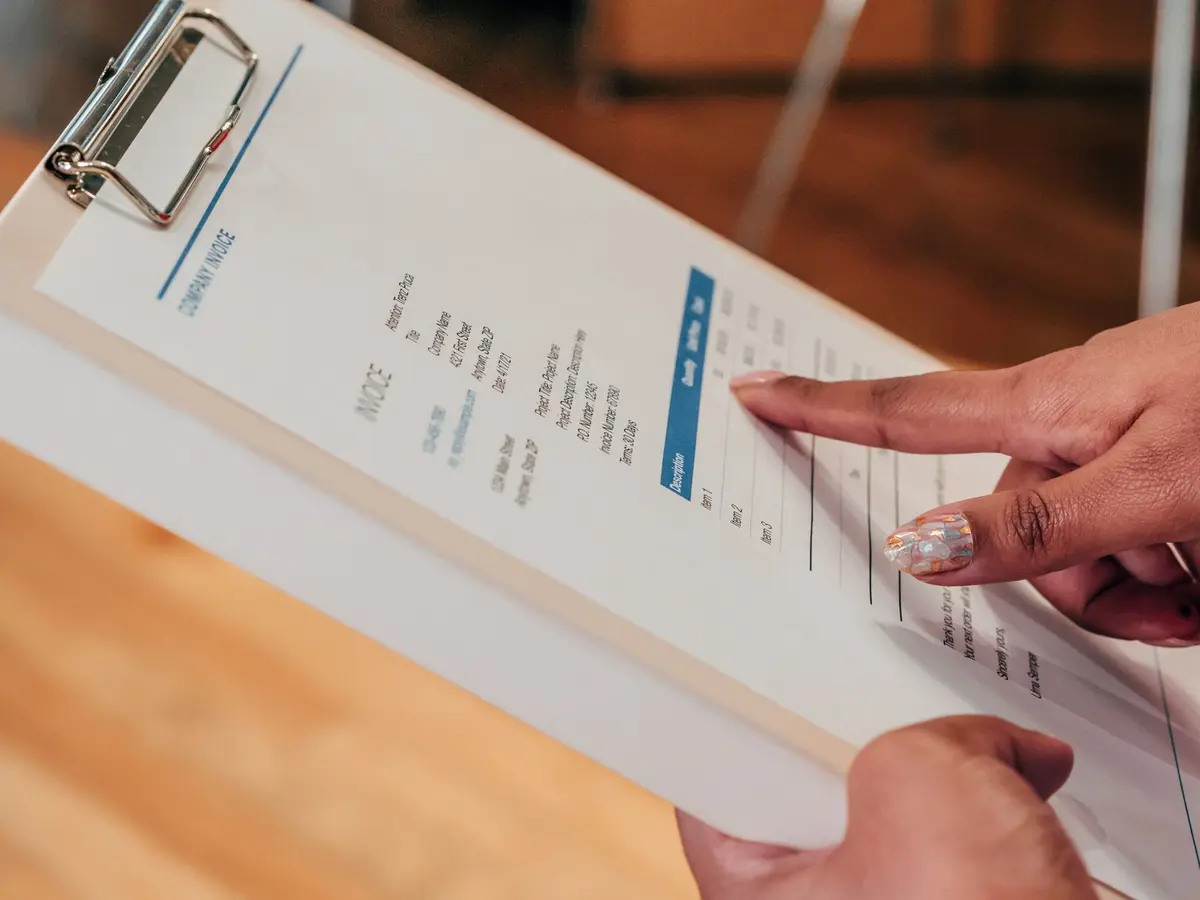
- It places the draft in the buyer's approval queue. Nothing is sent to a supplier until a person approves it.
- It flags any item with no supplier match, a sudden jump in demand, a negative or impossible stock count, or a supplier price that differs from the last order. Those items are not drafted.
What is included
- A review of your inventory and sales data, supplier list, and current reorder habits, with a written list of products that are suitable for automation
- A process map showing each reorder step, who does it today, and where the approval sits
- Reorder point and target cover rules agreed with your buyer for each product group
- A connection to your inventory or sales system, set up with the access level you choose
- The daily stock check and draft creation, running on a schedule you approve
- An approval queue with the reason for each draft and a simple way to edit or reject it
- An exceptions list for items without a supplier match or with unusual demand
- A short written guide for the buyer covering approvals, overrides, and what to do with flagged items
- Monitoring of the run, with fixes to rules and mappings after the first weeks of use
How the engagement runs
The work moves in five stages. Each stage ends with a decision from you, so nothing gets built on assumptions. The table below shows a typical plan. The actual time depends on how clean your stock counts are and how quickly your system grants access.
| Stage | Typical weeks | What happens |
|---|---|---|
| Audit | 1 | We review stock data, sales history, supplier lead times, and the current reorder steps. You receive a list of products suited to automation and those that should stay manual. |
| Process map | 1 | We map each step from stock check to supplier email. You confirm who approves what, and which exceptions go to whom. |
| Build | 3 to 4 | We connect the data sources, set reorder rules, build the draft format, and test against several weeks of past sales. You check the test drafts against what your buyer would have ordered. |
| Run | 2 | The worker runs live while your buyer approves every draft. We compare its drafts with the buyer's own orders and tune the rules. |
| Support | Ongoing | We maintain the connections, review exceptions each month, and adjust rules when a supplier changes lead time or a product changes season. |
What you provide
You provide read access to your inventory or sales system and your supplier list, including lead times, minimum order quantities, and preferred supplier per product. You name one person who owns approvals and one person who can answer questions about product rules. You also tell us which products should never be reordered automatically, such as one-off stock, discontinued lines, or items on a supplier allocation. Clean stock counts matter more than anything else on this list. If the counts are wrong, the drafts will be wrong, and the audit will say so before any build begins.
What automation does not cover
This service is not worth building for every business. If you order a handful of products once a month and your buyer already knows them by heart, a shared spreadsheet with a reorder column may be enough, and the cost of setup will not return much. Automation also cannot fix inaccurate counts, so a warehouse that never reconciles stock will need that discipline first. The worker does not negotiate prices, judge the quality of a supplier, or decide that a product is about to become fashionable. Demand from a new marketing campaign or a sudden change in customer taste must be entered by a person, because the system only sees what has already sold. Some supplier portals have no way to receive orders electronically, and those orders will still need to be sent by hand. Approvals stay with your buyer, which is deliberate, and the worker will sometimes produce a draft that needs editing. Those edits are the cost of keeping a person responsible for what is ordered.
Who this is for
The service suits any business that holds stock and reorders from suppliers on a regular basis, whether that is a five-person distributor selling through an online shop or a group with several warehouses and thousands of products. The larger the number of items, the more the daily check saves, because the buyer no longer reviews every product by hand. Businesses with more than one warehouse benefit from having the draft logic follow each location's stock separately, though this needs to be agreed during the audit.
Sources
How AiStaffo would automate this
We would start by connecting read-only access to your inventory or sales system and your supplier list, so the AI worker can see stock counts, sales history, and lead times. Once the reorder rules are agreed, it runs the daily stock check and drafts purchase orders in your purchasing tool or accounting system. Your buyer reviews each draft, changes quantities where needed, and approves it before anything reaches a supplier. Anything without a supplier match or with unusual demand waits for a person, and nothing is ordered on its own. Book a free automation audit.
Questions people ask
Does the system send purchase orders to suppliers without approval?
Which systems can the reorder worker read from?
How is the reorder point calculated?
What happens to products that sell in unusual patterns?
Can this work for a business with several warehouses?
Will the buyer still need to check stock by hand?
Book a free automation audit
Thirty minutes. We look at one process you run every week and tell you exactly what an AI worker would take off your desk, and what it would not.